Starting a business is exciting.
But as you grow, things can get a little complicated–particularly human resources–making it challenging to manage routine work with business development.
Recruitment, payroll, compliance, and employee management all require your attention. At some point, you might have to outsource your administrative workload to focus on your business.
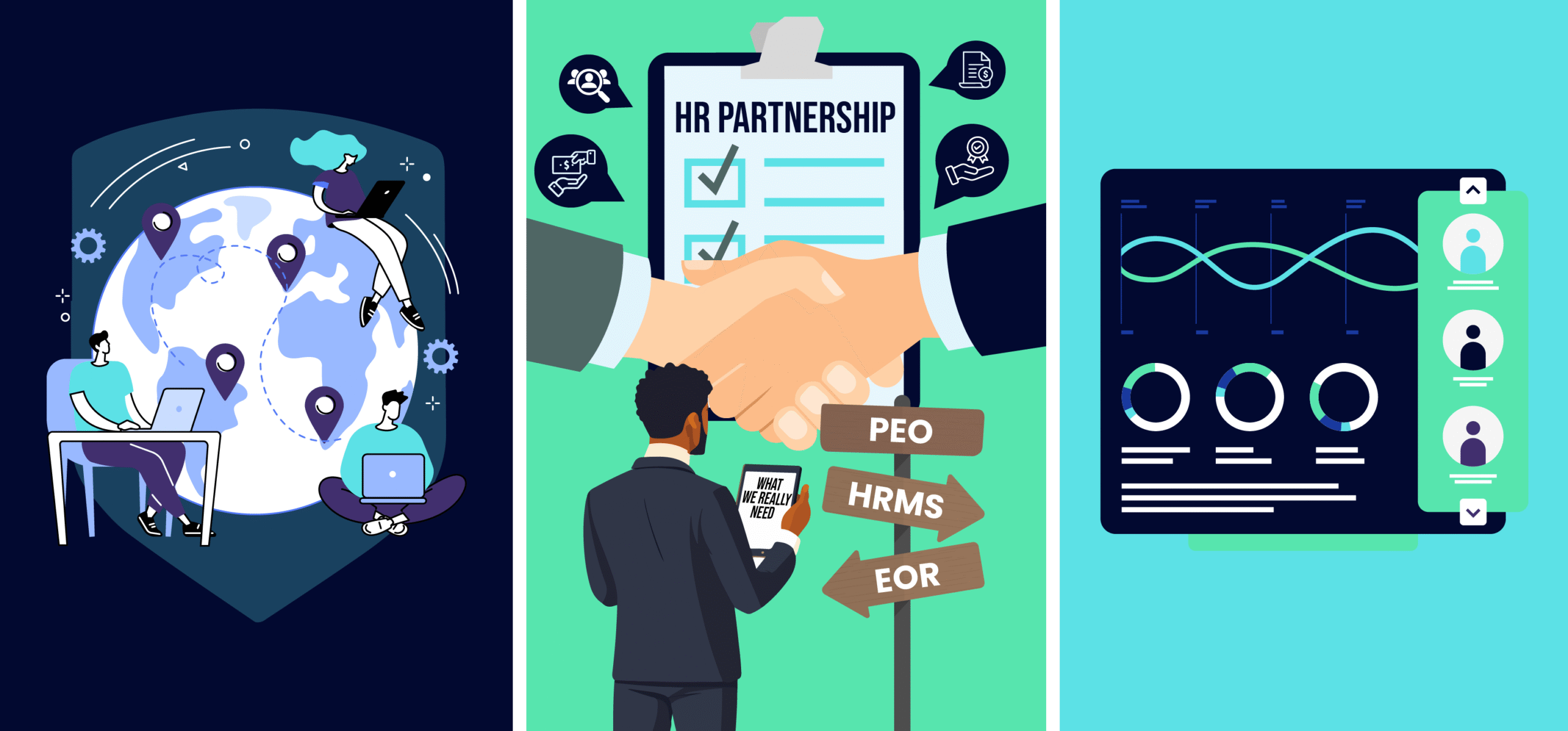
This is where external solutions, like EOR, PEO, and HRMS, come in.
Today, I am going to talk about the three HR platforms that can help you manage your workforce. They are interconnected but target different areas.
Let’s start with EOR.
What is an EOR?
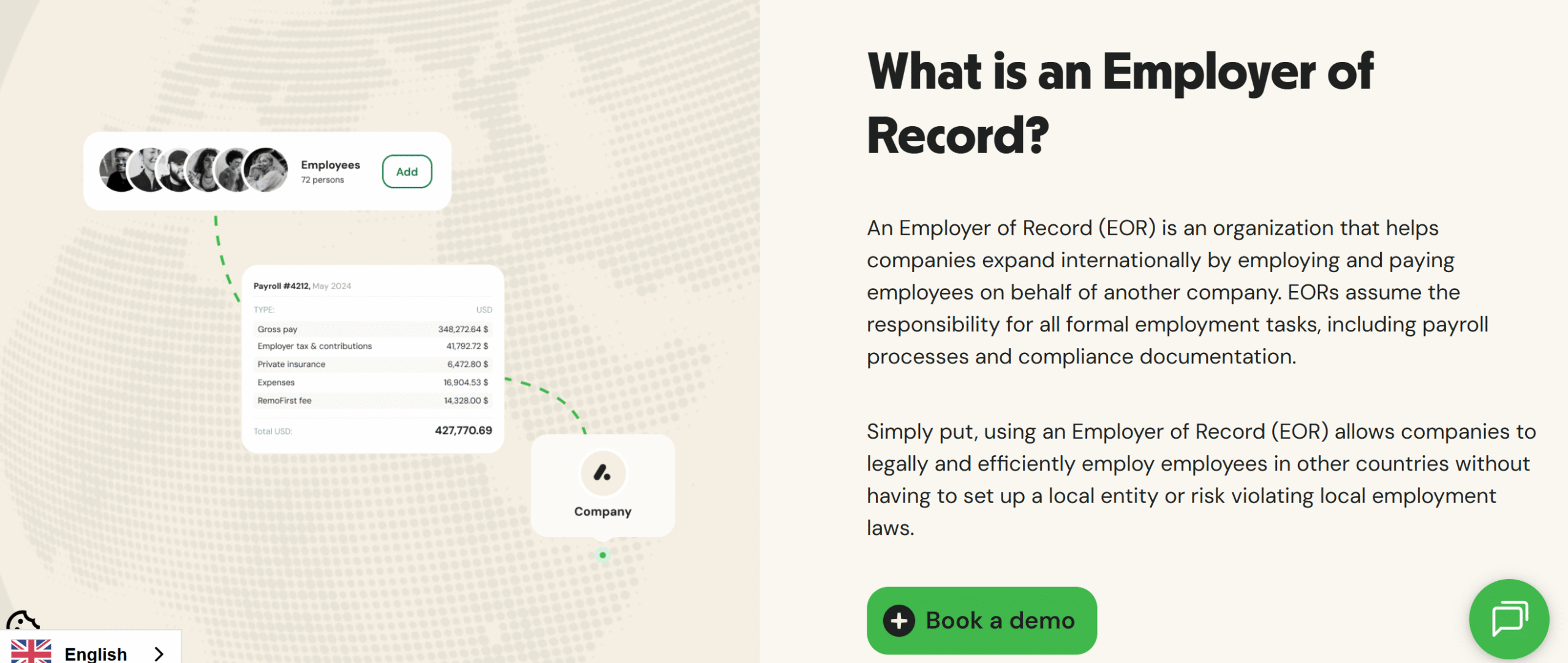
EOR (Employer of Record) is a third-party HR company that hires and pays an overseas team on your behalf.
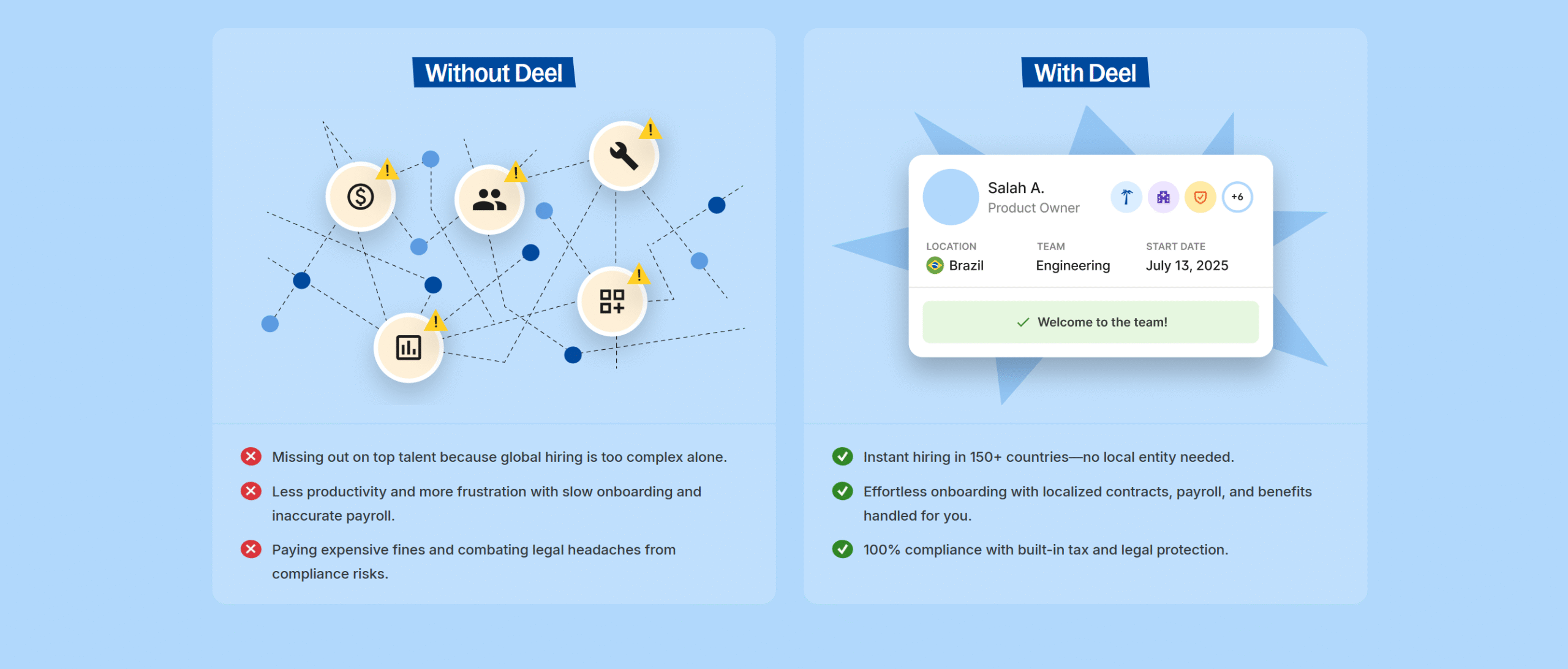
Startups can work with permanent employees in other countries without setting up a legal entity in that region.
For example, if you want to hire a developer in Brazil, but your company doesn’t have a legal entity in Brazil, you can legally onboard and pay the developer through an EOR platform.
The EOR is legally responsible for your staff and handles the complex local laws, contracts, benefits, and taxes, shielding your company from potential legal risk.
Core Features Of an EOR
- Hiring and paying international employees.
- Contract generation and compliance.
- Payroll disbursement.
- Benefits administration.
- A digital platform for the clients.
- Legal support.
Need a real-life example? Check out Deel.
Deel is a leading EOR platform. It enables you to hire people in over 150 countries and simplify salary disbursement.
What is a PEO?
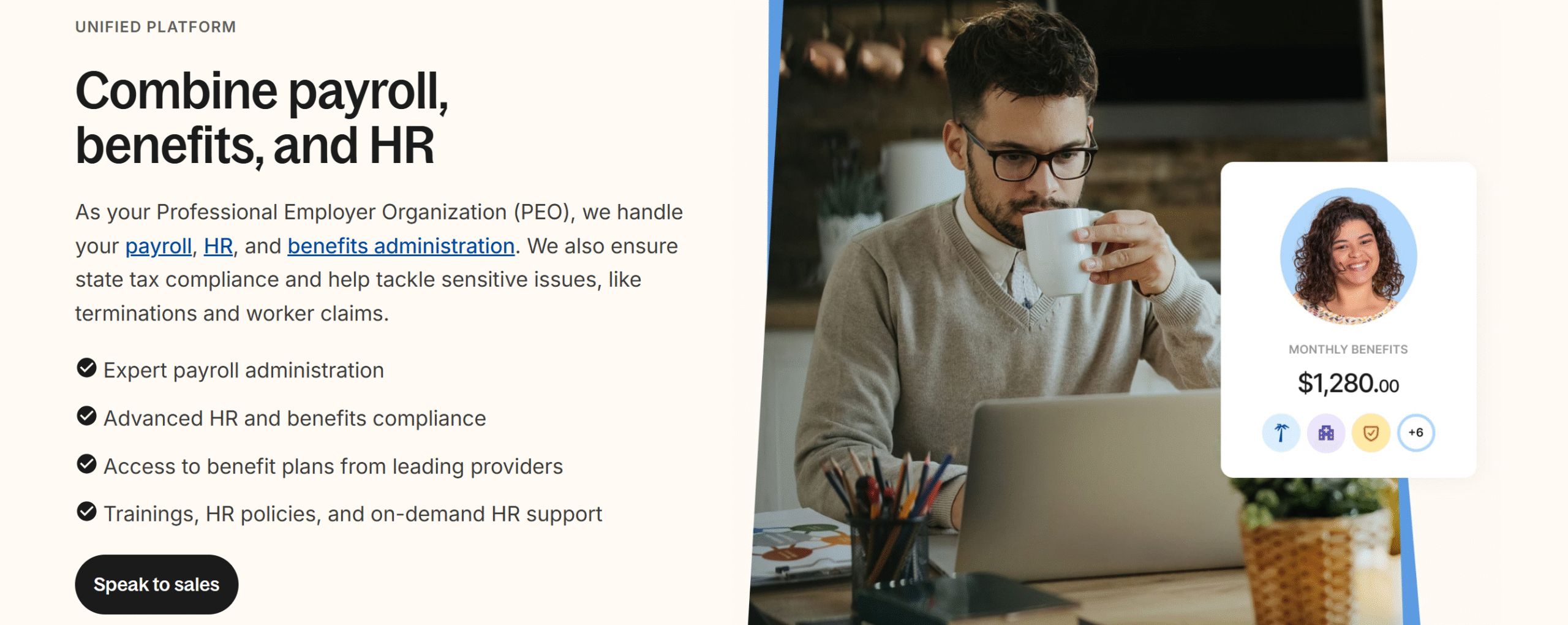
A PEO (Professional Employer Organization) is built for domestic employees.
Like EOR, it’s a third-party service, but instead of working with an overseas workforce, it helps you manage and pay employees residing in a country where your business is legally registered.
What makes it an attractive option?
Low cost and access to other states.
If your startup is based in Texas, a PEO can help you onboard and pay employees residing in California.
Overall, a PEO acts as your co-employer, sharing some of the liabilities, but you are still legally responsible for your employees.
Core Features of a PEO
- Onboarding and offboarding the domestic workforce.
- Policy management and training.
- Payroll and PTO.
- Tax and compliance.
- Benefits administration.
- HR consultation.
Remember the Deel platform I mentioned above? It also offers PEO services to US-based companies.
The package covers onboarding documentation, time off and expenses, payroll and taxes, compliance, and benefits administration.
What is an HRMS?
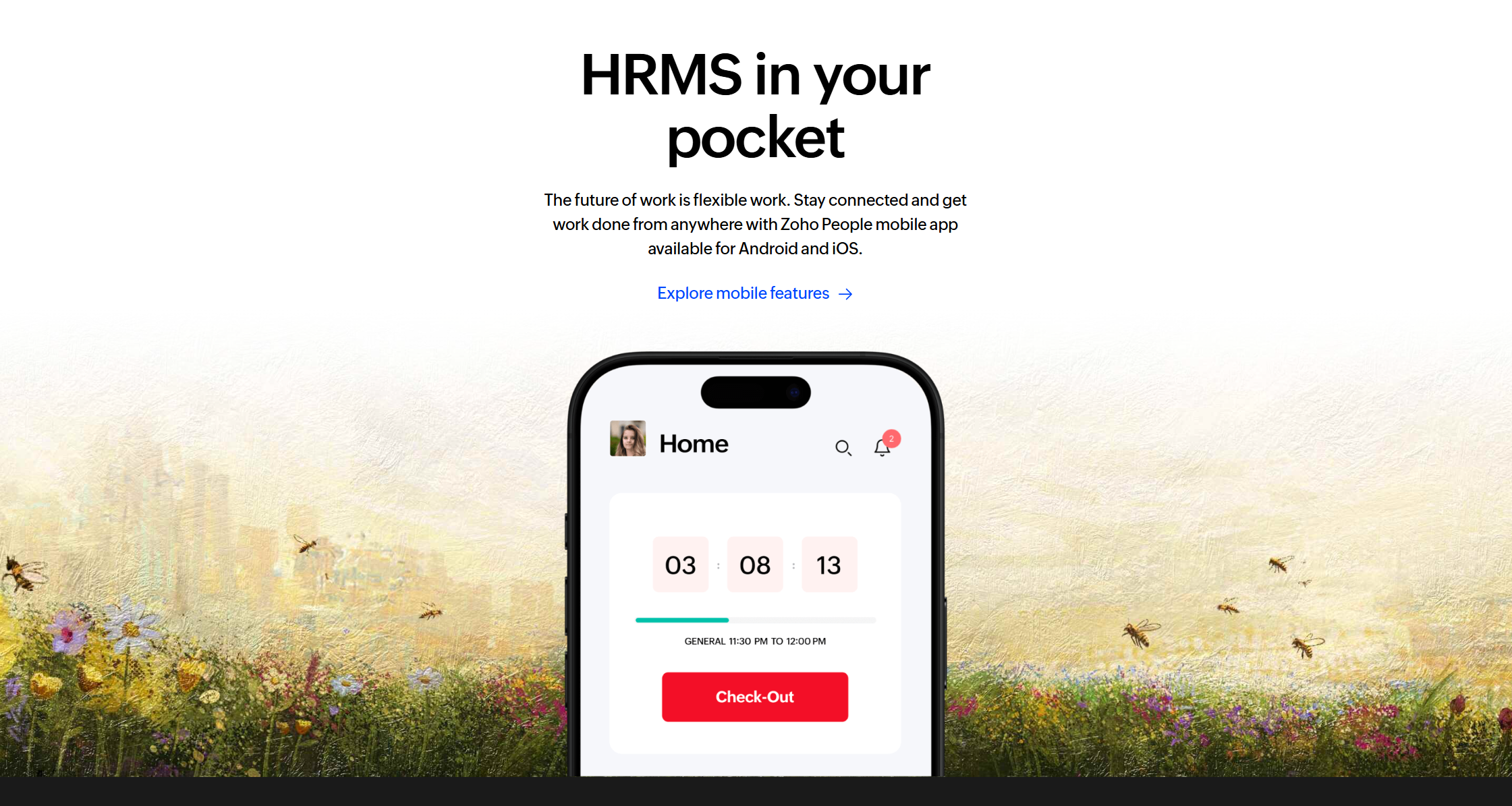
HRMS (Human Resource Management System) is a software product. It provides you with tools to manage every aspect of your HR department.
Through an HRMS, you can handle recruitment, onboarding and offboarding, time and attendance, payroll, and performance tracking. It centralizes all your HR workflows and automates repetitive tasks.
All in all, the software helps you reduce your workload, maintain employee records, improve work efficiency, and make better decisions.
Core Features of an HRMS
- Hiring and onboarding.
- Employee records.
- Time and attendance.
- Payroll.
- Performance reviews and employee engagement.
- HR reports.
Some HRMS also offer add-on services, but the core product is the software.
EOR vs. PEO vs. HRMS: A Detailed Comparison
EOR, PEO, and HRMS are HR platforms. They centralize the functions and simplify workforce management.
Their main focus and capabilities, however, may vary.
This makes each suitable for specific tasks.
To understand their roles better, let’s compare their core differences.
I have covered their core features, legal responsibilities, cost structure, and tech support.
1. Core Features
EOR
EOR’s primary purpose is to help you onboard and pay overseas employees where you don’t have a legal entity.
Via this platform, you can generate country-specific contracts, process the onboarding documentation online, enroll your staff in benefits programs, and run monthly payroll.
Your EOR verifies the documents in the back end, sends salaries to your team’s local accounts, and handles compliance.
For example. If you hire someone from Spain, your EOR generates a compliance contract specifying the salary and mandatory benefits based on Spain’s employment laws. Plus, it pays salaries in euros and handles taxes.
You can also get add-on services, such as visa assistance or consultation.
PEO
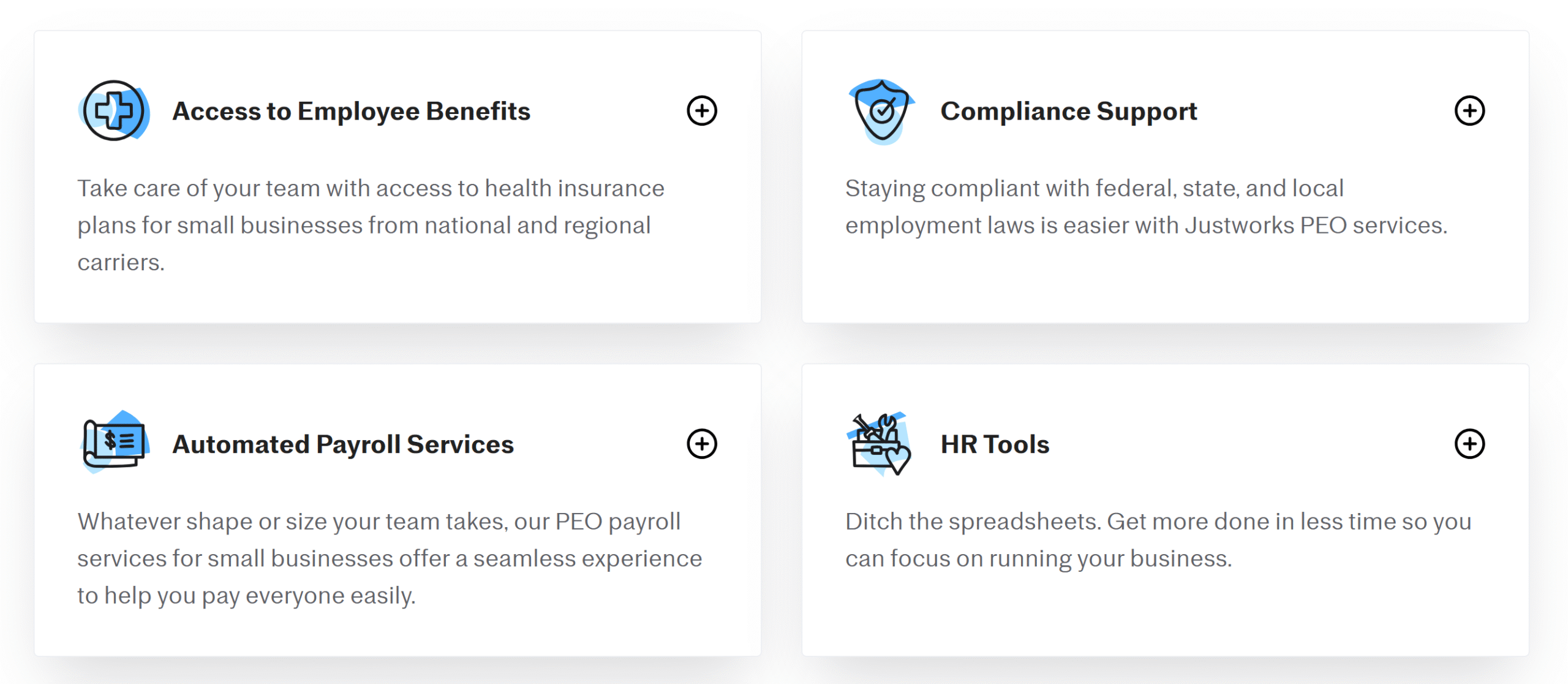
A PEO’s core function is to manage your HR administration and compliance for you.
You can outsource your talent management, payroll, benefits administration, and compliance workflows to a PEO.
The scope of a PEO is limited to the domestic workforce.
In some countries, like the US, employment laws in various states differ slightly. A PEO comes in handy in such situations, allowing you to work with employees residing in multiple states.
HRMS
HRMS offers tech support to startups.
It delivers a centralized system to streamline all your HR-related workflows and automates time-consuming tasks.
Whether you work with a domestic workforce or international teams, you can digitize your HR administration and manage core functions online.
Take BambooHR, for example.
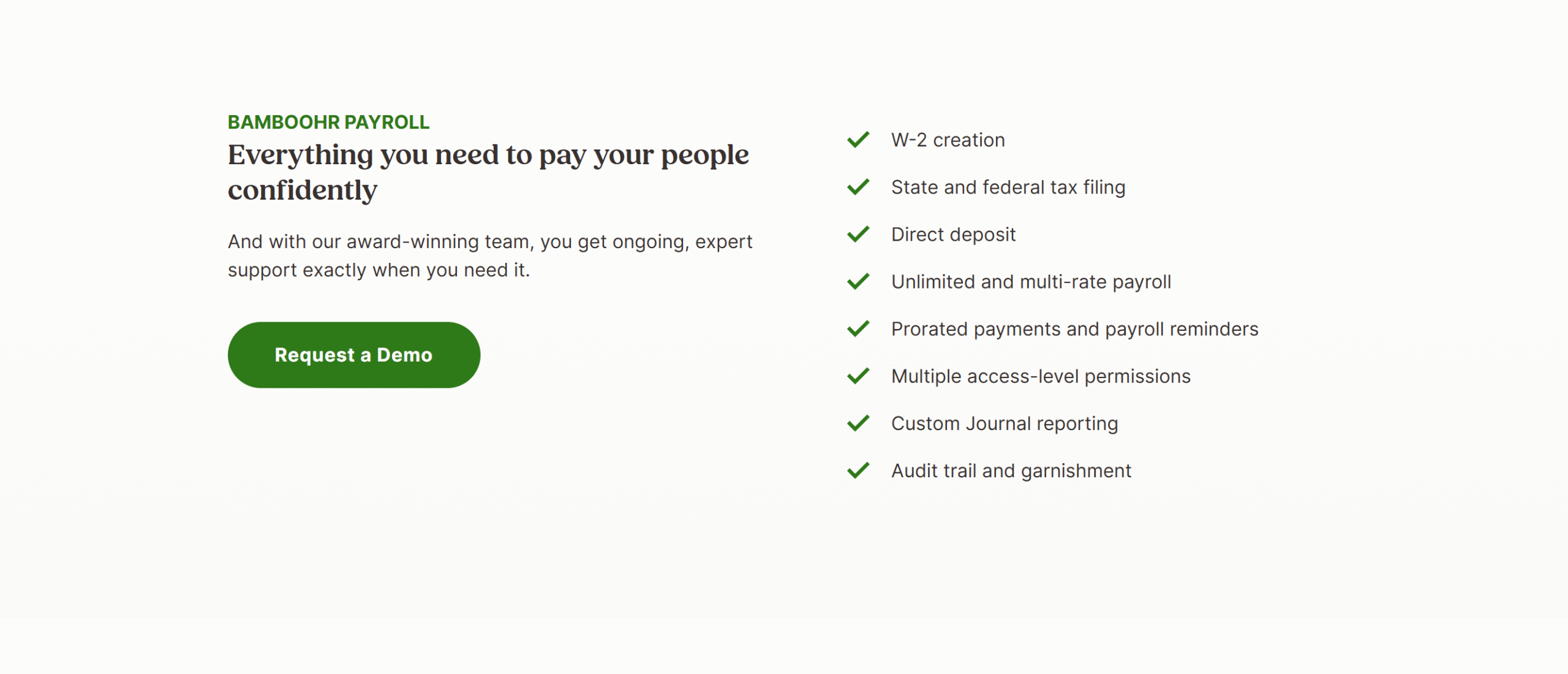
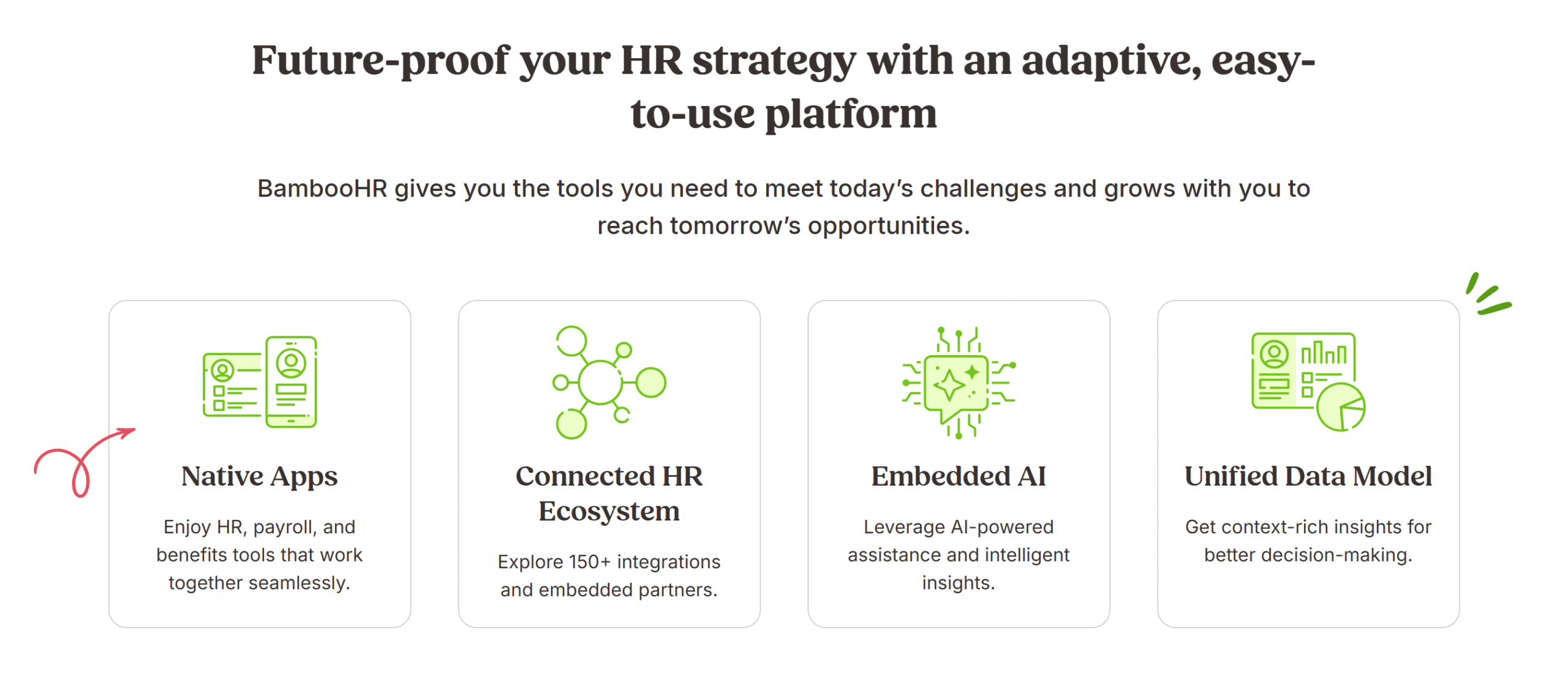
BambooHR provides modules for hiring and onboarding workflows, attendance and payroll features, and employee management. You can also hire HR experts via BambooHR for personalized guidance.
2. Legal Responsibilities
EOR
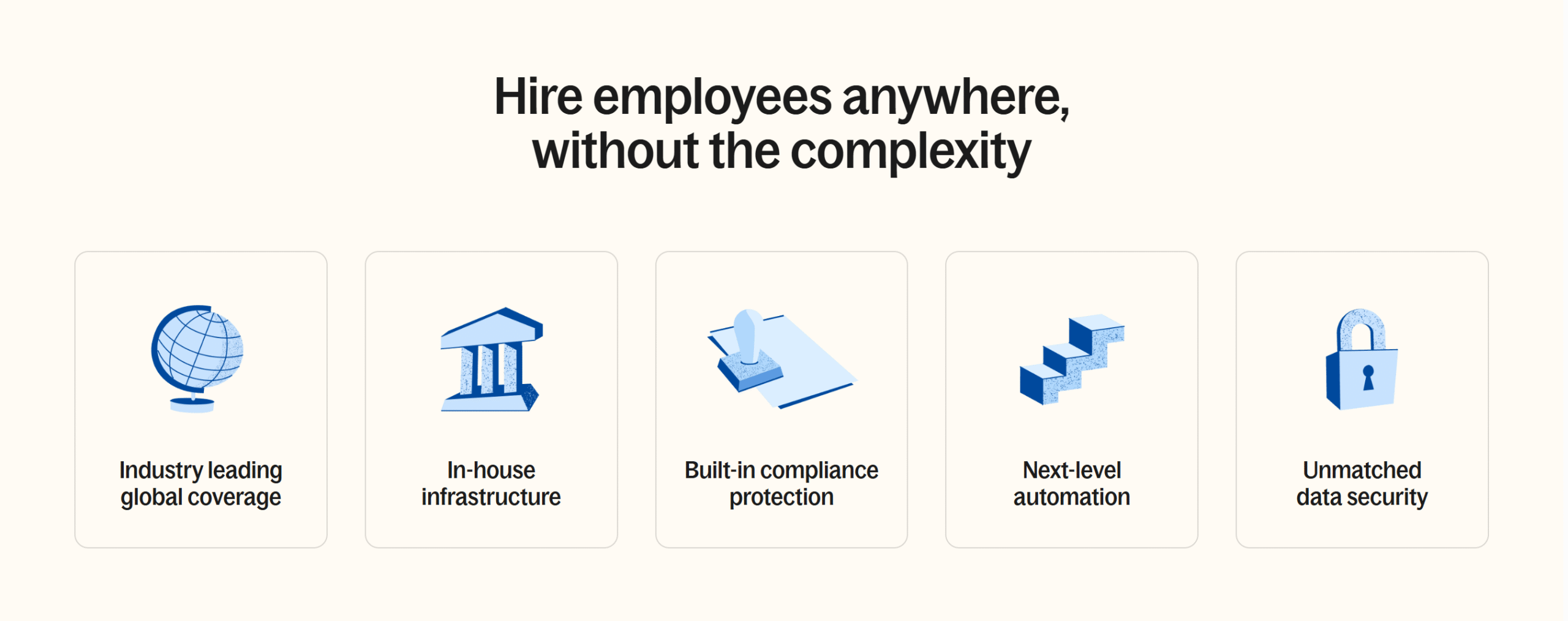
EOR is legally responsible for any employee you hire through the platform.
It acts as your overseas worker’s employer, taking care of onboarding, compliance, payroll, taxes, and work permits.
Any compliance risk associated with the above functions is handled by the EOR.
PEO
A PEO, like an EOR, doesn’t take full responsibility for your employees.
Instead, it signs a co-employment contract with you, which allows it to handle certain parts of HR administration legally.
Some of the legal responsibilities of a PEO include payroll and tax filing, benefits administration, compliance guidance, and risk management.
It also helps you keep up with local laws and regulations.
HRMS
HRMS doesn’t have any legal responsibility to its clients.
Unlike EOR or PEO, it only provides a digital platform to manage core HR functions in-house.
You’ll, however, get built-in tools to ensure data accuracy and compliance.
For example, BambooHR has launched a new feature that automatically updates labor laws and provides template guides for areas such as leave, overtime, and disability benefits.
3. Payroll Management
EOR
An EOR not only onboard and offboard employees on your behalf but also processes multi-country payroll and handles any compliance issues.
The service typically includes salary and tax calculation, bulk payment, payslip generation, and tax filing.
Your EOR integrates time off, expenses, bonuses, and other compensation into the monthly payroll to send accurate salaries.
PEO
PEO’s payroll management is similar to an EOR, with a few key differences.
For one, it handles payroll for domestic employees only. Its service, however, covers everything from salary calculation and add-ons to tax filing and reporting.
Second, it’s not responsible for compliance errors.
While PEO manages the entire payroll process on your behalf, it doesn’t bear the risk of compliance errors.
HRMS
HRMS software provides an automated payroll system to generate accurate timesheets and disburse salaries.
All you need to do is add the required information in the system, such as compensation and taxes, and the software automatically generates payroll for you.
Most HRMS platforms offer payroll and tax calculation, direct deposits, payslips, and reporting.
4. Tech Support
EOR
EOR service is an online service.
You receive a digital platform to manage day-to-day activities, while the EOR’s in-house team handles the more complex tasks, such as employment contracts and payroll disbursement.
Despite the nature of the service, their tech support is basic.
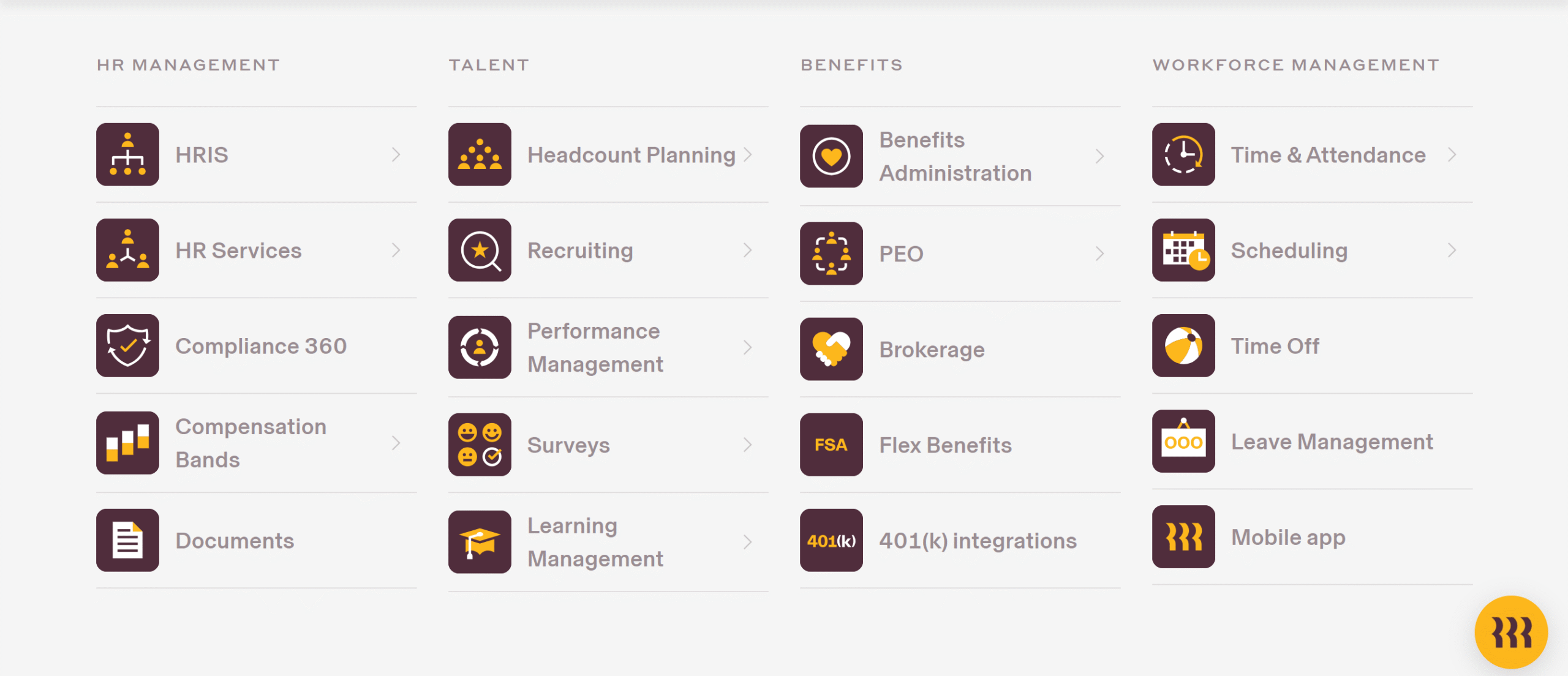
Some EOR platforms, like Rippling, may offer advanced workforce management tools with managed services, but most provide a simple HR app with basic integration.
PEO
PEO’s tech support largely depends on your chosen provider. If the platform offers both EOR and PEO services, its tech support would more or less be similar.
If you opt for PEO providers, like JustWorks, you might get better tech support.
In general, both EOR and PEO are outsourcing services, and their digital platforms cover all the essential functions required to manage onboarding, payroll, and compliance.
HRMS
HRMS is a comprehensive software.
It offers a suite of core HR tools and diverse third-party integrations.
A few HR modules built into the HRMS system are ATS, compensation planning, onboarding, time tracking, employee experience, and performance monitoring.
You can manage all the tasks from a single platform and provide self-service portals to your staff.
Compared to EOR and PEO, an HRMS delivers an advanced digital platform for HR management.
5. Cost
EOR
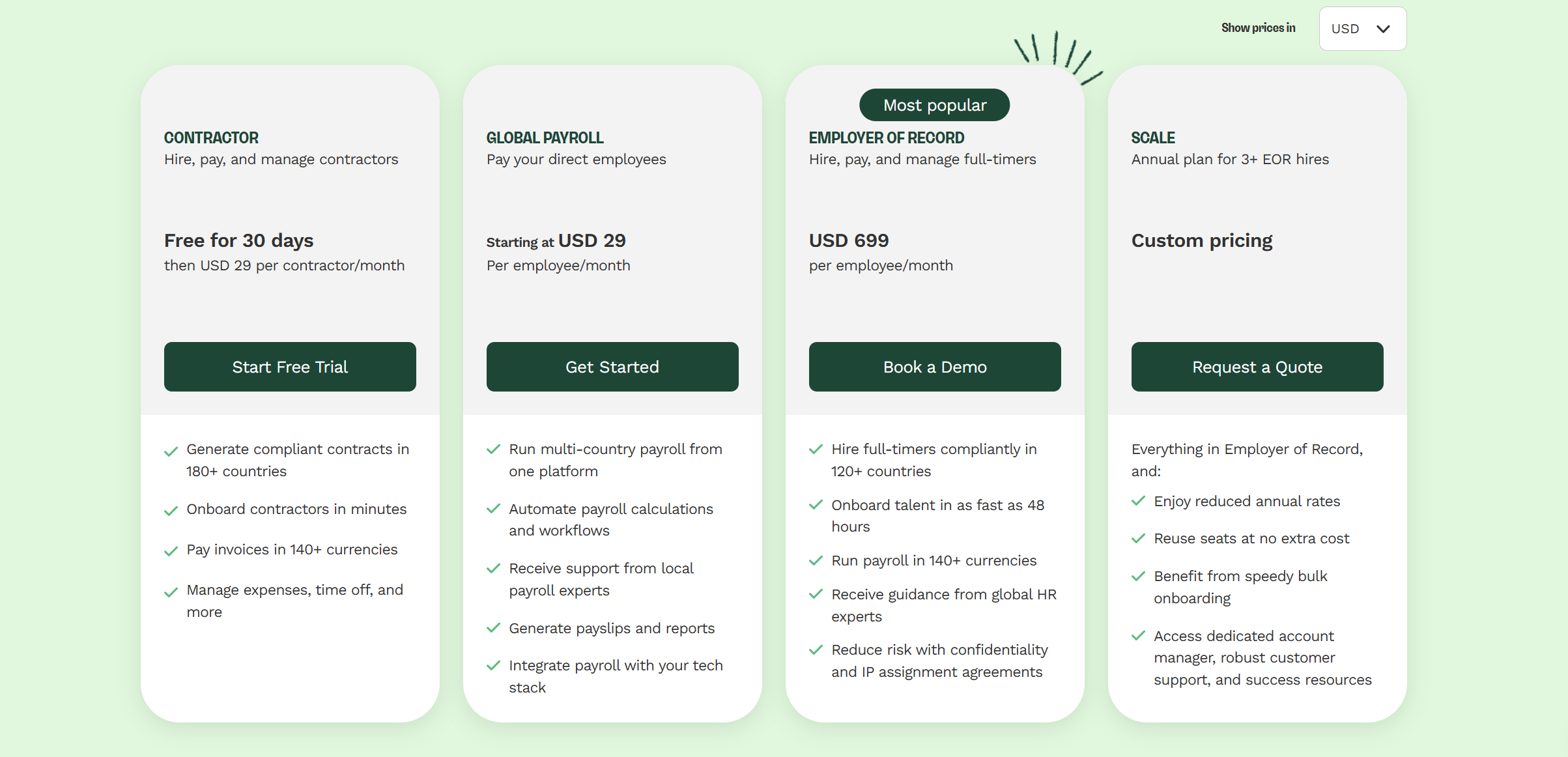
EOR is slightly expensive due to the nature of the service.
You have to pay a base fee per employee and separate charges for custom services, like background checks or visa assistance.
For example, Oyster charges $699/month per employee and sells benefits packages and visa sponsorship as an add-on.
Despite EOR’s premium prices, it’s still a budget-friendly option for startups. The cost of establishing your own entity is comparatively more expensive than working with an EOR.
PEO
PEO cost structure is flexible.
It either charges a certain percentage of your total payroll as its commission fee or takes a flat fee per employee.
For example, Rippling charges around 2-12% of total payroll, while JustWorks sells a fixed price package.
HRMS
HRMS price is pretty straightforward.
It’s a software product that sells monthly subscription packages for a flat fee.
For example, Orange HRM offers two packages. One gives you access to the basic modules, while the second unlocks advanced features.
6. Scalability
EOR
EOR is perfect for startup companies.
It allows you to test new markets and work with overseas employees without investing in any expensive setup.
That said, as you grow your business, you’ll find it a bit restrictive and expensive.
Mostly, it’s designed to help you in the initial phase.
PEO
PEO makes it easier to hire people from different states.
Startups can outsource most of their HR workflows at affordable rates and quickly expand their workforce as they grow.
The product is flexible and scalable.
PEO, however, is not ideal for companies looking to expand their business overseas.
HRMS
HRMS is built to support high volume.
It can be scaled up and down as you see fit and can be tailored to meet your business requirements.
Whether you are a startup, a growing company, or an established organization, you can use HRMS to manage your human resources.
Pros and Cons of EOR, PEO, and HRMS
Let’s explore the pros and cons of each platform.
I have shared a few key points to help you decide which option is better suited for your startup company.
EOR
Pros:
- Legally hire permanent employees in other countries.
- No need to set up legal branches overseas.
- Simplifies global payroll
- Handles compliance and taxes.
- Protection from legal penalties.
Cons:
- Packages are slightly expensive.
- Less control over some legal aspects of employment.
- Unsuitable for growing companies.
PEO
Pros:
- Manages domestic workforce.
- Simplifies HR, payroll, and benefits administration.
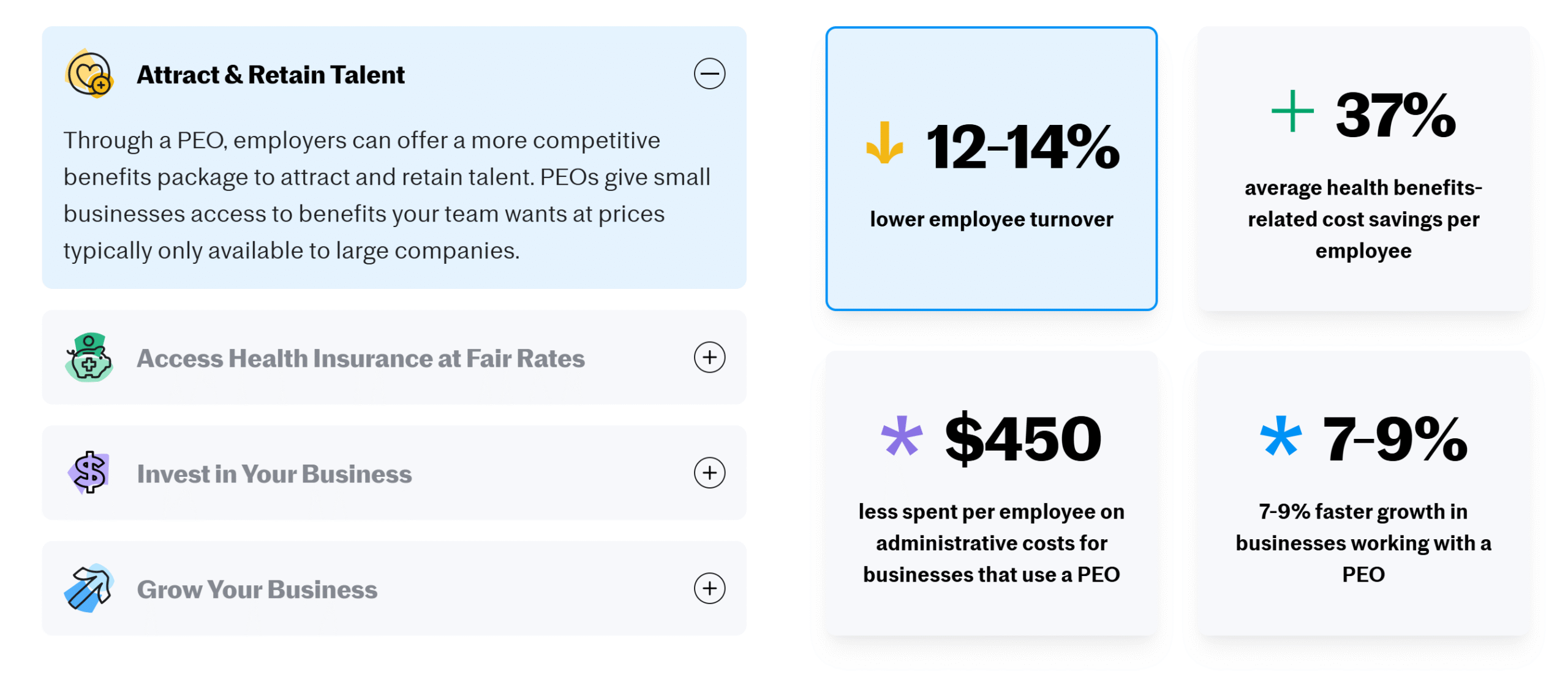
- Provides access to better health insurance.
- Offer compliance guidance.
Cons:
- Need a legal entity to hire a PEO.
- Work as a co-employer, limiting the accountability.
- Doesn’t support overseas workers.
HRMS
Pros:
- Organizes and centralizes employee data.
- Automates HR workflows.
- Improves employee engagement.
- Can be scaled as you grow.
- Accurate data for decision-making.
Cons:
- The initial setup is time-consuming.
- No third party bears any employee liabilities.
- Requires an internal staff to manage compliance.
What Does Your Startup Really Need?
Startups generally face HR challenges because they have to do everything from scratch, often with limited resources.
It leads to a high workload and exposes them to costly mistakes.
What a startup really needs is a third-party HR provider to reduce some of its administrative load. This would give them a breathing space to build a team and establish their systems.
With the right HR tools, startups can avoid getting bogged down by complicated paperwork. They can simplify most of their workflows to focus on growing their business.
Choose an EOR if:
- You are ready to expand your workforce overseas.
- You want to test a new international market without the commitment of a legal entity.
- Your top priority is to avoid legal risk in foreign jurisdictions.
Choose a PEO if:
- All your employees are within one country but spread across different states.
- You want to offer competitive benefits.
- You want to outsource complex payroll and tax filing but are comfortable with shared liability.
Choose an HRMS if:
- You work with both domestic and international teams.
- You have an in-house team.
- You can handle compliance management.
Conclusion
If you are exploring all three options for your human resource department, here are a few platforms you can try.
For EOR services, I recommend Deel and Remofirst. Deel sells a diverse range of global services, while Remofirst offers affordable packages.
ADP and JustWorks are excellent PEO platforms. They have good tech support, scalable packages, and better payroll management functions.
If you simply need an HRMS for your team, go for ZOHO People, BambooHR, or Rippling.
Zoho is affordable and can be scaled. BambooHR has a good payroll module and built-in compliance. And Rippling is a great choice for those who want all three services in one platform. It sells EOR, PEO, and HRMS products.
Visit their official websites and take free demos to compare their features. Good luck!


 A better way to manage projects and clients for freelancers
 Get through busy days like a breeze with Reclaim.ai