Traditional SEO research is incredibly effective, but it’s a slow process.
It demands time and commitment that solopreneurs and small businesses simply don’t have, making it incredibly hard to stay consistent.
With a ChatGPT/Claude prompt, you can squeeze the entire research process into a single instruction and get actionable insights in minutes.
It’s one of the best ways to cut the grunt work and get faster results.
In this article, I have shared the exact ChatGPT/Claude prompt I use for SEO research. You can copy/paste it and use it for your business.
Let’s start with the basics.
What Is SEO Research?
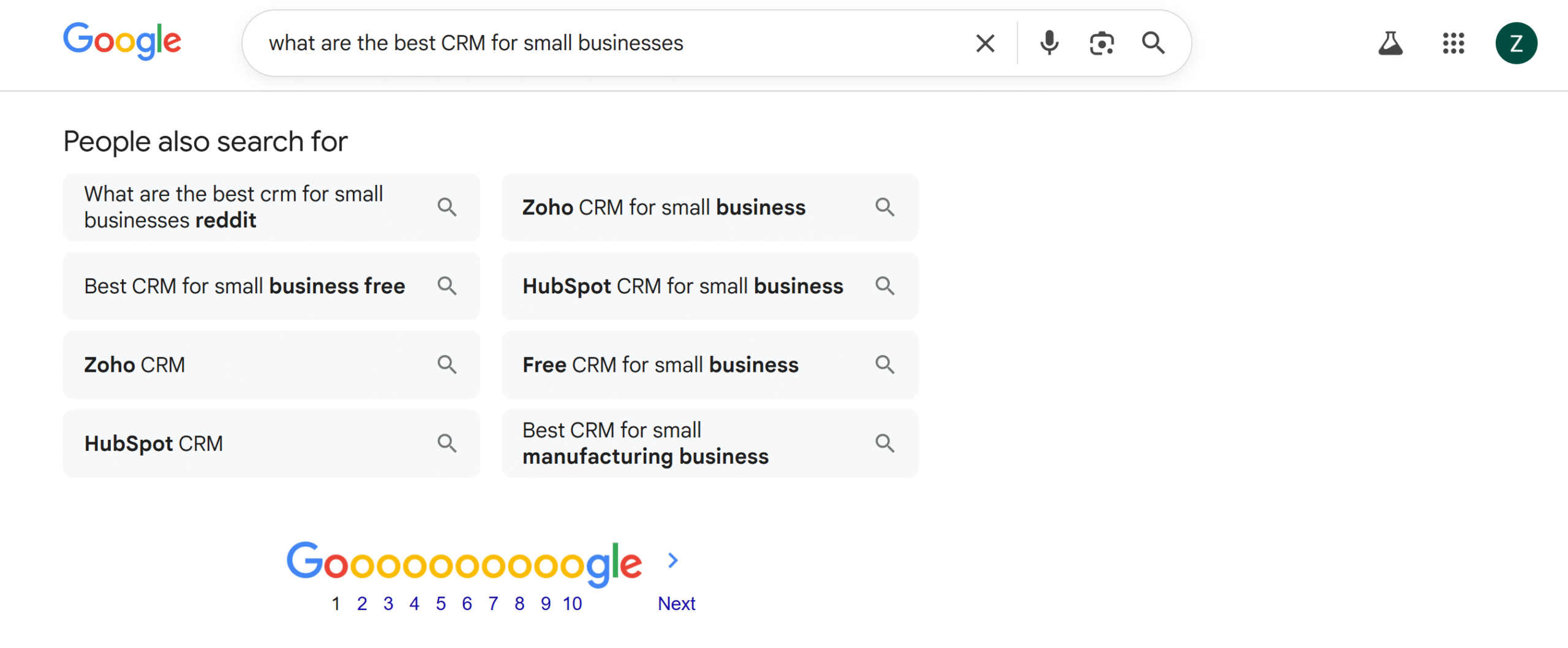
SEO research is a part of a search engine optimization strategy to improve your rankings on Google.
It involves finding what people are searching for and using that insight to create high-converting content.
This may sound complicated, but it really isn’t.
At its core, SEO focuses on one thing only: what type of content should I create to get ranked and attract my target audience? To do that, you need to understand how Google’s search engine works.
Google generally ranks content based on demand and relevancy. If your content matches what people are looking for, you have a higher chance of getting ranked.
SEO research analyzes Google search results and identifies those patterns, such as the type of content trending in the market and the intent behind searches.
It helps you understand your target audience’s search behavior and turns it into structured insights.
With this data, you get a clear path on what to produce and how to improve your content performance.
Here are the key elements of SEO research
- Keyword Research–The specific words people type in the search engine.
- Search Intent Analysis–Your target market and their pain points.
- Competitor Research–The type of content your competitors post.
- Topic Research–Ideas for the website content.
There are, of course, tons of other areas SEO covers, but I intend to focus only on on-page SEO research. (If you want to know more about on-page and off-page SEO, check out this guide.)
Now that we have a good idea of SEO research, let’s move on to the most interesting part of our discussion–prompts.
What Is An SEO Research Prompt
SEO research prompt is an instruction you give to an AI assistant, like ChatGPT/Claude, to generate SEO insights.
Instead of manually researching everything, you tell ChatGPT to find keywords, identify search intents, suggest topics, and more.
It speeds up your research process and gives you structured data you can work with.
One of the biggest advantages of an AI assistant is its efficiency.
AI can complete research in minutes that would have normally taken hours. It can also quickly identify patterns that would have gone unnoticed if done manually.
The only drawback you’ll find here is its limited judgment.
ChatGPT and Claude work best as AI assistants. You still have to involve yourself in every step. The prompt simply improves work efficiency.
To understand this better, let me compare AI research with traditional SEO research.
What Is The Problem With Traditional SEO Research
Technically, there isn’t any problem with traditional SEO research.
In fact, it produces more accurate data to help you make well-informed decisions.
The main challenge is time.
As a solopreneur, you wear multiple hats just to keep things moving. You are not only managing the main operations but also business development and communication.
Traditional SEO optimization requires time and effort that’s hard to maintain on a tight schedule.
Think about it.
Most websites take around three to six months of consistent optimization to show noticeable results.
Maintaining that level of consistency is a real challenge for solopreneurs, especially when you are already working over 50 hours a week on your business.
There’s also a matter of using SEO tools to gather insights.
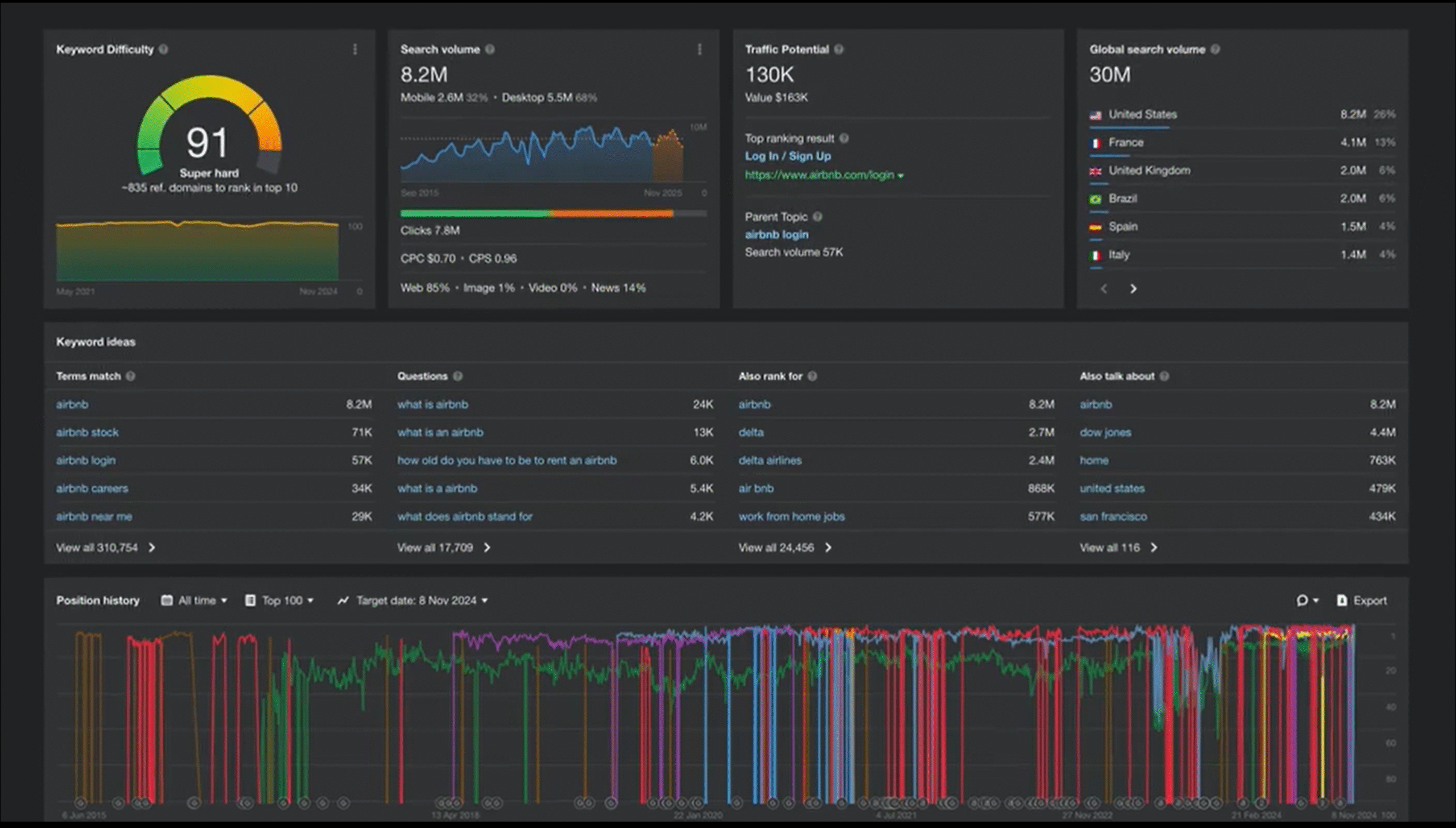
In the traditional SEO research process, most strategists rely on tools like Ahrefs, SEMrush, and Google Analytics to gather information. The monthly subscription cost can really stack up, adding undue financial pressure.
Outsourcing SEO isn’t always a viable option either, especially when you face budget constraints.
If you put all of them together, you can pretty much see why traditional SEO research can be a challenge for the solopreneur.
How an AI Assistant Simplifies SEO Research
An AI assistant like ChatGPT/Claude changes the way you do your research.
Instead of taking time out for SEO, you can do it alongside your routine work without disrupting your workflow.
All you need is a good prompt.
With just a solid prompt, you can generate high-quality keywords, gather content ideas, and explore different ways to capture your audience. You don’t need to use multiple SEO tools to gather information or structure your data–AI handles everything in one place.
Another advantage of an AI assistant is its flexibility.
You can use it both as a research assistant and a thinking partner.
Meaning, AI can help you suggest ideas and give directions when you are unsure of what to do next. If you know how to phrase your request, you can get maximum output from your AI assistant.
ChatGPT and Claude also make SEO research simple.
You don’t need a technical background to get started. They can break complex data into readable insights, allowing you to learn and apply SEO strategies at your own pace.
This makes AI a handy tool for solopreneurs and small teams with limited human resources.
All in all, an AI assistant is more affordable, efficient, and flexible.
The Exact Prompt I Use For SEO Research
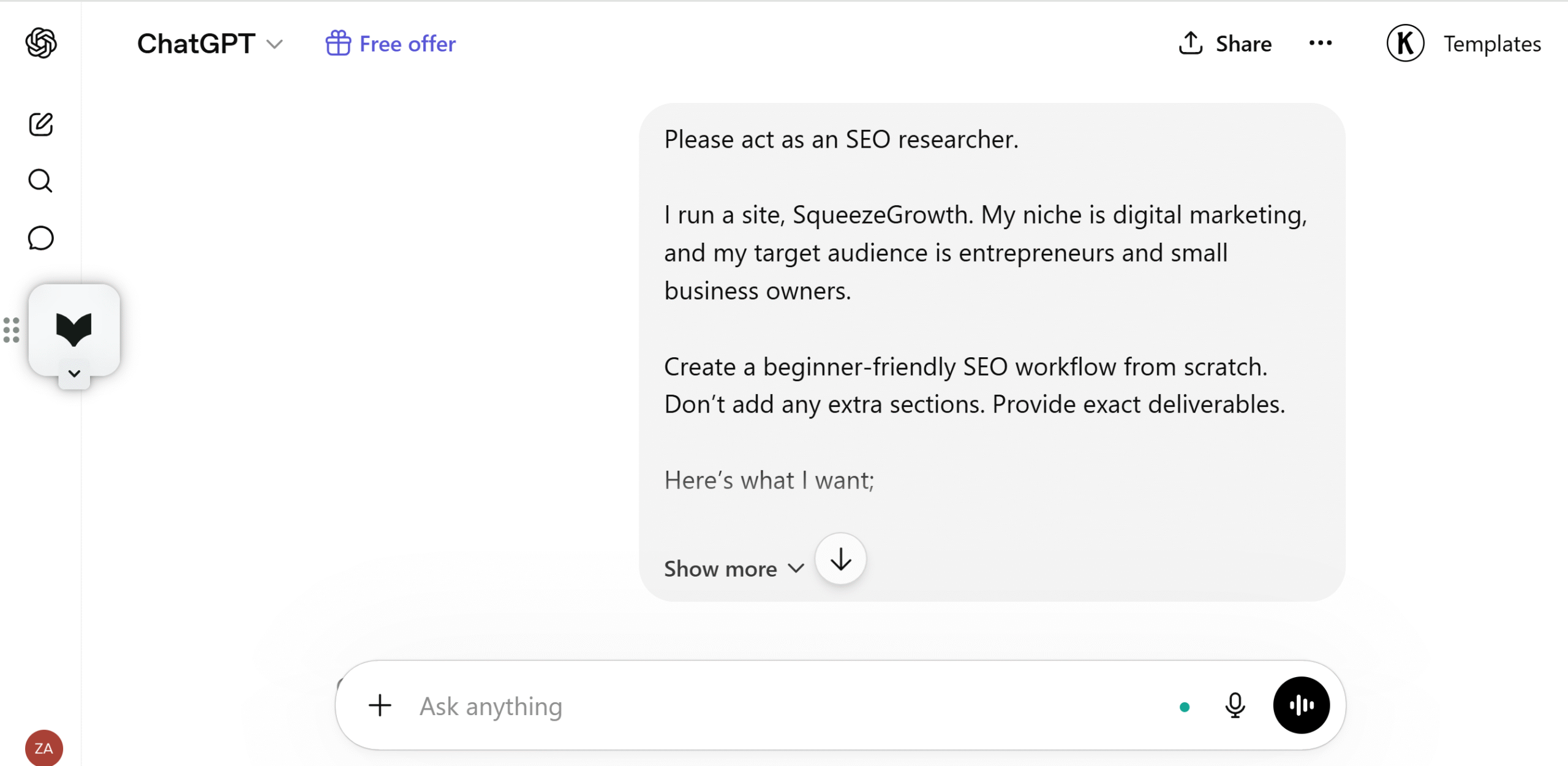
Below, I have shared the exact ChatGPT prompt I use for SEO research.
I have used SqueezeGrowth to show how a prompt works and how to incorporate all the key elements of SEO research into it.
You can use this prompt on Claude as well.
Here’s my instruction to ChatGPT:
Please act as an SEO researcher.
I run a site, SqueezeGrowth. My niche is digital marketing, and my target audience is entrepreneurs and small business owners.
Create a beginner-friendly SEO workflow from scratch. Don’t add any extra sections. Provide exact deliverables.
Here’s what I want;
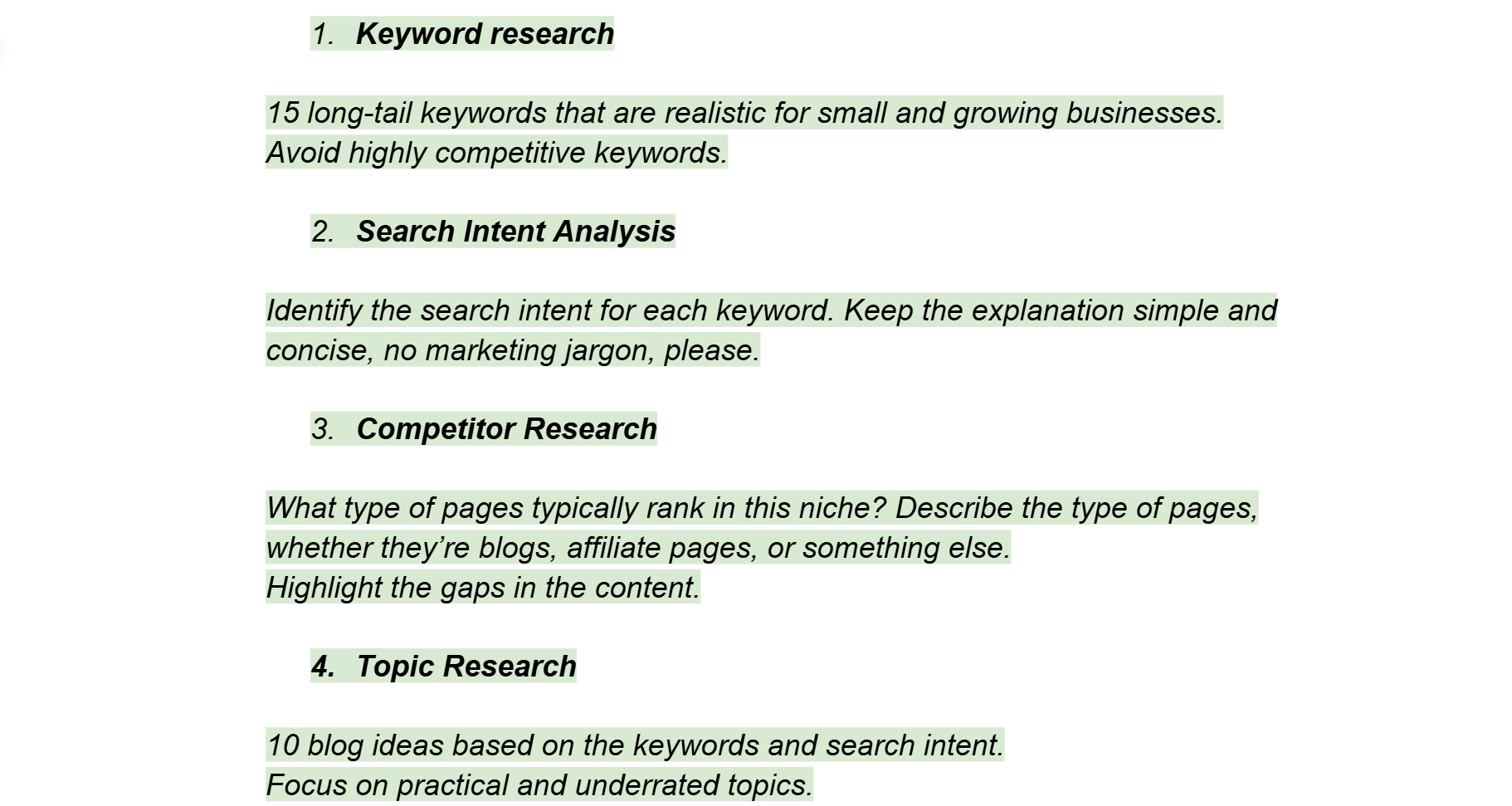
- Keyword Research
10 long-tail keywords that are realistically searched by small and growing businesses. Avoid highly competitive keywords.
- Search Intent Analysis
Identify the search intent for each keyword. Keep the explanation simple and concise, with no marketing jargon.
- Competitor Research
What type of pages rank in this niche? Describe the type of pages, whether they are blogs, affiliate pages, or something else.
Highlight the gap in the content.
- Topic Research
10 blog ideas based on keywords and search intent.
Focus on practical and underrated topics.
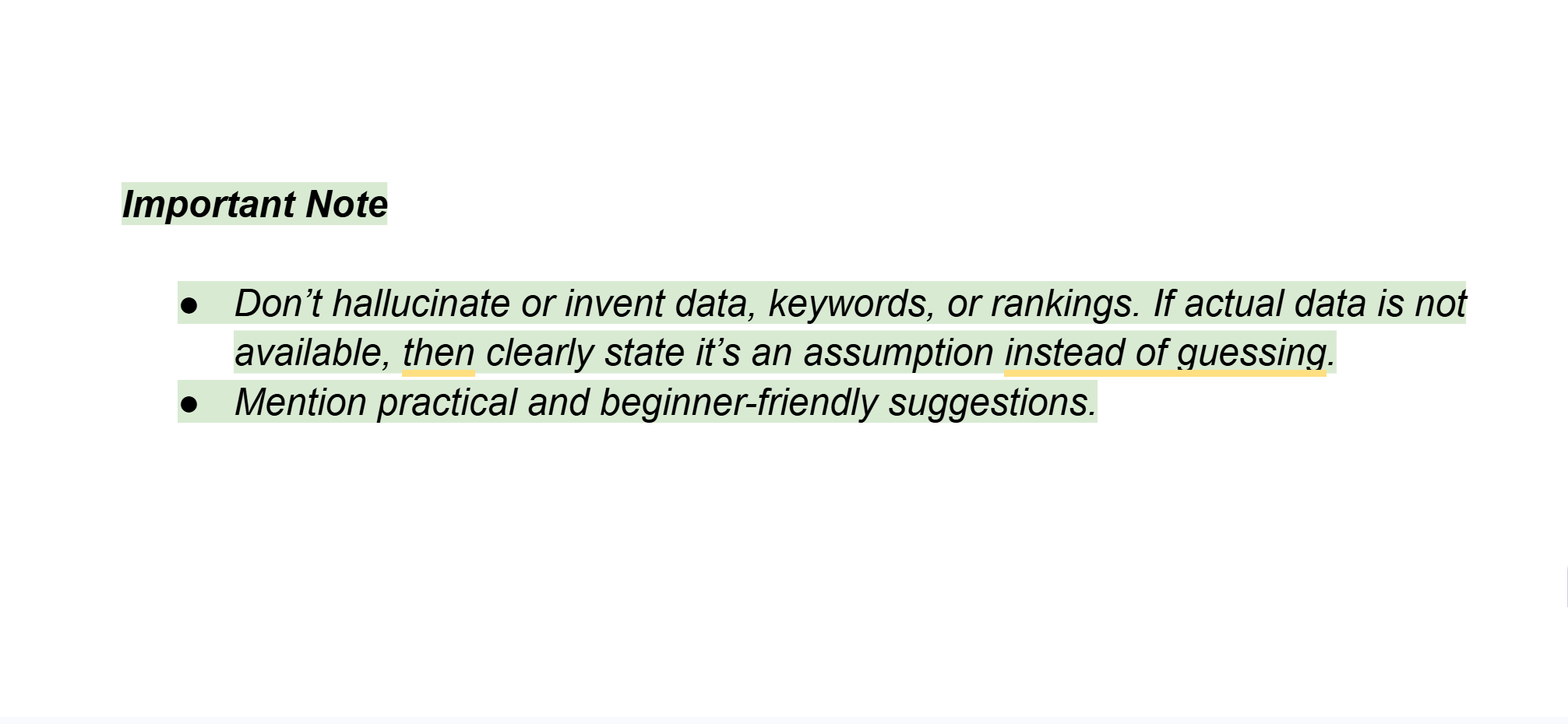
Important Note
- Don’t hallucinate or invent keywords and rankings. If actual data is not available, then clearly state it as an assumption instead of guessing.
- Mention practical and beginner-friendly suggestions.
I have created this format based on personal experience, expert recommendations, and ChatGPT’s suggested structure.
This is the result I got.
ChatGPT Response
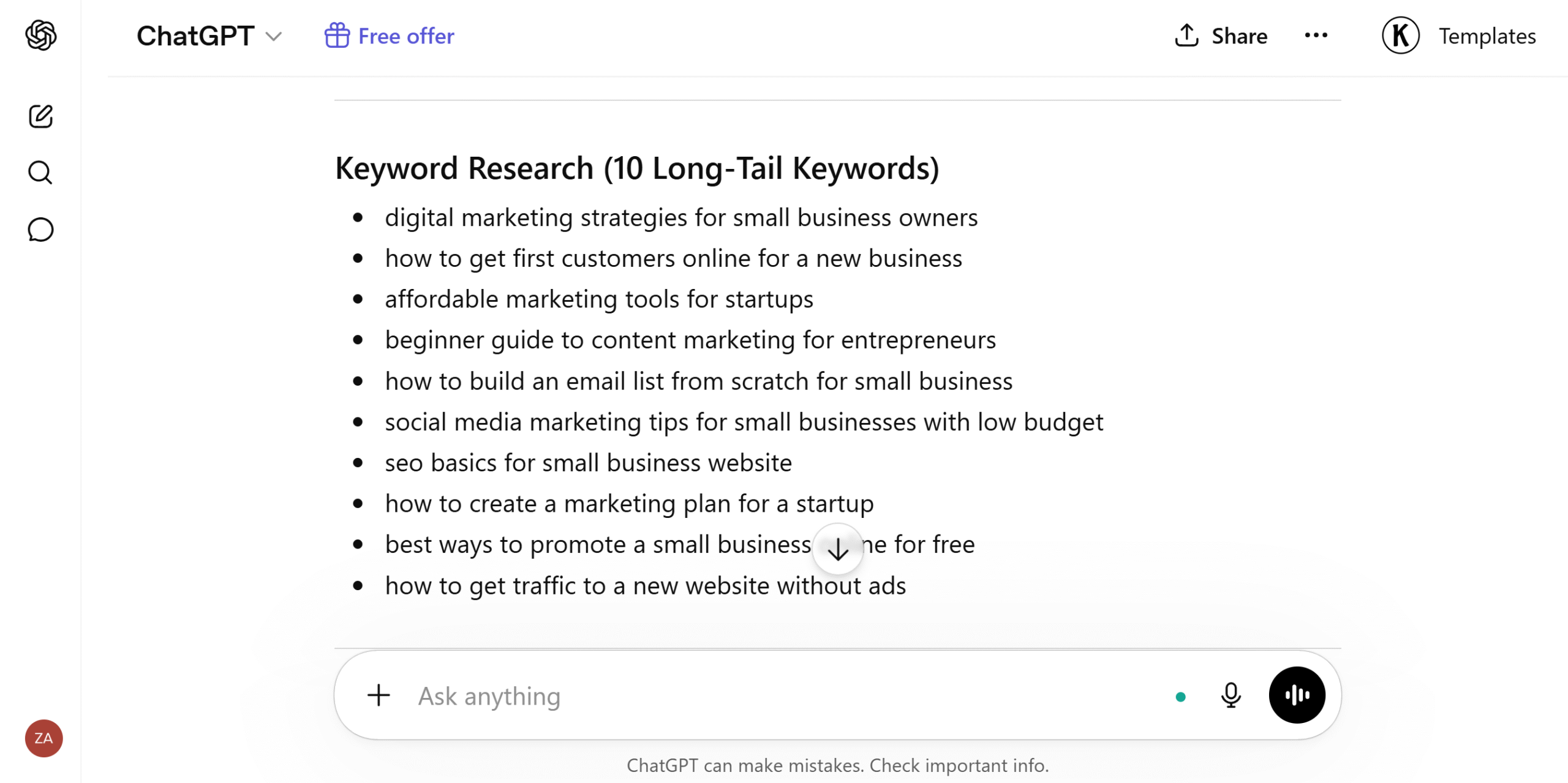
Keyword Research
Assumption-based (not data-verified; no live keyword tool used)
These keywords are based on common search behavior from beginners in digital marketing and small business growth.
- How to create a digital marketing strategy for a small business
- Beginner’s Guide to SEO for a small business website
- How to get first customers for a new online business
- Content marketing plan for small business owners
- How to grow website traffic without ads
- Email marketing setup guide for beginners
- How to write SEO blog posts for beginners
- Social media marketing plan for startups
- Affordable digital marketing tools for small businesses
- How to generate leads online without paid ads
- How to build an audience from scratch online
- Simple sales funnel for small business beginners
- How to promote a new business with no budget
- SEO checklist for new websites
- How to validate a business idea using online marketing
Search Intent Analysis
Each keyword below reflects what the user is trying to achieve when searching for it.
- How to create a digital marketing strategy for a small business
Intent: Informational
The user wants a clear step-by-step plan to build a strategy from scratch.
- Beginner’s Guide to SEO for a small business website
Intent: Informational
The user is trying to understand SEO basics in a simple way.
- How to get first customers for a new online business
Intent: Informational
The user wants practical methods to acquire early customers.
- Content marketing plan for small business owners
Intent: Informational
The user wants a structured content system they can follow.
- How to grow website traffic without ads
Intent: Informational
The user is looking for free traffic strategies.
- Email marketing setup guide for beginners
Intent: Informational
The user needs a simple setup process explained step by step.
- How to write SEO blog posts for beginners
Intent: Informational
The user wants guidance on writing optimized blog content.
- Social media marketing plan for startups
Intent: Informational
The user wants a simple and actionable social media strategy.
- Affordable digital marketing tools for small businesses
Intent: Commercial
The user is comparing tools before choosing one.
- How to generate leads online without paid ads
Intent: Informational
The user wants free lead generation methods.
- How to build an audience from scratch online
Intent: Informational
The user wants a clear growth strategy for beginners.
- Simple sales funnel for small business beginners
Intent: Informational
The user wants to understand the funnel structure in a simple way.
- How to promote a new business with no budget
Intent: Informational
The user is looking for free promotion methods.
- SEO checklist for new websites
Intent: Informational
The user wants a structured SEO setup checklist.
- How to validate a business idea using online marketing
Intent: Informational
The user wants to test an idea before investing time or money.
Competitor Research
What typically ranks in this niche
Digital marketing SERPs are usually dominated by a few consistent content formats:
- Long-form guides
These are step-by-step educational articles covering SEO, content marketing, and traffic growth in detail. They rank because they fully satisfy informational intent.
- Listicle posts
Examples include “best tools,” “top strategies,” or “ways to grow traffic.” These perform well because they are easy to scan and match comparison-based searches.
- SaaS educational blogs
Marketing tools often publish guides to attract users. These pages rank due to strong domain authority and topical relevance.
Content gaps in this niche
Even though content volume is high, several gaps still exist:
- Most content is too theoretical and lacks real execution steps
- Beginner-focused explanations are often missing or incomplete
- Real-world constraints (like no budget or no audience) are rarely addressed
- Many articles feel generic and not tailored to small business realities
- Content is often long but not structured for quick action
Topic Research
These blog ideas are directly derived from the keyword themes and search intent patterns above.
- How to build a digital marketing plan from scratch for beginners
- SEO checklist for launching a brand-new website
- How to get your first 100 website visitors without ads
- Simple content marketing system for solopreneurs
- How to start email marketing when you have zero audience
- Beginner’s guide to writing SEO blog posts that actually rank
- How small businesses can grow online with no budget
- How to validate a business idea using simple online marketing tests
- A beginner-friendly guide to building a sales funnel step by step
- How to choose the right marketing channels for a small business
(You can download the prompt and read it at your convenience.)
Why Does This Prompt Work
This prompt works because it removes the guesswork and turns a general idea into well-structured deliverables.
Most people struggle with an AI assistant because their instructions are too broad to generate any meaningful results.
For example, if I tell ChatGPT to “find 10 keywords for digital marketing” without providing any context, it’ll default to generic answers.
You have to understand that AI assistants like ChatGPT don’t research like humans. They don’t “know” things or browse data in real-time; they generate results based on learned patterns from their training data.
So, if you ask ChatGPT to find the best SEO tools, it will likely show Ahrefs, SEMrush, or other popular tools like SurferSEO. Not because it researched them, but because they are the most talked-about tools.
The same applies to broader questions.
If you ask ChatGPT whether SEO is still the best marketing tool for web traffic, ChatGPT will probably say “yes.” Not because it checked the current state, but because SEO has worked well in the past.
Now, if you refine the prompt to “Is SEO still the best marketing tool to get web traffic in 2026?” You have given it a clear direction, and it adjusts its answer accordingly.
Your prompt determines your output. When you provide context, tasks, and scope, it produces the most specific results.
That’s why my prompt works.
How To Create A Prompt For SEO Research
Let me break down my prompt into simple steps to show you how to draft it.
This will help you understand the dos and don’ts so you can create the exact ChatGPT prompt for SEO research.
1. Assign A Role
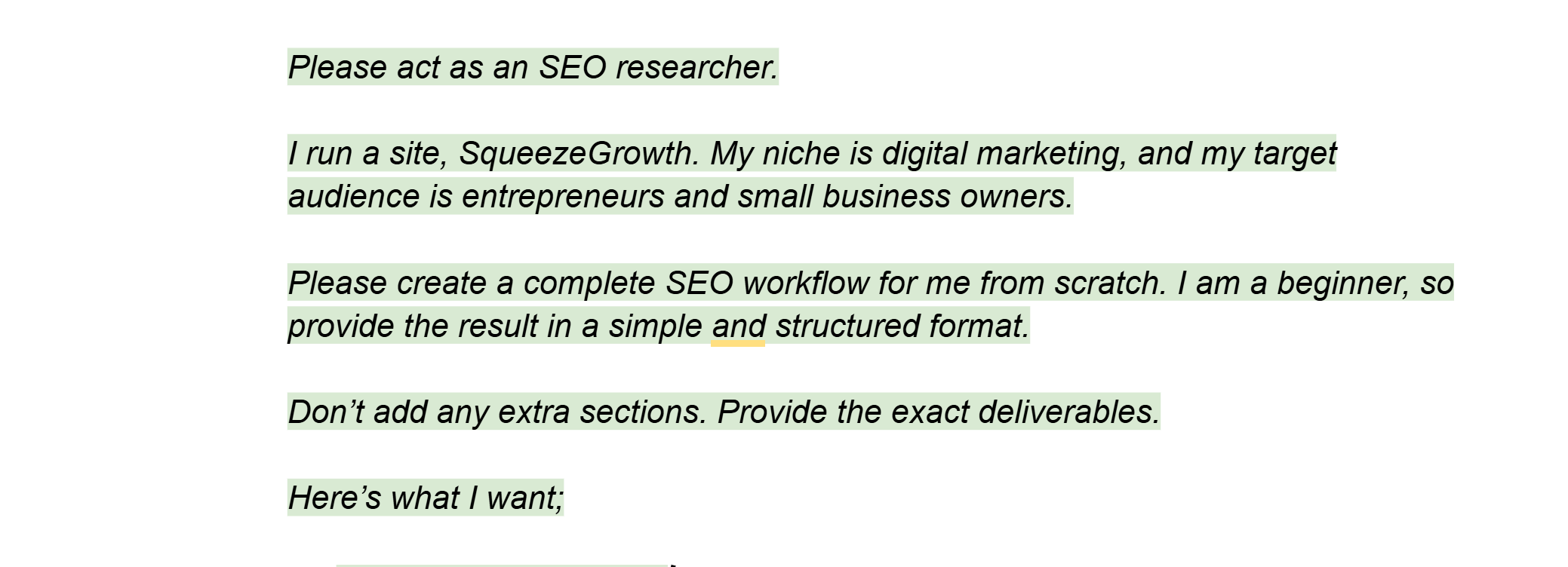
Whenever you draft a prompt, always start with a role.
If you check my prompt, I told ChatGPT to act like an SEO researcher, assigning it a specific job.
Without this line, the AI will most likely give generic answers.
Why?
Because AI tools like ChatGPT generally cover broad areas when you ask anything. They see many possibilities and choose a relevant but generic response to be on the safe side.
By assigning a role, you let ChatGPT think in a specific way. It will now prioritize data that’s relevant to an SEO researcher.
2. Context
Once you have given a role to ChatGPT, the next step is to provide context for clarity, such as your niche, target market, and goals.
You are basically explaining the situation.
If the AI assistant knows what your site is about and who you are targeting, it can focus on specific areas.
For example, if you sell a SaaS product for small clinics and ask ChatGPT to find keywords, you’ll likely get a list of “how to manage a clinic.”
But with the context, ChatGPT will drill down to high-intent keywords, such as “the best CRM for small clinics.”
3. Tasks
This is where the actual work begins.
Tasks are goals you give to ChatGPT to generate a structured response. The more specific your goal is, the better output you’ll get.
If your goal contains multiple objectives, it’s better to break it down into small tasks for clarity. It will make the request clearer and minimize misinterpretation.
If you check my prompt, I did exactly that.
I divided my goal into separate parts and assigned a different task in each section–find keywords, identify search intent, analyze my rivals’ pages, and search blog topics.
ChatGPT responded in the same structure, explaining each point under subheadings.
Remember, the key difference between a good prompt and a generic prompt is clarity. If you give a vague instruction, ChatGPT will probably deliver a mix of specific and unrelated ideas.
4. Restrictions
This is the last and most important part of the prompt.
AI models tend to fabricate data when real information is not available just to fill in the blanks. If you don’t set boundaries, you’ll receive answers that would look solid but are just assumptions.
The best way to avoid it is to instruct ChatGPT to stop guessing and highlight parts that are predictions.
This will override ChatGPT’s default response and restrict it from adding unnecessary information.
In my prompt, I gave three explicit instructions to ChatGPT–not to hallucinate, highlight assumptions, and give practical suggestions.
What I meant was not to make things up, mention if you are guessing, and keep your answers simple.
Conclusion
ChatGPT/Claude prompts don’t replace SEO research.
They simply speed up the process and give you a starting point to work from.
Once you get it right, you can get actionable insights without spending much time or effort.
Download the prompt here, study the structure, and start implementing it.


 A better way to manage projects and clients for freelancers
 Get through busy days like a breeze with Reclaim.ai