
If you are exploring tech tools and want to know what real users think, technology review platforms are one of the best places to start.
They are websites where you can read honest reviews, compare different tools, and get a clear idea of what you’re paying for before you commit.
The thing is, not every platform is equally helpful. Some have massive databases but inconsistent reviews.
Some are great for quick browsing, while others are better for in-depth research.
And a few are designed for very specific use cases, like finding open-source alternatives.
In this article, I have shared the seven best technology review platforms and what each one is actually good at. You can pick the one that fits your needs and start exploring.
What Is A Technology Review Platform And What Are The Best Platforms?
A technology review platform is an online website that showcases software products based on user reviews and expert insights.
You can discover new tools, check alternatives, and get in-depth information on the products.
Top Features To Look For In A Technology Review Platform
- B2B software product directory.
- Comparison tools and alternatives.
- User reviews and product ratings.
- Feature breakdown with prices.
Here’s the list of the top technology review platforms that provide all the features mentioned above.
| Platform | Best For | Free for Buyers | Vendor Pricing | Database Size |
|---|---|---|---|---|
| G2 | Largest review volume | Yes | From $3,000 | Very Large |
| SoftwareFinder | Personalized recommendations | Yes | Custom | Medium |
| SoftwareSuggest | Indian market focus | Yes | From $4,000 | Large (50k+) |
| TrustRadius | In-depth, vetted reviews | Yes | ~$30k/year | Small (Enterprise) |
| Capterra | Side-by-side comparison | Yes | Free listing + PPC | Very Large |
| SourceForge | Open-source software | Yes | Free + paid promos | Large |
| AlternativeTo | Finding software alternatives | Yes | Free | Medium |
1. G2
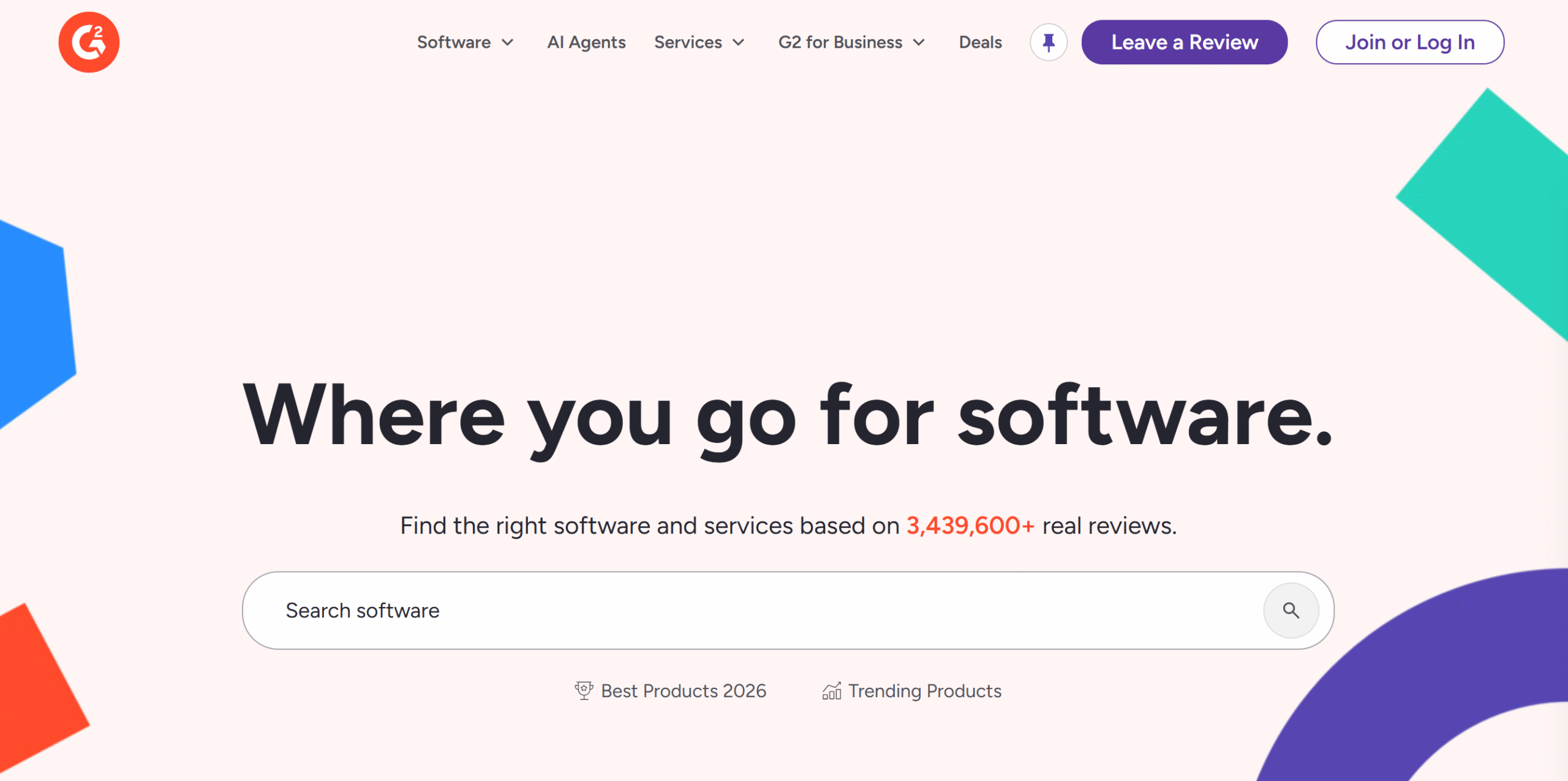
G2 is a go-to platform for technology product reviews.
It has one of the largest databases and attracts millions of users and vendors globally.
Core capabilities of G2 include product reviews, software discovery, alternative listings, and pricing information. You can easily tailor your search results to shortlist apps and contact the sellers directly from G2.
The unique selling point of G2 is its review volume.
It gives you a broader perspective on the software’s usability, helping you understand what it’s good at and where it falls short.
Some of the user feedback might feel a bit promotional, but the overall volume of reviews gives you enough information to make a good purchase decision.
For vendors, G2 has an exclusive product called G2 Marketing Solutions. It’s a suite of lead-generation tools to increase your brand exposure and connect with potential customers. Vendors can check out the details here.
All in all, it’s a good platform for comparing various SaaS apps and finding alternatives.
Core Features
- Software product reviews.
- A diverse range of product categories.
- Search filters.
- Comparison and alternative listing.
- Pros and cons.
- Premium marketing tools for sellers, including buyer intent alerts.
- Dashboard and reporting.
Pros
- G2 has a massive database of software listings and reviews. The platform serves thousands of vendors and millions of visitors.
- You’ll get several ways to compare tools.
Cons
- The authenticity of the reviews is debatable. While most of them are genuine, many need cross-checking.
- Emerging sellers may struggle to get noticed without sponsorship.
Price
Both vendors and buyers can use G2 for free. The premium subscription for vendors starts at $3000.
2. SoftwareFinder
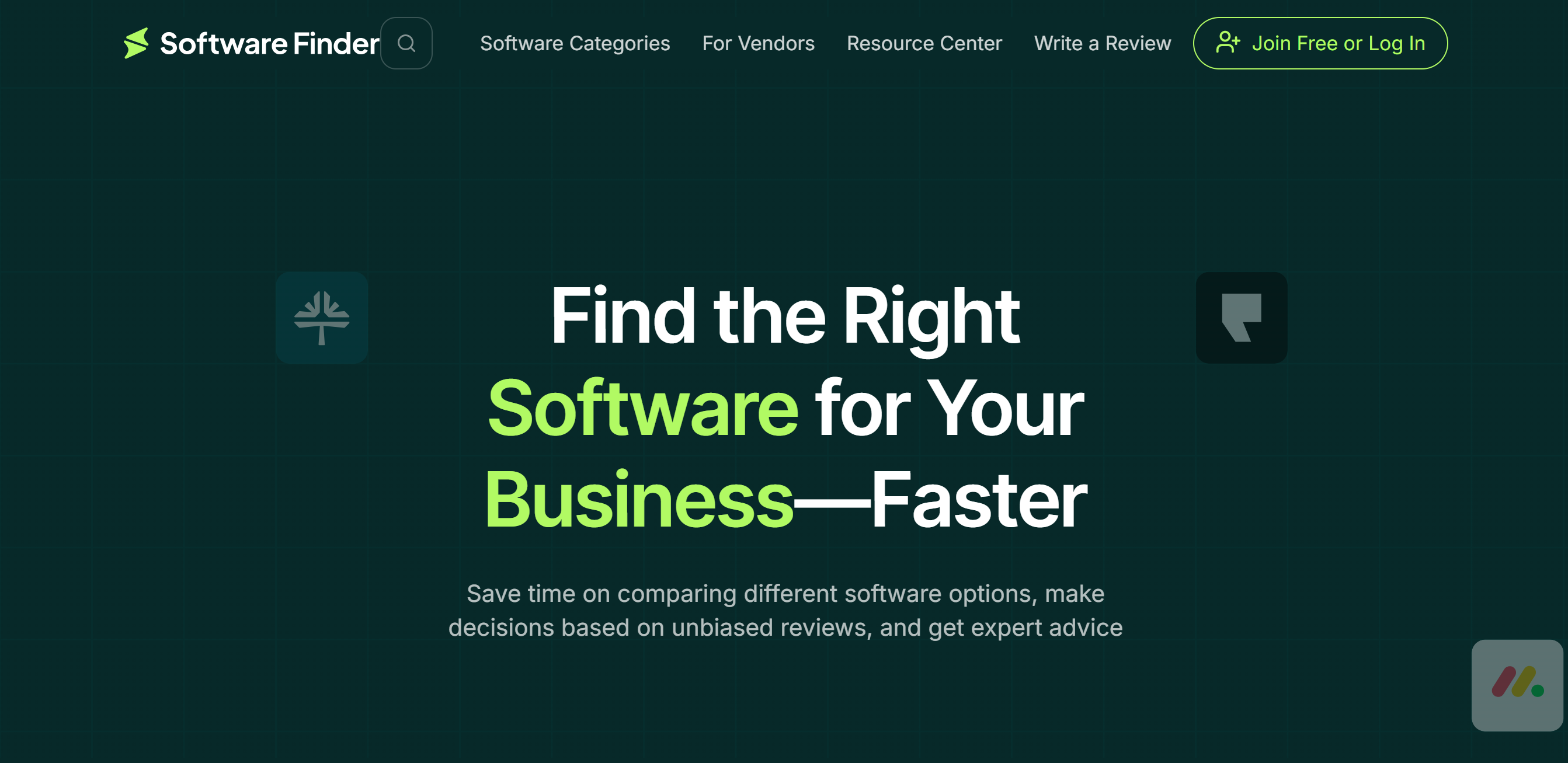
If you are just starting out and need a quick curated list of top products to get some ideas, SoftwareFinder is perfect for you.
It has a comparatively small database, but it is designed to speed up decision-making.
How?
SoftwareFinder offers a combination of tech and human guidance. You can discover relevant apps using its search filter, and consult its in-house team to get personalized recommendations for free.
All you need to do is share your requirements, and you’ll receive a tailored list from the SoftwareFinder’s team.
This is its unique selling point, which sets it apart from leading technology review platforms like G2. I believe only a handful of platforms, like SoftwareSuggest, offer this feature, and it’s on my list.
Overall, you can use SoftwareFinder to browse over 1000 categories, including AI, accounting, CRM, productivity, and service-based tools.
Core Features
- A database of B2B software products.
- Software discovery and search filters.
- User and expert reviews.
- Detailed reviews and demo requests.
- Feature breakdown.
- Comparison tool.
- Pros and cons.
Pros
- SoftwareFinder is clutter-free and straightforward. The website’s visual elements are well-placed to reduce distractions.
- You can get personalized recommendations for free. It’s SoftwareFinder’s core strength.
- It’s an excellent lead generation tool for vendors.
Cons
- The database and review volume are smaller than those of leading tech review platforms like G2.
- The discovery tool is basic.
Price
SoftwareFinders is free for users, and vendors pay custom prices for listing and marketing.
3. SoftwareSuggest
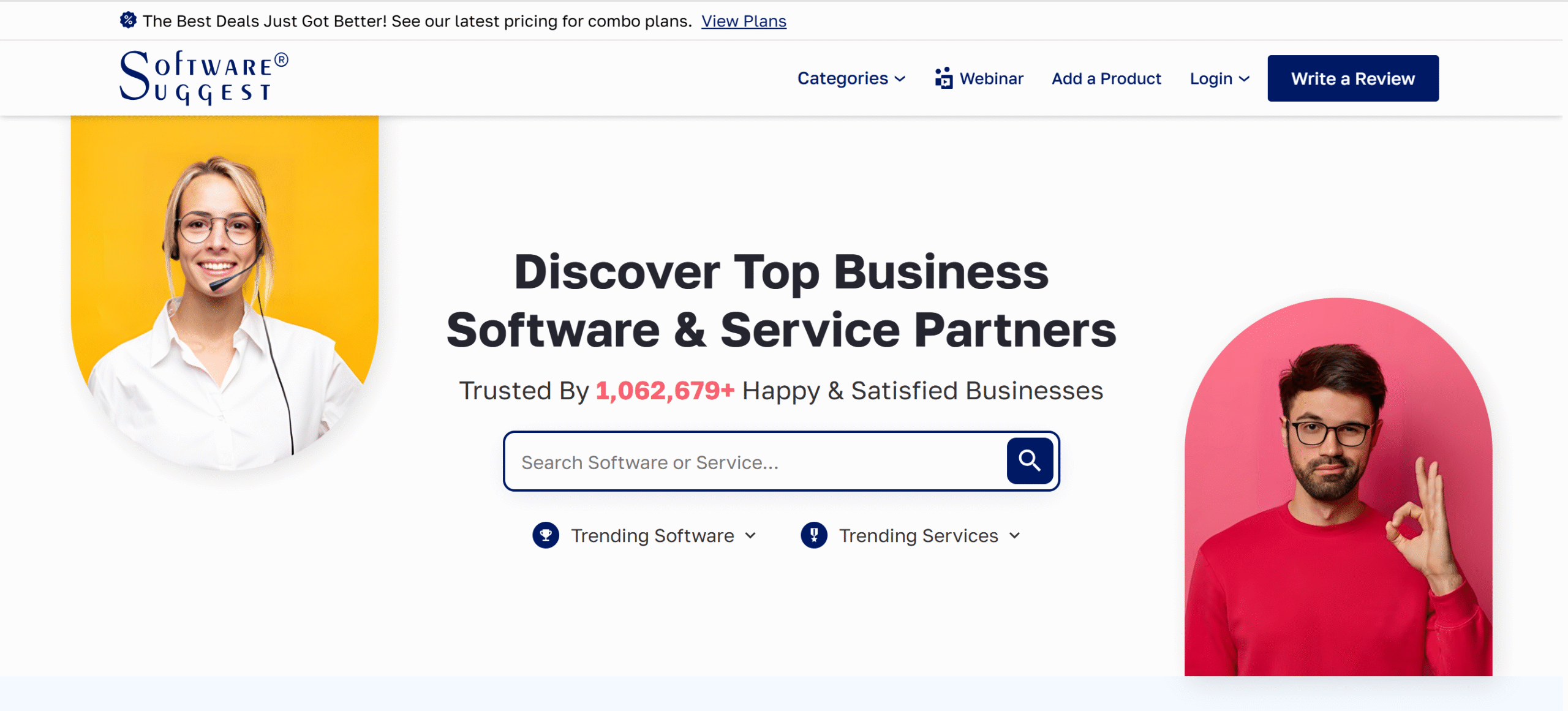
SoftwareSuggest has a lot in common with SoftwareFinder.
Like SoftwareFinder, it follows a hybrid model, offering a directory of B2B products with free consultation. That means you can explore different tools, compare their features, and get a second opinion from in-house experts.
You can find over 50k software and service-based apps on the platform and get in-depth product information. The discovery tool is basic, but its comparison engine and user reviews are strong.
SoftwareSuggest’s vendor tools, however, are less advanced. The platform focuses on high volume and visibility to attract more leads but delivers inconsistent lead data.
It’s not a deal breaker, as this is a common issue with technology review platforms, but I thought you should know.
One thing that distinguishes SoftwareSuggest from SoftwareFinder is its target audience.
While both are global platforms, SoftwareFinder caters to the US market, and SoftwareSuggest targets the Indian market.
Core Features
- A large database of B2B tech products.
- Discovery tool.
- Comparison and alternatives.
- User reviews and ratings.
- In-house expert recommendations.
- Lead generation tools for vendors.
Pros
- SoftwareSuggest offers detailed product information with personalized recommendations from in-house experts.
- It focuses on emerging products and SMBs.
Cons
- It mainly targets the Indian market. Unlike other platforms, its global coverage is low.
- It generates a high volume of leads, which might affect its lead quality.
Price
SoftwareSuggest prices start at $4000. Buyers can browse the platform for free.
4. TrustRadius
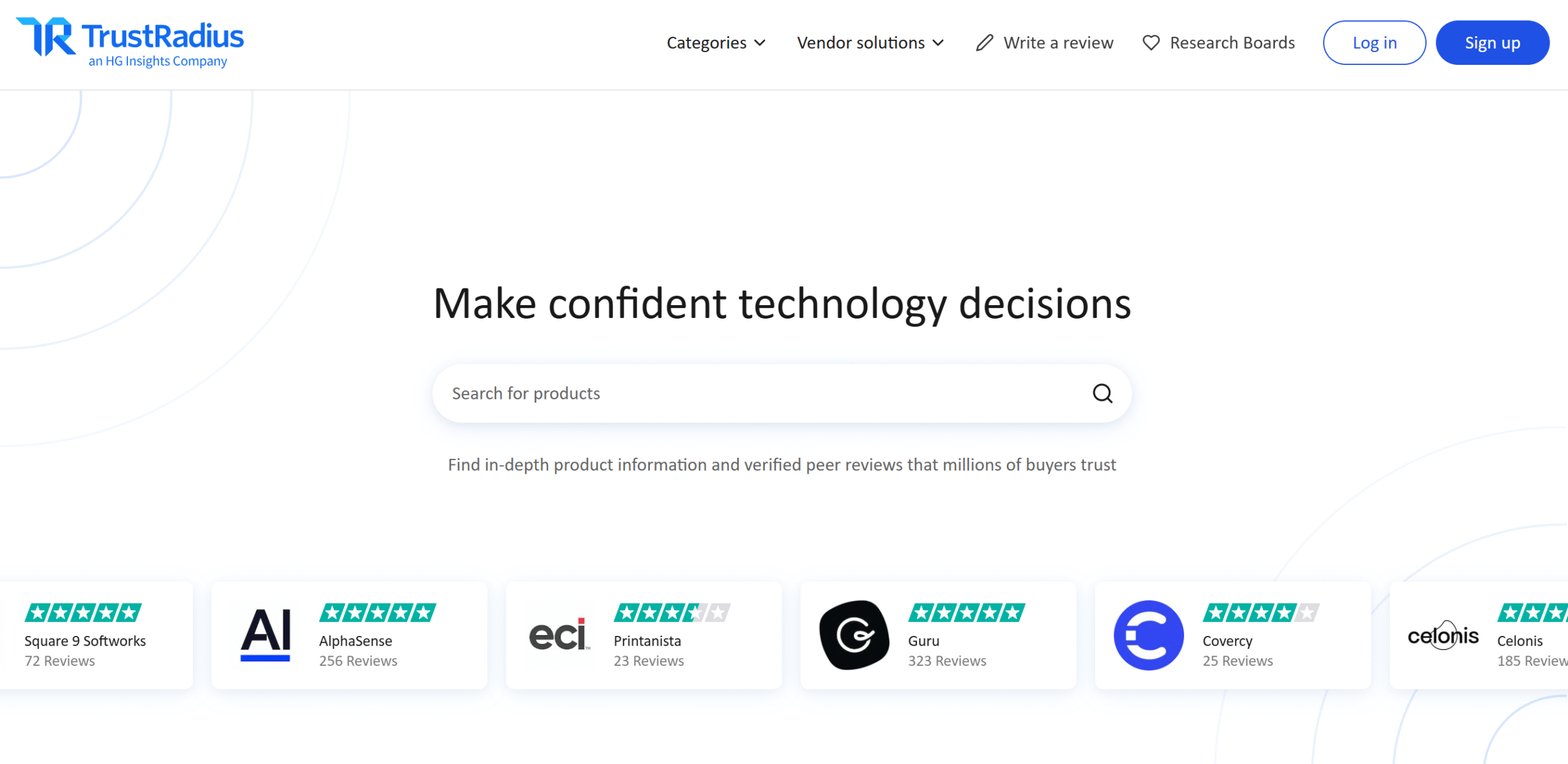
TrustRadius is best for its user reviews. It’s where you go when you need authentic and unbiased reviews.
The platform’s database is comparatively small, but it offers diverse software categories with screenshots of the apps.
It also has pretty strict review submission criteria, which is why most people find it credible.
The major drawback of TrustRadius is its limited product listings.
It serves a small percentage of sellers and focuses on enterprise-grade products. That means the emerging brands get low visibility.
On the other hand, its vendor’s features are excellent.
If you are a seller, you can attract qualified leads for outreach campaigns through SoftwareFinder and use their reviews on your website.
To summarize, TrustRadius is a good platform to get a second opinion.
Core Features
- In-depth reviews.
- Verification badges.
- Discovery tool.
- Alternative options.
- Buyers’ intelligence data for vendors.
- Content licensing.
- Analytics and reporting.
Pros
- TrustPilot has an excellent vetting process, which improves its review quality.
- It provides strong lead-generation tools to vendors.
Cons
- It’s not designed for quick browsing. If you want to discover new tools or shortlist products, this platform is not the best place for that.
- It’s a bit pricey for vendors, given its low traffic.
Price
TrustRadius charges around $30k per year for product listing. Software buyers, however, can browse the platform for free.
5. Capterra
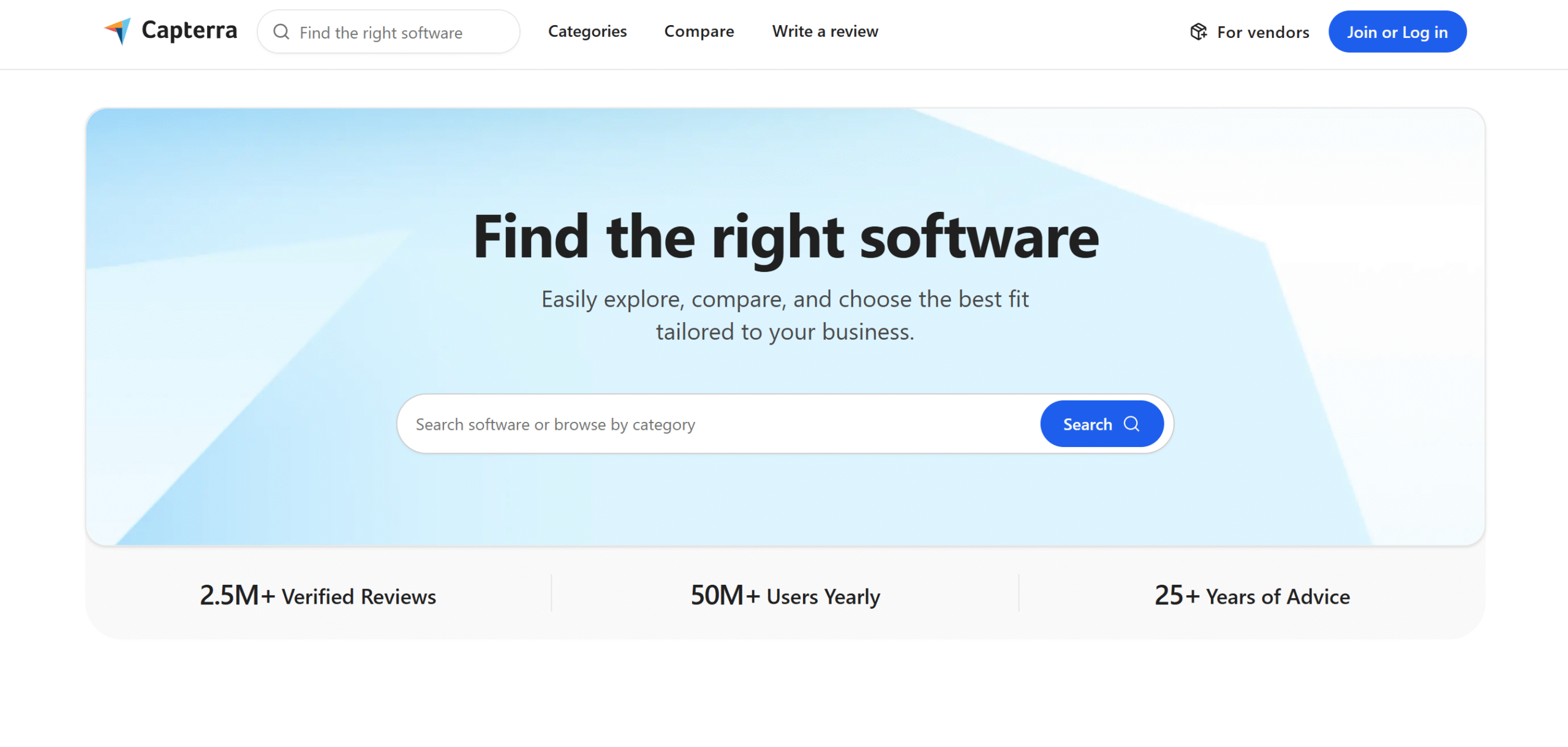
Capterra is one of the oldest SaaS directories.
It’s highly reputable and more selective about the B2B tools it displays, which makes it a good platform for product research.
On Capterra, you can explore tons of software categories and get in-depth information on different tools. The platform offers several advanced filters, such as interface and integrations, so you can get all the information you need to make a decent purchase decision.
The reviews are also verified by the in-house team before publishing.
The general sentiment about the user reviews, however, is somewhat mixed, but the submission criteria are pretty strong.
The core strength of Capterra, however, is its comparison tool.
It lets you compare multiple products side-by-side, allowing you to see their features, prices, integrations, and reviews on one screen. It’s an incredibly convenient feature, and you’ll not find it on every technology review platform.
Capterra is also ideal for emerging vendors. It sells a PPC model, making it easier for new vendors to list their products and gain brand exposure.
Just a heads-up. There’s a speculation that the pricing structure may change after its recent acquisition by G2. So, if you’re a vendor, you might want to hurry up before it happens.
Core Features
- B2B product discovery.
- Side-by-side comparison.
- A diverse range of categories.
- Pros and cons.
- PPC model for vendors.
- Verified reviews.
Pros
- Capterra has a large database of B2B software and easy navigation tools.
- The comparison feature is its unique selling point.
Cons
- Some of its ratings might be influenced by sponsorship due to its PPC model. This is something you’ll find on several review platforms.
- The discovery tool is basic compared to other technology review platforms. I didn’t find any filter to tailor my search.
Price
Buyers can browse Capterra for free. Vendors can also list the products for free.
Capterra charges for sponsored ads only.
6. SourceForge
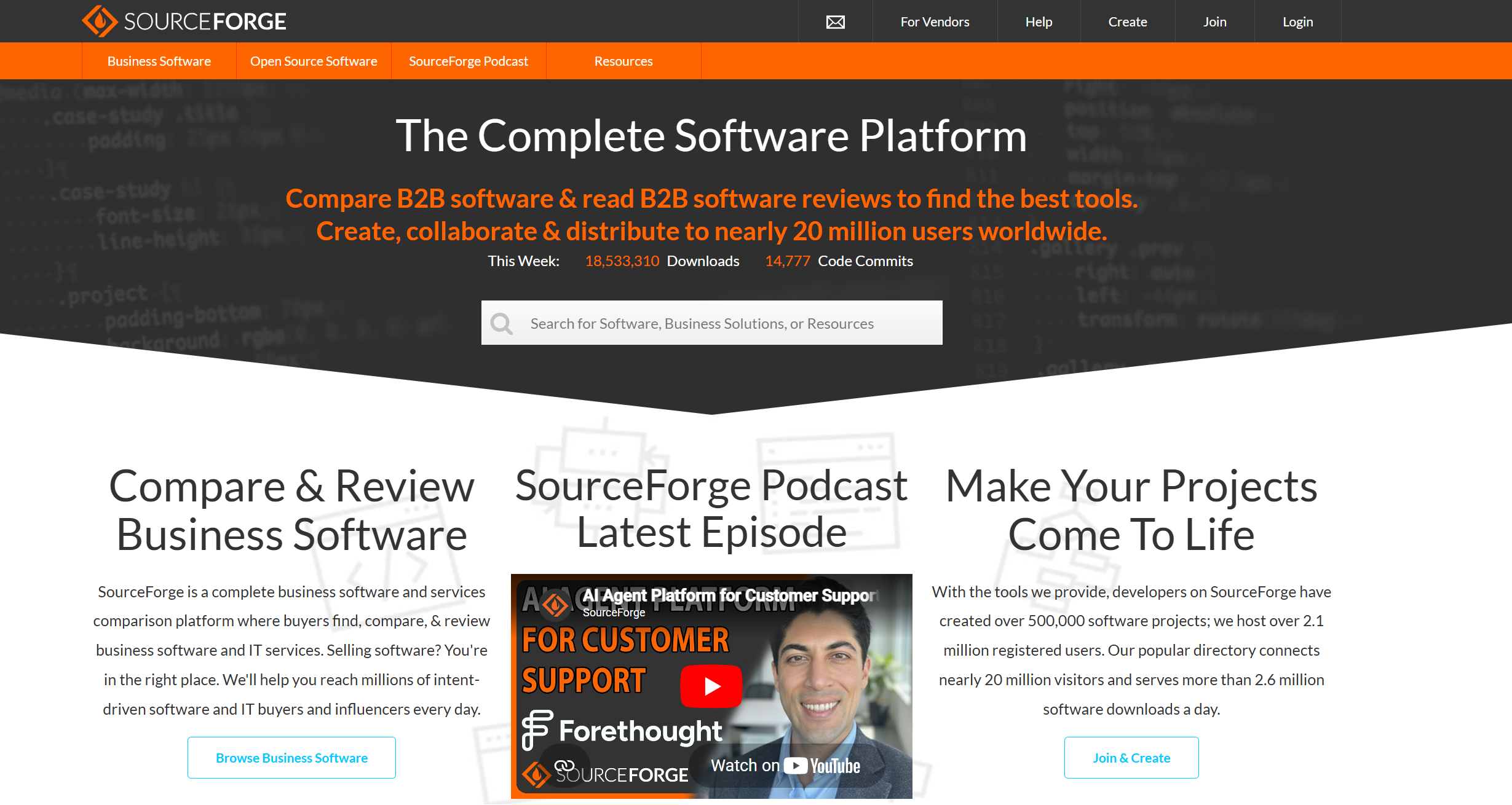
SourceForge is a little different from other technology review platforms.
The interface is similar, but the type of products it displays attracts a wide range of users.
Unlike other review platforms, SourceForge doesn’t focus mainly on SaaS tools. You’ll find IT products, service platforms, and developer apps, among other things.
It also lets you search for open-source software products separately and download them directly from the platform.
That was, in fact, SourceForge’s main purpose when it was initially launched. Later, it expanded its product line and added paid tools to its repository.
If you are looking for tech tools or plan to switch apps and want a free version of the same software, SourceForge can find similar software for you.
Core Features
- Open-source and paid software directory.
- Technology apps discovery.
- A high range of categories.
- Product information and user reviews.
- Alternatives and comparisons.
- Software recommendations.
Pros
- SourceForge is best for tech-heavy tool discovery.
- You can find a separate category for open-source software products.
- Vendors can list their products for free. It only charges for promotions.
Cons
- The interface is less intuitive than modern technology review platforms.
- The lead generation is weak for vendors. Most of the visitors are those who are simply exploring tools and aren’t ready to buy.
- User reviews are limited. I think it’s because the platform started out as a free software hosting site, so its main focus wasn’t on user reviews.
Price
SourceForge is free for both visitors and vendors.
For marketing and promotions, it offers several premium packages. The information is available here.
7. AlternativeTo
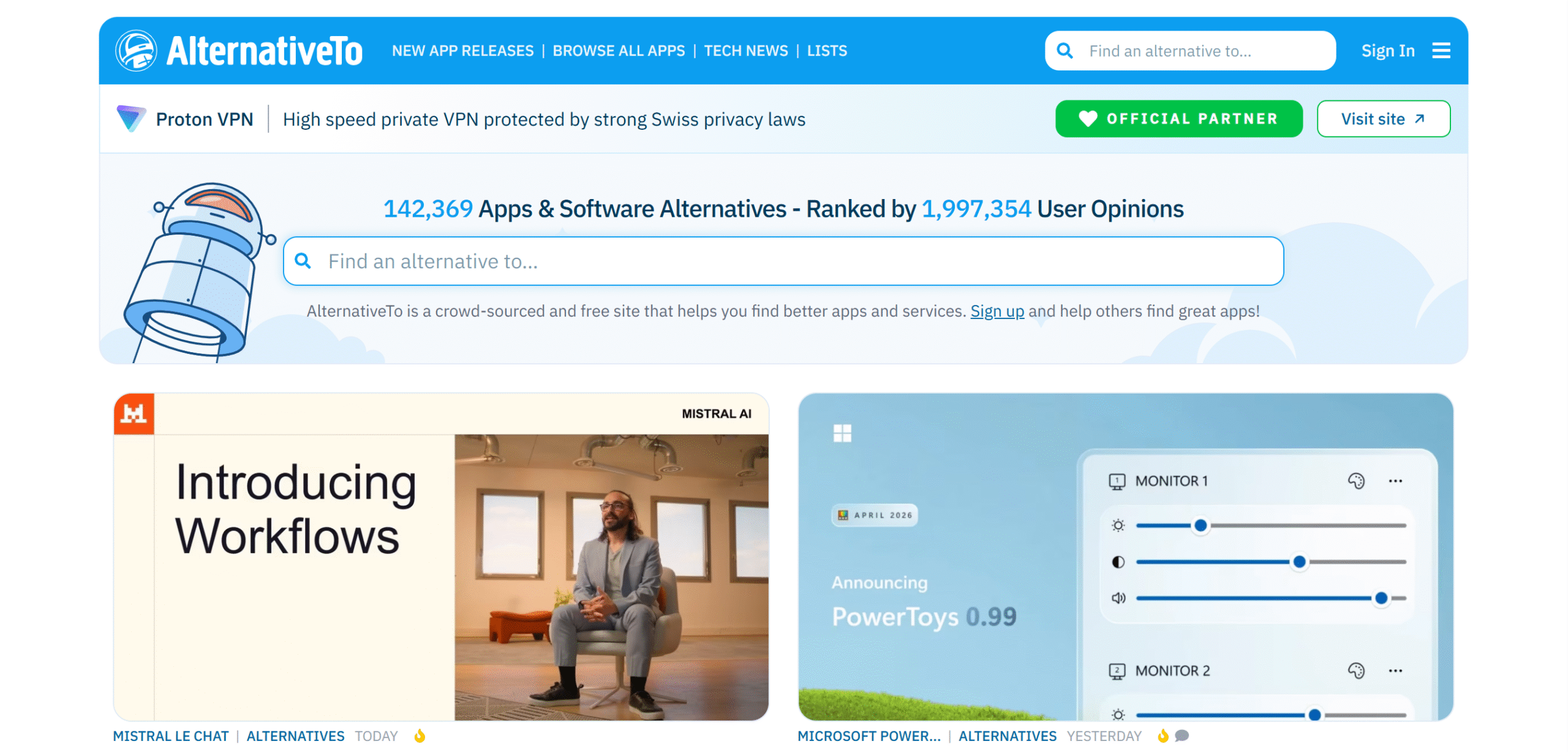
AlternativeTo is best at what it promotes: helping you find alternative software products.
Think of it as an amalgamation of discovery and comparison.
When you already know the type of software you want or have a particular app in mind, you use AlternativeTo to explore other available options on the market.
The platform doesn’t offer side-by-side comparison. Instead, it shares a list of alternatives with brief introductions and basic details, like whether they have free versions or cross-platform capabilities.
What you’ll love about AlternativeTo is its crowdsourced recommendation system.
The user community votes on the tools they like and adds them as alternatives, keeping the product listings updated. That means some of the options you see are influenced by real users who have actually used them.
AlternativeTo also doesn’t use paid listings, which adds another layer of credibility. The product ranking on the platform mainly depends on user voting.
Core Features
- B2B product alternatives discovery.
- A wide range of software products.
- Strong tagging and search filters.
- Community-driven recommendations.
- Review section.
- Continuous updating.
Pros
- It’s a niche platform, designed specifically to provide alternatives.
- People can vote on the tools they like and add them to the product recommendations.
Cons
- While its community-driven system keeps the list updated, it makes the information inconsistent.
- The comparison feature is lacking. While the platform offers the best alternatives, it doesn’t provide comparison tables, which is, quite frankly, a bit frustrating.
Price
AlternativeTo is a free platform. Both users and vendors can add software recommendations.
Frequently Asked Questions
Are G2 reviews trustworthy?
G2 reviews are generally reliable due to its verification process, which requires LinkedIn or business email confirmation. However, because vendors can incentivize reviews with gift cards, some feedback may feel promotional. The sheer review volume usually balances this out, but cross-checking with TrustRadius or Capterra is a good idea before any major purchase.
What’s the difference between G2 and Capterra?
G2 has a much larger review volume and stronger vendor marketing tools, while Capterra excels at side-by-side product comparison and is more accessible for emerging vendors through its PPC model. G2 is better for in-depth research; Capterra is better for quick shortlisting.
Is Capterra free to use?
Yes, Capterra is free for software buyers. Vendors can also list their products at no cost. Capterra only charges for sponsored ads and pay-per-click placements.
Which technology review platform is best for small businesses?
SoftwareFinder and SoftwareSuggest are best for small businesses because both offer free personalized recommendations from in-house experts. Capterra is a strong free option if you prefer self-serve research with side-by-side comparison.
Are software review platforms free for users?
Yes, all major technology review platforms, including G2, Capterra, TrustRadius, SoftwareSuggest, SourceForge, and AlternativeTo are completely free for software buyers. The platforms generate revenue from vendor listings, sponsored placements, and lead-generation services.
How do I find alternatives to a specific software?
AlternativeTo is purpose-built for this. Its crowdsourced recommendation system lets users vote on alternatives. G2 and Capterra also have dedicated “alternatives” pages for most listed products.
Conclusion
Technology review platforms offer a lot of valuable insights if you know how to use them properly.
The key is to look beyond the surface-level ratings and cross-check the information on multiple sites to get more accurate information.
Go ahead and explore these platforms to see if they can help you make smarter purchase decisions.


 A better way to manage projects and clients for freelancers
 Get through busy days like a breeze with Reclaim.ai