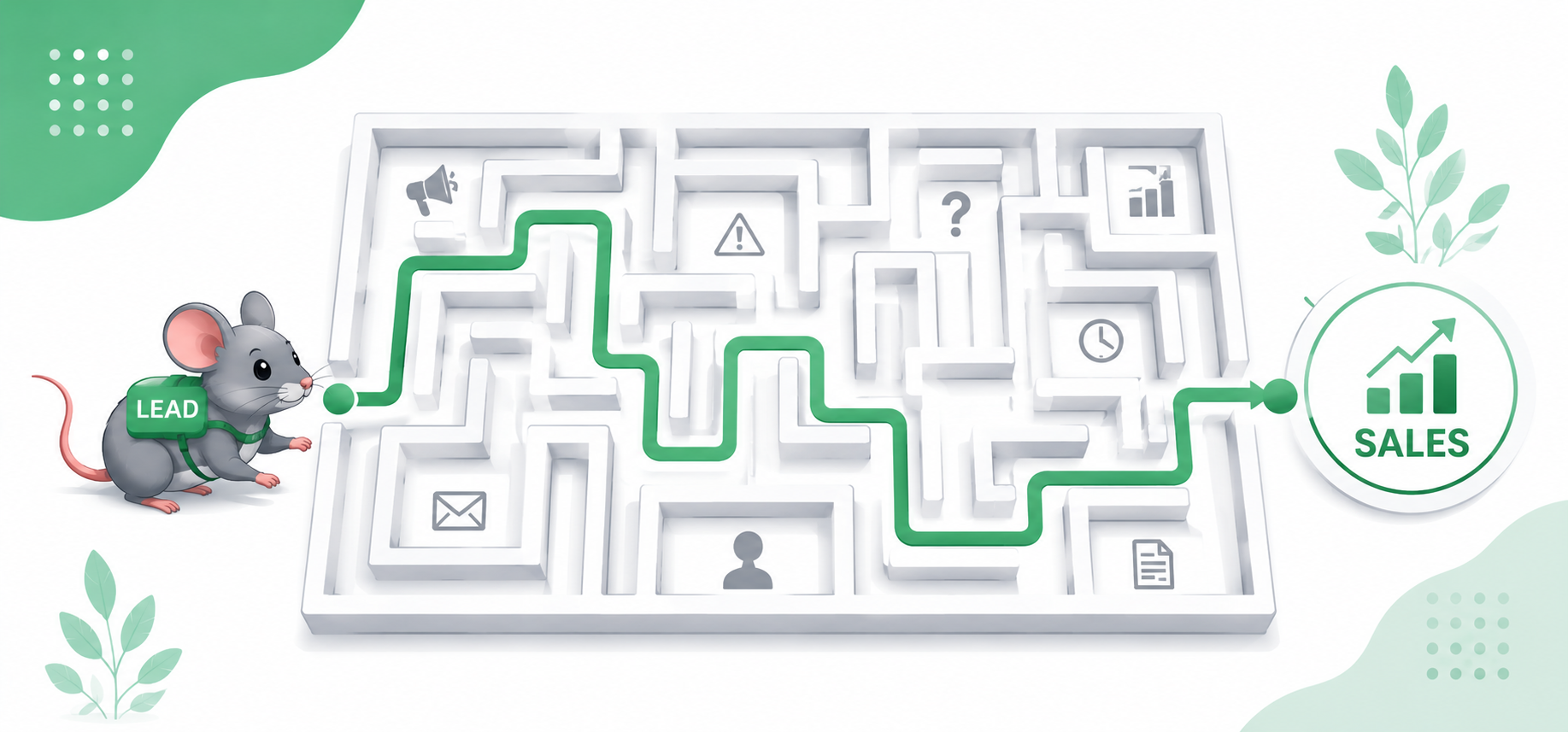
PPC agencies rely heavily on paid traffic to generate qualified leads.
Marketing attribution tools help you identify those leads and show you which paid ads drive better results.
If this is what you are looking for, I have shared the top five marketing attribution tools that are tailored for PPC agencies. They go beyond multi-channel attribution, giving you clear, actionable insights to optimize your campaigns.
Let me explain a little bit about the marketing attribution tool before we dive into the list.
What Is A Marketing Attribution Tool And Which Platforms Are Best For PPC Agencies
A marketing attribution tool is a lead-tracking app that monitors your leads and traces them back to the original source.
If someone clicks your Google ad but later comes through your Facebook ad, the attribution tool will tell you it’s the same lead who saw your Google ad.
Summarily put, it lets you know which ad campaigns or keywords are driving results and which ones are actually bringing more sales.
Top Features To Look For In A Marketing Attribution Tool
- Customer journey tracking.
- Multi-channel attribution.
- Conversion tracking and insights.
- Real-time dashboard reporting.
- White-label solution for agencies.
If the attribution tool has a built-in AI, that’s even better. AI not only makes the process more efficient but also offers smart recommendations.
Let’s explore the top five marketing attribution tools for PPC agencies.
1. WhatConverts
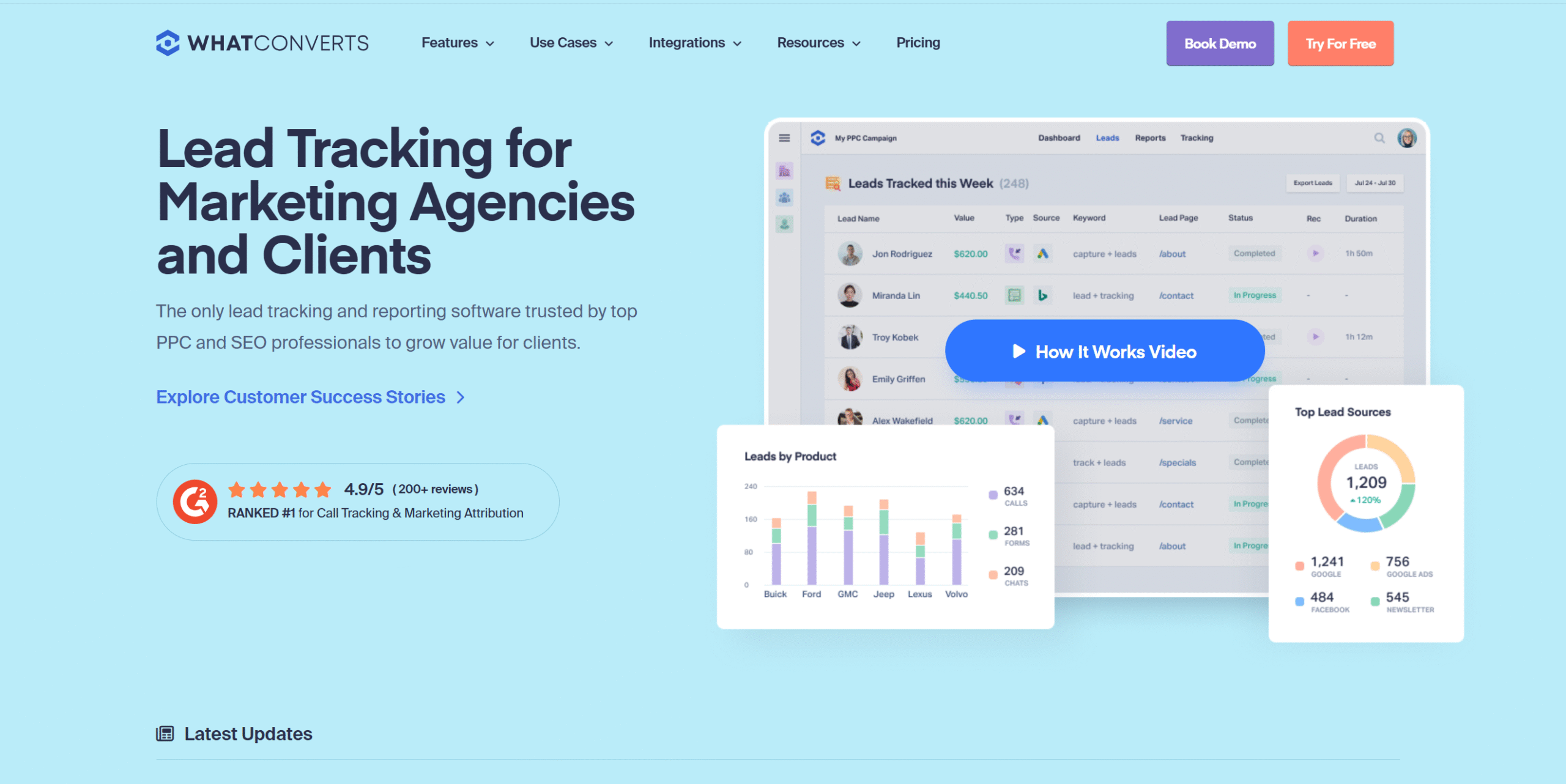
WhatConverts is one of the best attribution tools for PPC agencies.
It tracks every lead from your PPC campaigns, website pages, and e-commerce transactions.
Some of its most notable features include call tracking, form tracking, attribution, lead management, and reporting. You’ll get dynamic numbers for PPC campaigns and AI-powered lead insights.
WhatConverts also has a built-in lead management tool.
This is something not widely available in every marketing attribution platform. While all tracking tools offer some kind of lead management support, WhatConverts provides a better system.
WhatConvert’s attribution feature is also pretty comprehensive. You can integrate your Google Ads to get better visibility over your website leads.
Overall, if you are a growing agency, this platform is best for you.
Core Features
- Tracks calls, forms, chats, emails, visitors, and e-commerce transactions.
- Attributes lead to marketing channels, PPC campaigns, keywords, and social media advertisements.
- Offer dynamic numbers to track calls and record conversations.
- Call flows for voicemail and routing.
- A report builder for creating custom reports and scheduling regular summaries.
- Lead organizing, qualification, and exporting.
- Integration with Google, Facebook, CRM, and 1000+ other third-party applications.
- Unlimited accounts and a white-label solution.
Pros
- WhatConvert can track multiple marketing channels. You gain real visibility into your best-performing channels to improve your ROAS.
- It works well with Google Ads, CRM, and other third-party business applications.
- It lets you create branded reports and generate measurable data to show campaign progress to clients.
Cons
- The software is comparatively complex because it focuses more on data. It makes WhatConverts a little less intuitive, specifically for beginners.
- The pricing structure isn’t ideal. Your subscription increases with the usage, which can add up quickly.
- The integrations are not always plug-and-play. You can integrate popular platforms easily, but most require manual input. This isn’t a deal breaker, but it’s a hassle.
Price
WhatConverts charges $500 to $1,250 per month for the agency package. You can take a 14-day free trial and also request a demo.
- Plus Plan: It costs $500 per month and provides call, form, chat, and e-commerce tracking.
- Pros Plan: It costs $800 per month and offers call flows and custom reporting.
- Elite Plan: It costs $1,250 per month and unlocks all features.
2. CallRail
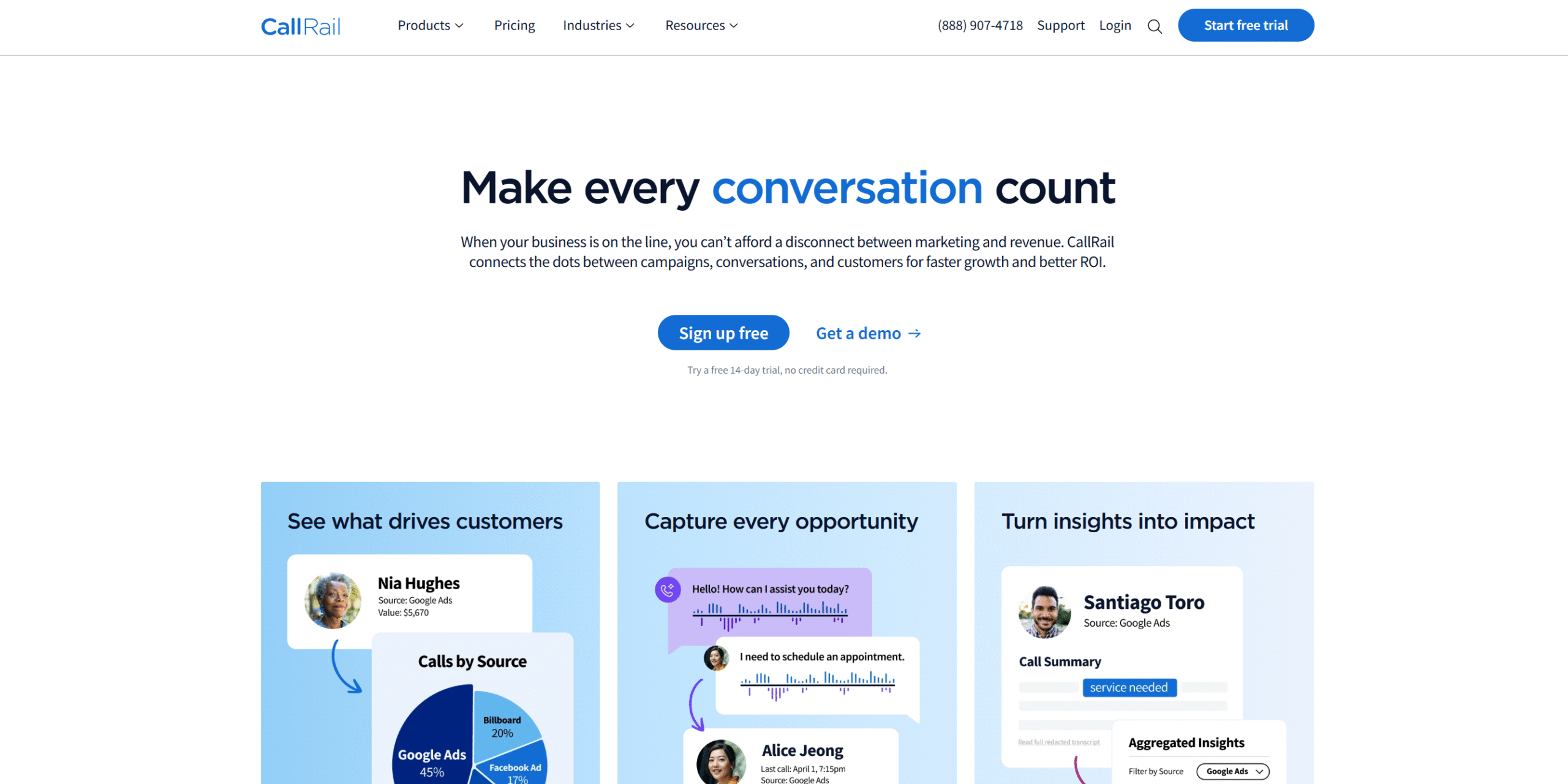
Next up is CallRail. It’s the software most PPC agencies switch to when they need something more straightforward.
Unlike WhatConverts, CallRail is easy to set up and run.
You can onboard new clients fast, build predictable reports, and scale it with ease. The app is designed for speed, offering standard tools and plug-and-play integrations.
The catch? It’s heavily call-focused.
WhatConverts is popular for its multi-channel tracking. CallRail, on the other hand, specializes in calling and SMS tracking.
Here, you can assign unique numbers to each PPC campaign and marketing channel and track both online and offline numbers.
With its built-in AI, you can capture conversations, analyze visitors’ sentiments, and spot opportunities.
Form tracking is also part of the software. It tracks leads through submitted web forms and sends you instant alerts whenever a new lead comes in.
If your PPC agency targets local clients that are specifically in service-based businesses, CallRail is ideal for you.
Core Features
- Online and offline call tracking, SMS tracking, and lead form tracking.
- Attributes the leads to Google Ads, PPC campaigns, keywords, and SMS.
- Dynamic numbers with call recording and transcriptions.
- A unified lead box to collect leads and respond to conversations.
- Lead tagging and assigning.
- Call flow builder with advanced steps and custom settings.
- AI-powered summaries, action plans, follow-ups, and coaching.
- Lead-level reporting with customization options.
- Plug-and-play integration with ad platforms, CRM, communication, and analytics tools.
- Multi-client accounts for agencies.
- A mobile app for remote monitoring.
Pros
- CallRail has strong call-tracking capabilities. It’s, in fact, one of its unique selling points.
- The built-in AI generates useful insights, such as detecting high-converting keywords from the conversation and identifying leads’ sentiments.
- Integration with Google and other ad platforms is easy.
Cons
- It has limited tracking capabilities. While it’s a pretty strong call attribution app, its form tracking is comparatively weak.
- The basic subscription is affordable, but add-ons and usage make it a bit expensive, especially for small agencies.
- Reporting is straightforward, which is both a blessing and a curse. It’s easy to use but feels quite limited.
Price
CallRail prices start at $55 per month. You can get both monthly and yearly subscriptions and take a 14-day free trial to explore the software.
- Lead Tracking: It costs $55 per month and offers call tracking and integration.
- Lead Tracking Complete: It costs $105 per month and provides form tracking and multi-touch reporting. It’s ideal for startup agencies.
- Lead Conversion: It costs $165 per month and unlocks AI features, such as conversation intelligence.
- Lead Conversion Complete: It costs $215 per month and gives you access to all the functions. This is the best fit for PPC agencies.
If you’re still confused between our top 2 choices, please visit our guide on WhatConverts vs Callrail here.
3. Invoca
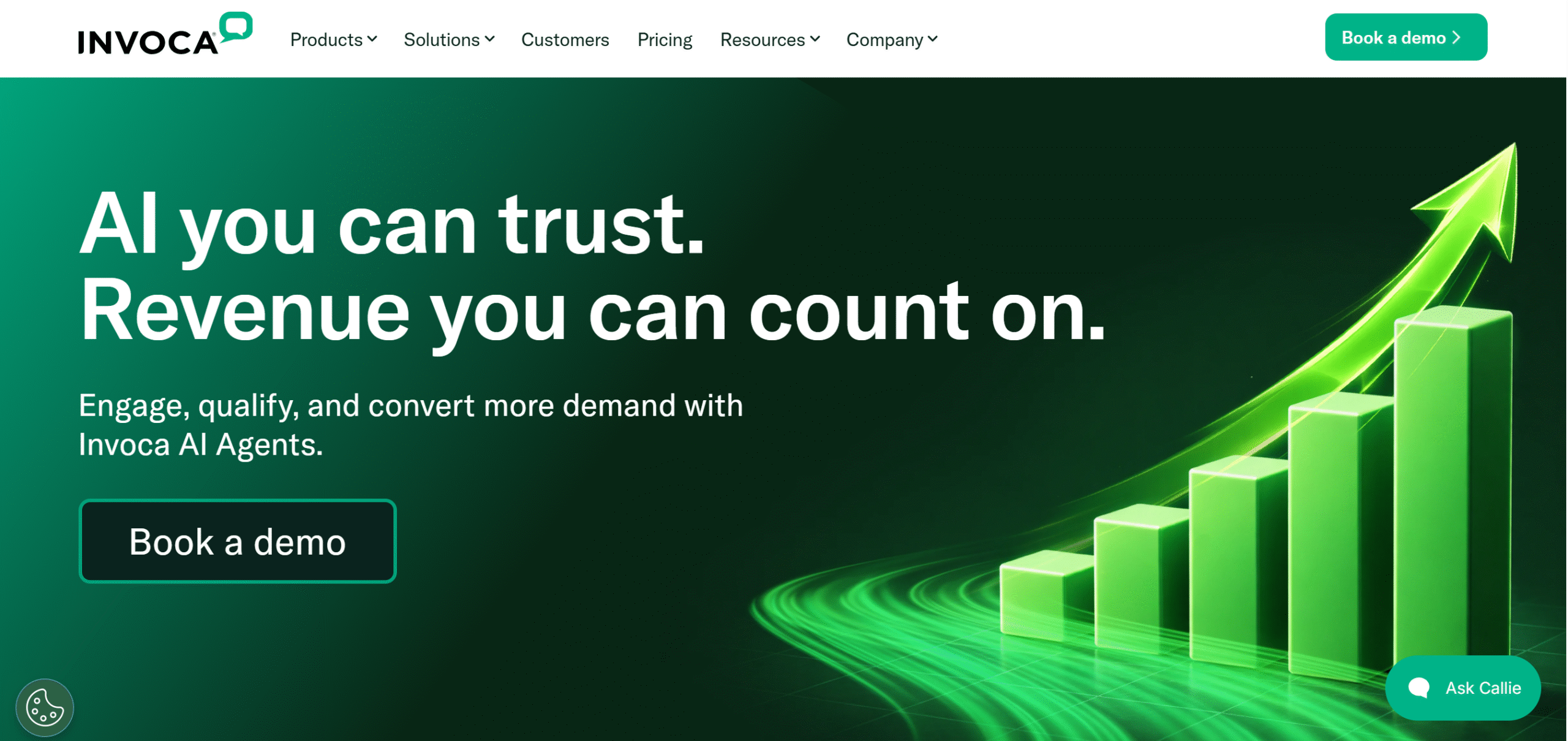
If CallRail is too restricted for you, check out Invoca. It’s an enterprise version of CallRail and can support a high volume of calls.
Core capabilities of Invoca are inbound call tracking, call recording and routing, advanced IVR, and conversation intelligence. You can integrate with all the major ad platforms and use dynamic numbers to track calls.
Everything you see on CallRail is available on Invoca, just way more advanced–save for a few features that are CallRail’s unique selling points, like outbound calling.
Invoca’s AI capabilities are also advanced. It can analyze your leads’ interactions and predict sales.
To summarize, use CallRail when you are starting out and switch to Invoca once you have established yourself.
Core Features
- Inbound call tracking and attribution.
- AI-powered call scoring and classification.
- Conversion intelligence and AI signals.
- Smart call routing with strong IVR features.
- Real-time alerts of priority leads.
- AI-powered SMS engagement.
- Enterprise-grade security and compliance.
- Integration with Google Ads, Meta Ads, and other ad platforms.
- Affiliate marketing tools.
- Agent coaching and quality management.
Pros
- Invoca’s attribution capabilities are excellent. It tracks leads to the ads, campaigns, and keywords.
- It has powerful AI capabilities that help you detect lead intent and possible outcomes.
- It’s specifically built for PPC agencies and can handle complex workflows and multi-location businesses.
Cons
- It has a learning curve. The initial setup is slow and requires tech knowledge.
- The pricing is the major issue. It’s an enterprise-grade tool and well-suited for established agencies only.
- The software is not mobile-friendly. You can use it on your smartphone, but its interface is designed for a desktop screen.
Price
Invoca sells three subscription packages and several optional add-ons. There’s no free trial, but you can book a demo and request the prices.
- Pro Plan: It covers inbound call tracking, IVR, integrations, and real-time alerts. You can also buy some add-ons to extend the features.
- Enterprise Plan: It offers all the features of the Pro plan plus some advanced functions such as social ads integration and reporting.
- Elite Plan: It contains intelligent data routing and live call detection.
4. Hyros
Hyros is well-liked for its PPC attribution tools.
The software doesn’t just track leads; it tracks your entire customer journey from the first click to sales and identifies high-value customers.
Think of Hyros as a revenue attribution tool.
Like Invoca, Hyros plays a long game, focusing on channels that drive long-term customer value. The only difference is that Hyros tracks ad revenue while Invoca tracks call value.
You can connect both Google and social ad platforms and optimize your PPC campaigns. Not only that, but you can also integrate your e-commerce platform and track the full funnel.
For agencies, Hyros has partnership programs that include multi-client dashboards, client reporting, and onboarding support. I recommend exploring this option.
Core Features
- Tracks the full customer journey, both short and long-term.
- Call and full funnel tracking.
- All PPC ad platforms’ attribution and optimization.
- Analytics and in-depth reporting.
- Repeat customer analytics and ROAS forecasting.
- Multi-client management dashboard for agencies.
- AI remarketing tools for website visitors.
- API and integrations.
- Mobile apps.
Pros
- Hyros tracks both new leads and repeat customers to identify the most profitable marketing channels.
- It offers multi-touch attribution to handle complex funnels.
- You can download its mobile apps for remote monitoring.
Cons
- It’s a bit expensive for small agencies.
- The initial setup is not intuitive, and you might need help implementing the system. However, VIP onboarding is included in the agency package.
Price
Hyros’s prices start at $230 per month, but for PPC agencies, it sells separate packages and shares prices on request.
You can check out the details here.
5. Ruler Analytics
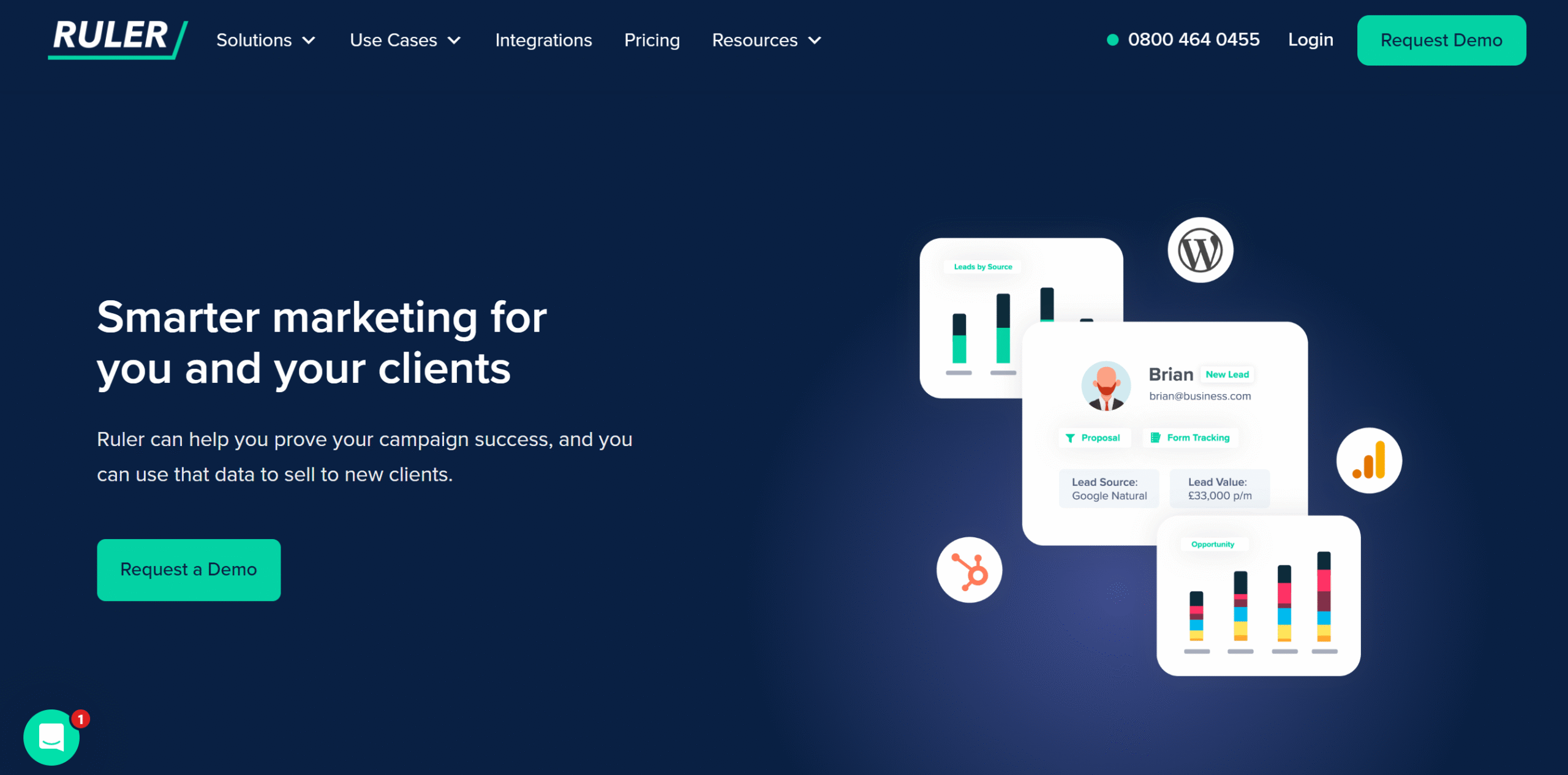
RulerAnalytics is designed to support both B2B and B2C customers.
It’s a CRM-based revenue attribution tool that tracks leads across all touchpoints and tells you which campaign closes more deals.
You can connect Ruler Analytics with Salesforce, HubSpot, Pipedrive, and around 12 different CRMs. The software collects data directly from the sources and sends it to your CRM for sales tracking.
With this multi-touch attribution model, you can pretty much track every touchpoint, including calls, forms, live chat, and both online and off-site leads.
What you’ll love most about Ruler Analytics is its agency-focused features.
PPC agencies can identify lucrative campaigns, predict future conversions, and run budget scenarios to make the best decisions for their clients. The platform combines all the online and offline data in one place to make data more visible.
Core Features
- Tracks calls, forms, chat, ads, visitors, and sales.
- Consolidate online and offline conversions.
- Multi-touch attribution and advanced segmentation.
- Marketing mix modeling, including budget scenario planning and forecasting.
- Analytics and reporting.
- Centralized dashboard for PPC agencies.
- Third-party integrations.
Pros
- RulerAnalytics offers a closed-loop attribution system that traces the revenue to the original ad.
- It tracks both online and offline conversions.
- It has several optimization tools for PPC agencies to help them improve their ROI.
Cons
- This tool is not for beginners. The initial setup is complex.
- It supports both B2B and B2C customers, but it’s more suited to B2B companies.
- It might be a bit pricey for small agencies.
Price
Ruler Analytics sells several monthly packages. You can request a demo to explore the platform.
- Small: It starts from $400 per month and covers data capture, basic attribution, and integration.
- Medium: It costs around $668 per month and offers advanced attribution.
- Large: It starts from $1,326 and tracks up to 100k visitors per month.
- Advanced: It starts at $2000 per month and unlocks strategic tools like budget planning and forecasting.
Conclusion
To find the best marketing attribution tool for your PPC agency, it’s important to understand that not all scalable tools may work for you.
Some are designed as all-in-one apps, and some serve a niche market. Even within these criteria, you’ll find a lot of variations.
For example, CallRail is a call-focused platform, but so is Invoca. But while one is ideal for startups, the other is built for established agencies.
Explore the tools and try their demos or free trials to get a better idea of their usability.


 A better way to manage projects and clients for freelancers
 Get through busy days like a breeze with Reclaim.ai