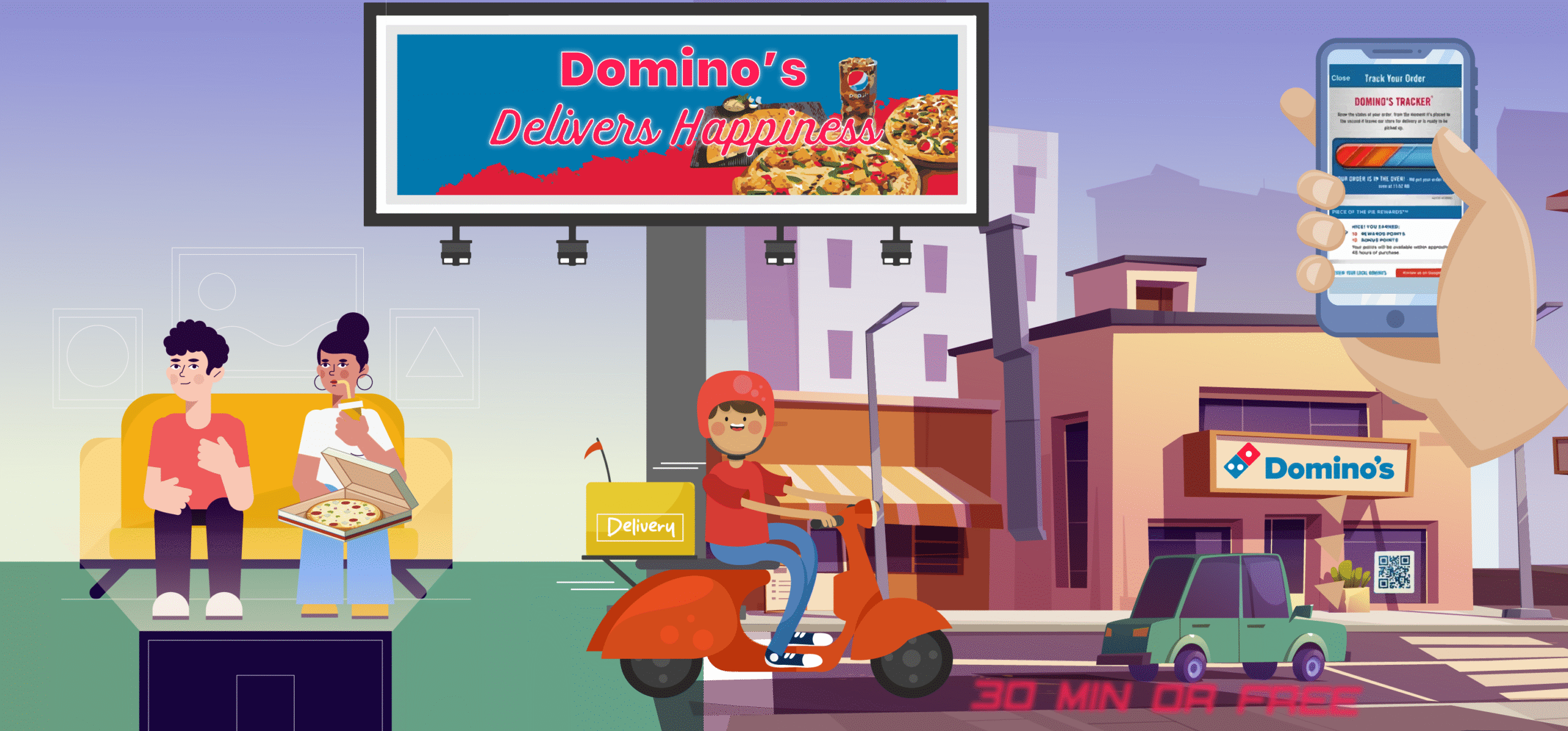
Domino’s runs one of the most successful global pizza restaurant chains.
The brand is well-known for its mouth-watering pizzas and excellent customer service, and it has built a solid reputation for being a consistent delivery point for the locals.
No matter where you reside, you’ll probably find a Domino’s branch near you, offering a familiar experience and comfort food.
In this article, we’ll talk about some marketing techniques Domino’s has used to dominate the global pizza industry.
While Domino’s has, no doubt, spent years carving a place for itself, its marketing strategies play a vital role in its global success.
Let me give you a little company background first.
About Domino’s Pizza
Domino’s is an American pizza delivery service that sells a wide range of pizza, fried items, and side servings.
It’s headquartered in Ann Arbor, Michigan, United States, and operates 20,000 branches across 90 countries.
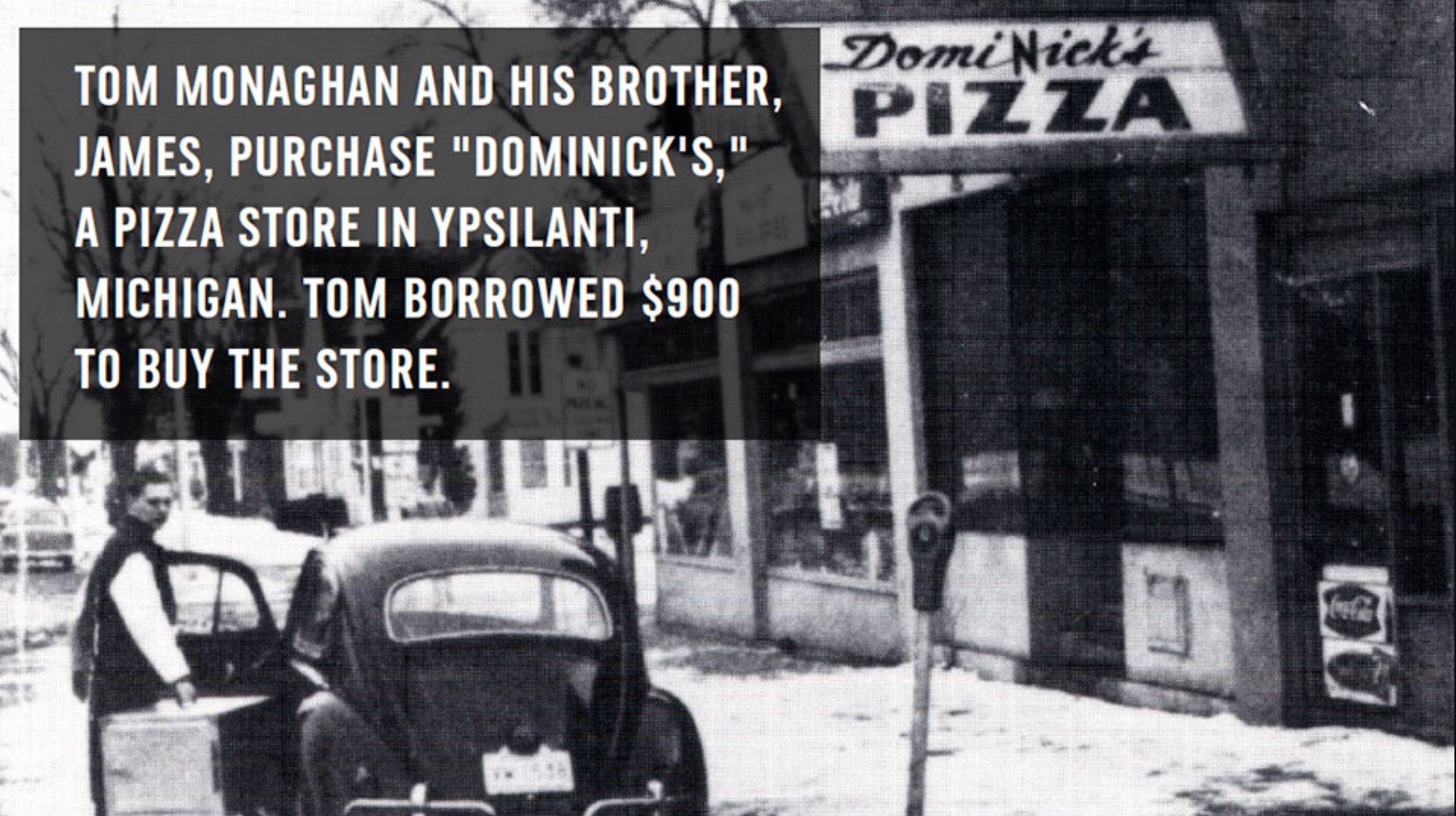
Tom Monaghan and his brother James started Domino’s in 1960.
At that time, it was a small pizzeria in Michigan, run by the name of DomiNick’s. The founders renamed the restaurant later, starting a food business that would become one of the largest restaurant chains.
One of the company’s earlier initiatives to establish the brand was to optimize its delivery service. The founders kept the menu simple and customer service supreme.
It was Domino’s 30-minute delivery guarantee campaign that brought it to the limelight.
Over the years, it pioneered several production and delivery techniques, focusing on both traditional and digital marketing to increase the brand’s visibility.
Today, if you check out its growth chart, you’ll notice continuous growth in revenue, largely due to its delivery-oriented business model.
Nine Marketing Strategies of Domino’s
Domino’s has perfected the art of marketing through a combination of tech innovation, customer interaction, and old-fashioned branding.
By merging traditional and digital promotion techniques, it has climbed to the top, ensuring steady business growth.
This is one reason that, despite fierce competition, Domino’s still leads the Pizza delivery industry.
I have shared its nine most successful marketing strategies with examples for reference.
Some of these are standard promotional tactics, but Domino’s leverages them in a way that yields outstanding results.
Let’s explore them one by one.
1. Product Niche
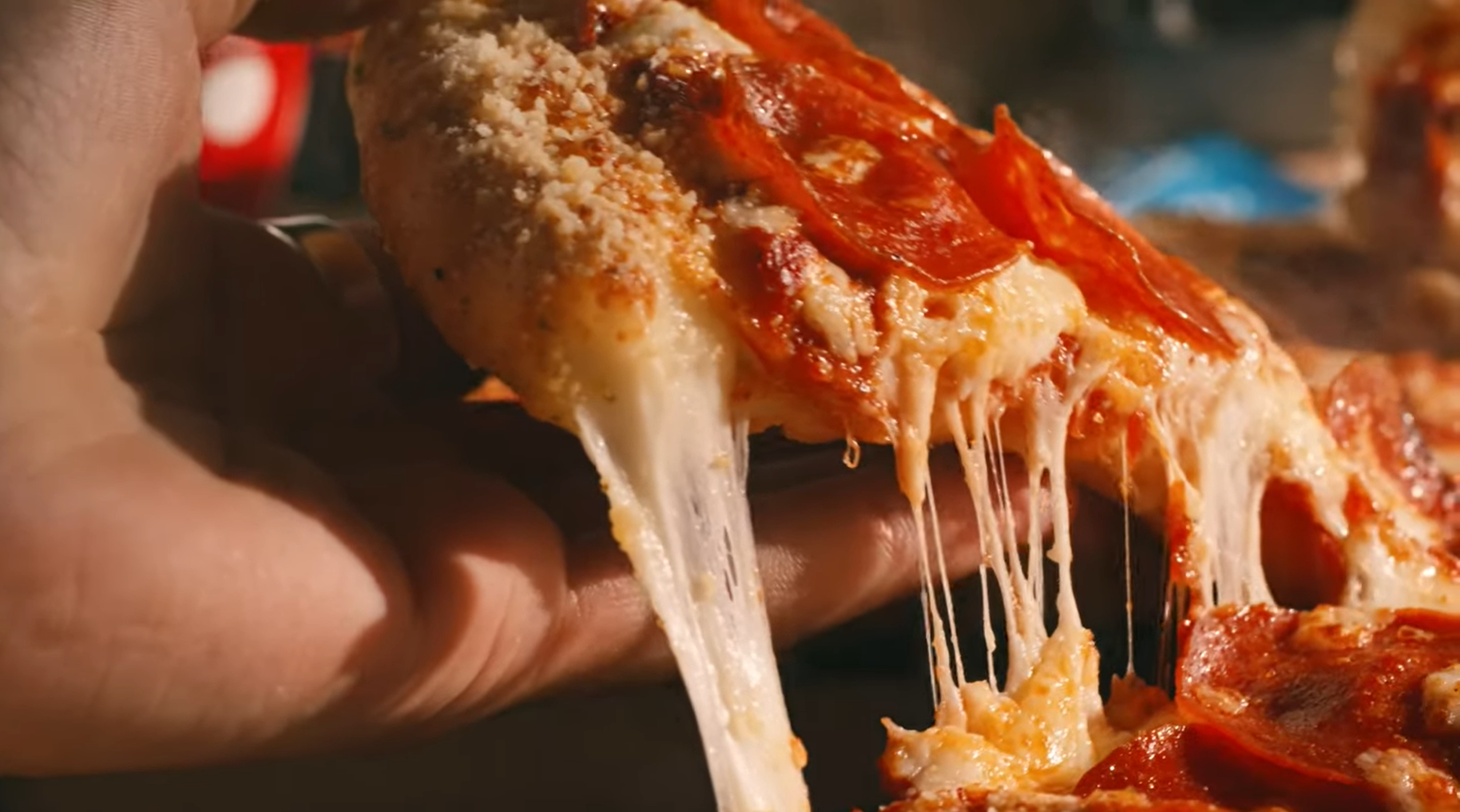
Domino’s core product strategy is niche marketing. It has kept a limited product line, focusing on one product to highlight its expertise.
The tactic allowed Domino’s to save on marketing costs and tailor its marketing strategy.
For example. Pizza is Domino’s niche product. It was an obvious option for Domino’s because that’s where it began its journey.
The fact that Pizza is one of the most universally loved foods and can be customized with toppings, crusts, and sizes gives Domino’s plenty of options to keep things fresh.
But, of course, people still need variety to satisfy their palate. To ensure steady orders, Domino also serves side dishes, desserts, and drinks.
Its menu typically includes traditional, specialty, and customizable pizzas with sides like garlic bread and chicken wings. But you’ll also find desserts, such as chocolate lava cake, Cinna Stix, and a variety of sodas.
This combination enables Domino’s to keep its options open and bring something new each year.
Takeaway
Choosing a niche product can help you present yourself as an expert in the field.
You’ll also focus on specific marketing instead of general, resulting in lower marketing costs, tailored strategies, and loyal customers.
2. Brand Image
Branding is one of the basic foundations of marketing. It gives you an identity to differentiate yourself from competitors and relates to your audience.
Take Domino’s brand personality. The company has developed a brand personality to convey fun and casual dining. Because Pizza is a comfort food. People love Pizza, and they want an authentic, affordable, and delicious product.
Domino’s logo, packaging, product, and marketing campaigns all deliver the same message. So, when people think about Domino’s and taste the pizza, they experience a sense of familiarity and comfort.
Domino’s has also imbued its brand values in its marketing strategy. If you notice, many of its campaigns deliver a particular brand message.
Let me give you an example.
In 2009, Domino’s received a series of complaints regarding its product quality. People found it lacking and shared their experiences online.
After delivering pizza for years, the criticism was surprising.
You know what Domino’s did? Instead of running divergent campaigns, it changed its recipe and released a better version of the old product.
This move made Domino’s appear authentic and humble, leading to a 14.3% surge in sales.
Takeaway
80% of the companies don’t realize the value of branding. Sure, everyone can create an “identity,” but branding is more than just a logo and package design. It involves advertisement, publicity, problem-solving, and engagement.
Build a strong brand to boost your product value. 77% of people will buy your product on the brand name alone.
3. Digital Marketing and Tech Innovation
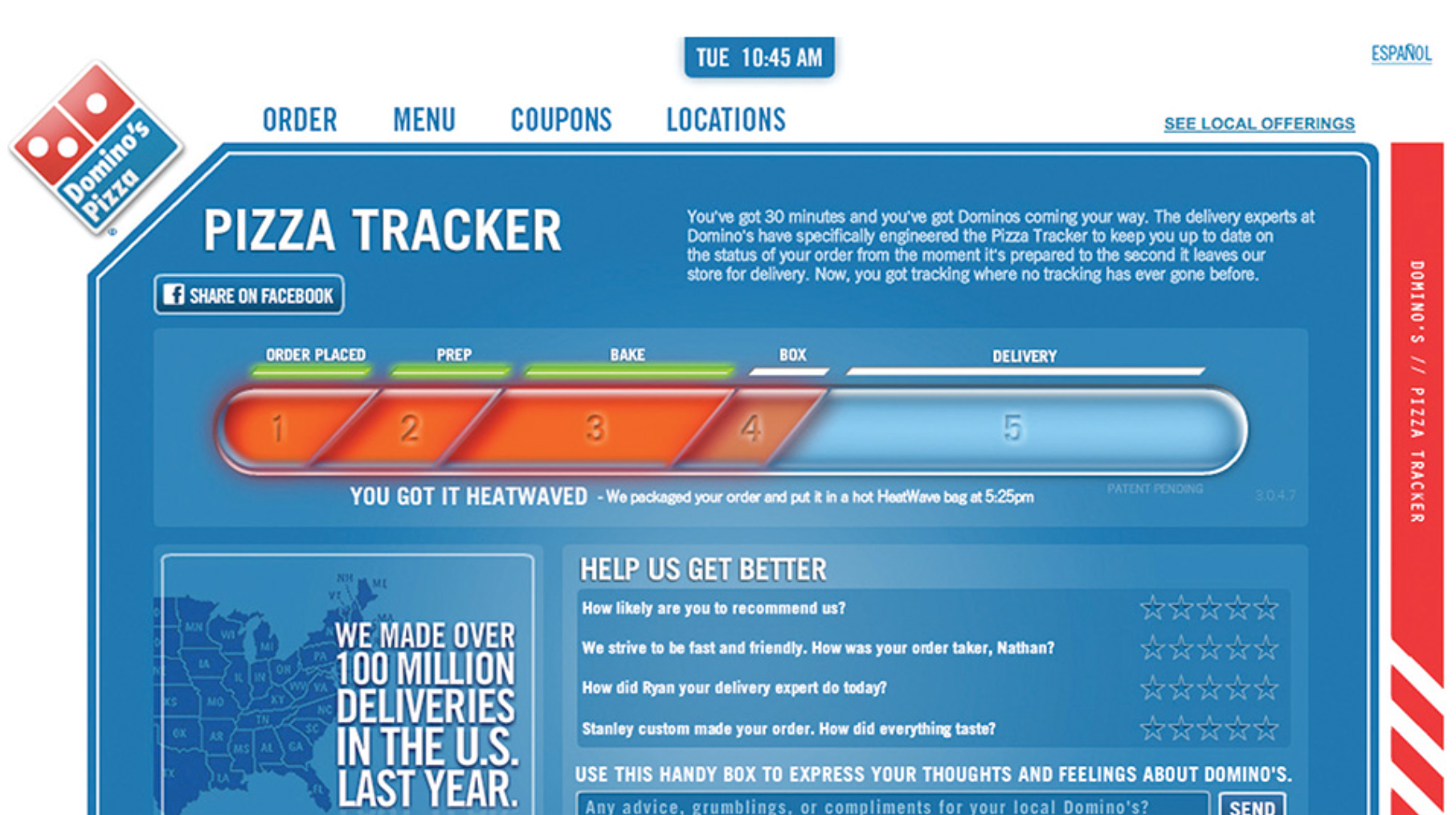
Domino leverages both digital channels and technology to increase conversions. While it generally uses conventional channels for advertisement, it also integrates tech in its marketing and supply chain to improve customer service.
Tons of examples are available for study.
For example, Domino’s offers a mobile app for convenient ordering. The app has advanced features like Snapchat’s augmented reality feature to enable users to scan for pizza orders.
Domino’s “Paving for Pizza” campaign is also an excellent example of the effective use of digital channels.
The company ran a social campaign a while back to improve the road conditions. It leveraged digital media to gain exposure and received a positive response in a short time.
Social media is Domino’s prominent marketing channel for lead generation and nurturing. It utilizes humor and memes in its interactive campaigns to attract its audience’s attention.
Today, digital channels generate more than 70% of Domino’s total sales.
Takeaway
Many brands assign 72% of the total marketing budget to digital marketing. It’s not only cost-effective, but also gives you access to the global market at scale.
Take advantage of various digital and social media channels to increase your brand reach. You can utilize them for all kinds of marketing, including lead generation, nurturing, engagement, and promotion.
4. Pricing Strategy
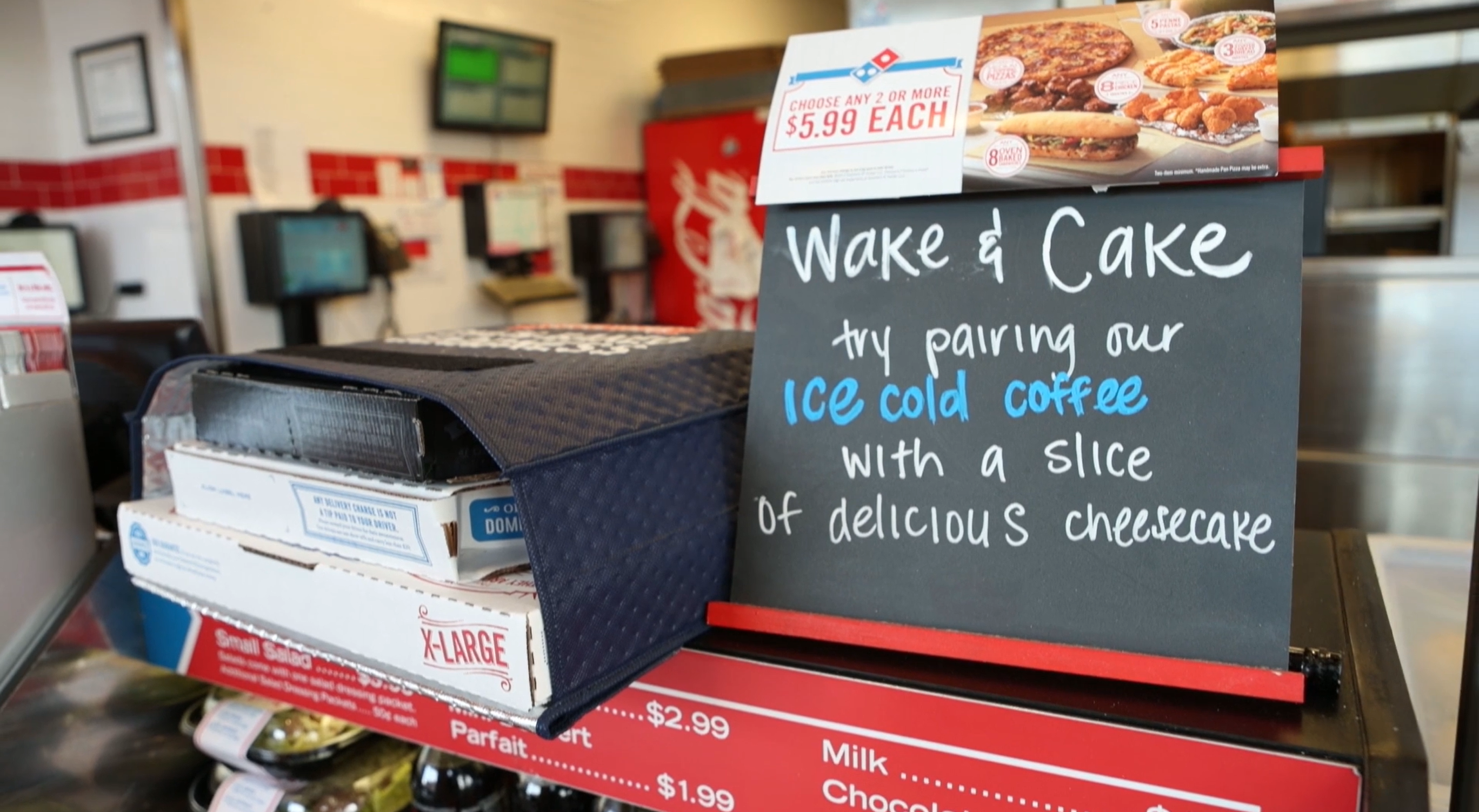
Affordability is the main factor that gives Domino’s an edge over its competitors. It offers a good quality product at reasonable rates to ensure customer satisfaction.
Domino’s also uses various pricing tactics to make its products attractive. It applies value-based pricing to generate sales and sells combos to increase the average value of the product.
The pricing strategy of Domino’s also varies by location and region. The product prices are generally tailored to meet the purchasing power of the buyer.
Loyalty programs, discounts, and coupons are some of its other notable pricing strategies.
Takeaway
Your pricing strategy directly impacts your product value, brand position, and customer base.
If your brand represents comfort, but you set premium prices, people might consider your product overpriced and not worth the value it delivers. Similarly, if you are selling luxury items, setting low prices might make people distrust the product quality.
Consider psychological factors when drafting your pricing strategy. Leverage industry standards and customer behavior to set your product prices.
5. Flexible Delivery
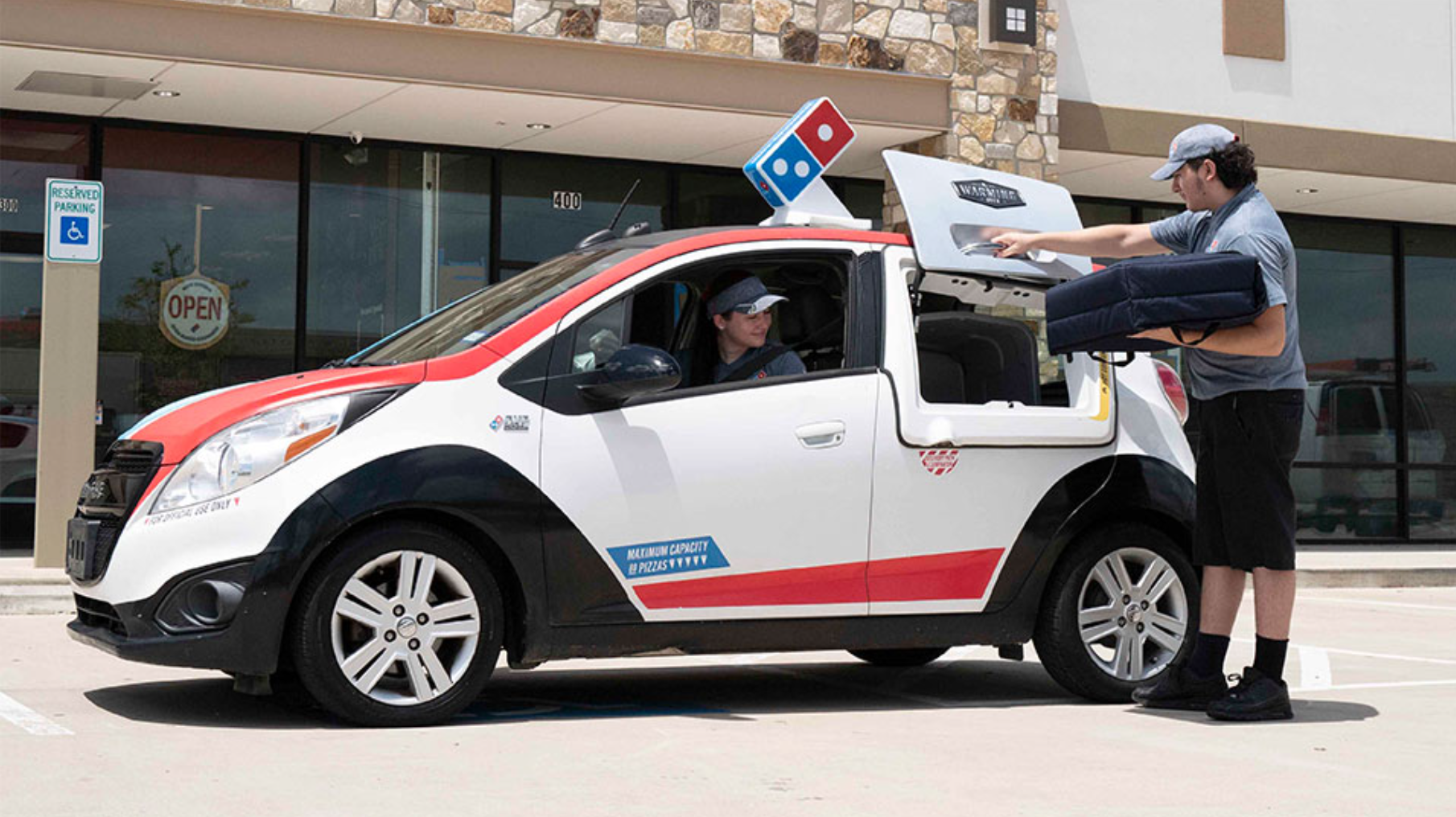
One of Domino’s unique selling points is its delivery service. The company has invested heavily in logistics to speed up the production and distribution processes.
The idea behind flexible delivery is to make ordering convenient for the customers, so they would want to make repeat orders. The convenience, coupled with decent price and quality, makes Domino’s an attractive option.
The 30-minute delivery promise is one of the prime examples. It was Domino’s early brand exposure strategy that brought a lot of publicity for the company. While the campaign was temporary, fast delivery still remains Domino’s top focus.
Another example of Domino’s excellent delivery service is Hotspot deliveries. It allows customers to receive orders at unique locations, such as parks and beaches.
Domino’s constantly tries to optimize distribution methods with cutting-edge methods and tech advancements. With each new upgrade, Domino’s successfully converts more leads into buyers and increases its customer base.
Takeaway
Food delivery has become pretty common in urban cities. 40% of people order takeouts at least 4 to 5 times and usually stick to services with good delivery.
Offer multiple delivery options and an easy ordering process. With a good delivery system, you can create a better customer experience and attract repeat buyers.
6. Localization
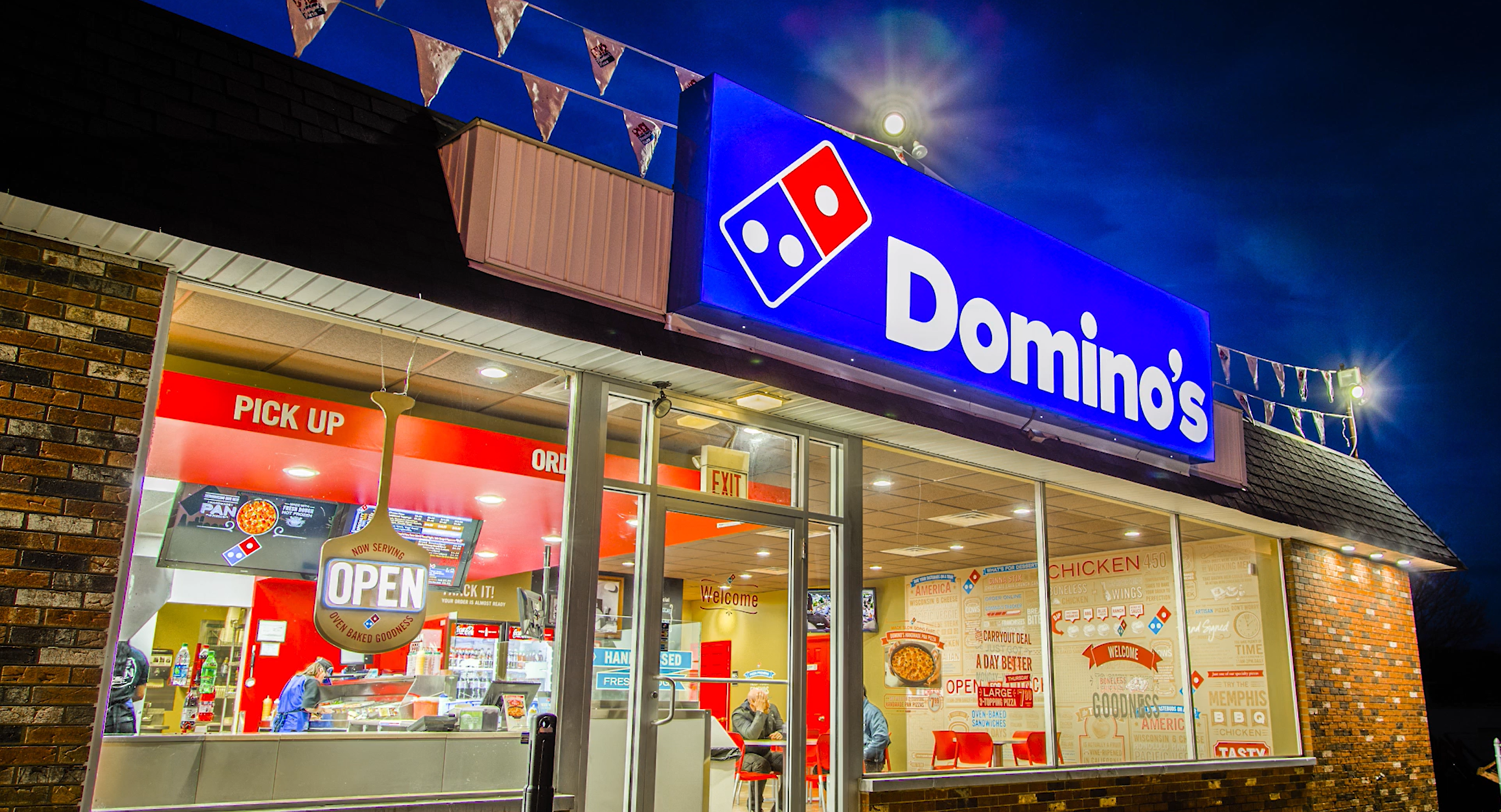
Localization means adjusting your product features to meet the needs of the local audience. It’s part of a global expansion strategy that allows brands to integrate into different markets.
Domino’s knows how to attract locals. With customized menus adjusted to local palettes and geo-specific advertisement, Domino’s has increased its brand reach statewide and overseas.
Take its Indian menu for example.
India is one of its fastest-growing markets, and a majority of them follow a vegetarian diet. To capture a large portion of the market, Domino’s launched vegetarian-only restaurants, providing a familiar selection like Paneer Makhani Pizza and Achari Do Pyaza.
On top of it, it adjusted its pricing strategy to match the customers’ buying power, offering reasonably priced meal options through “Everyday Value” combos.
Takeaway
The success of global expansion largely depends on your localization strategy. If you can make cultural adaptations well, you’ll find better revenue opportunities.
Over 84% of businesses have seen a growth in their revenue after applying localization strategies.
7. Attention-Grabbing Campaigns
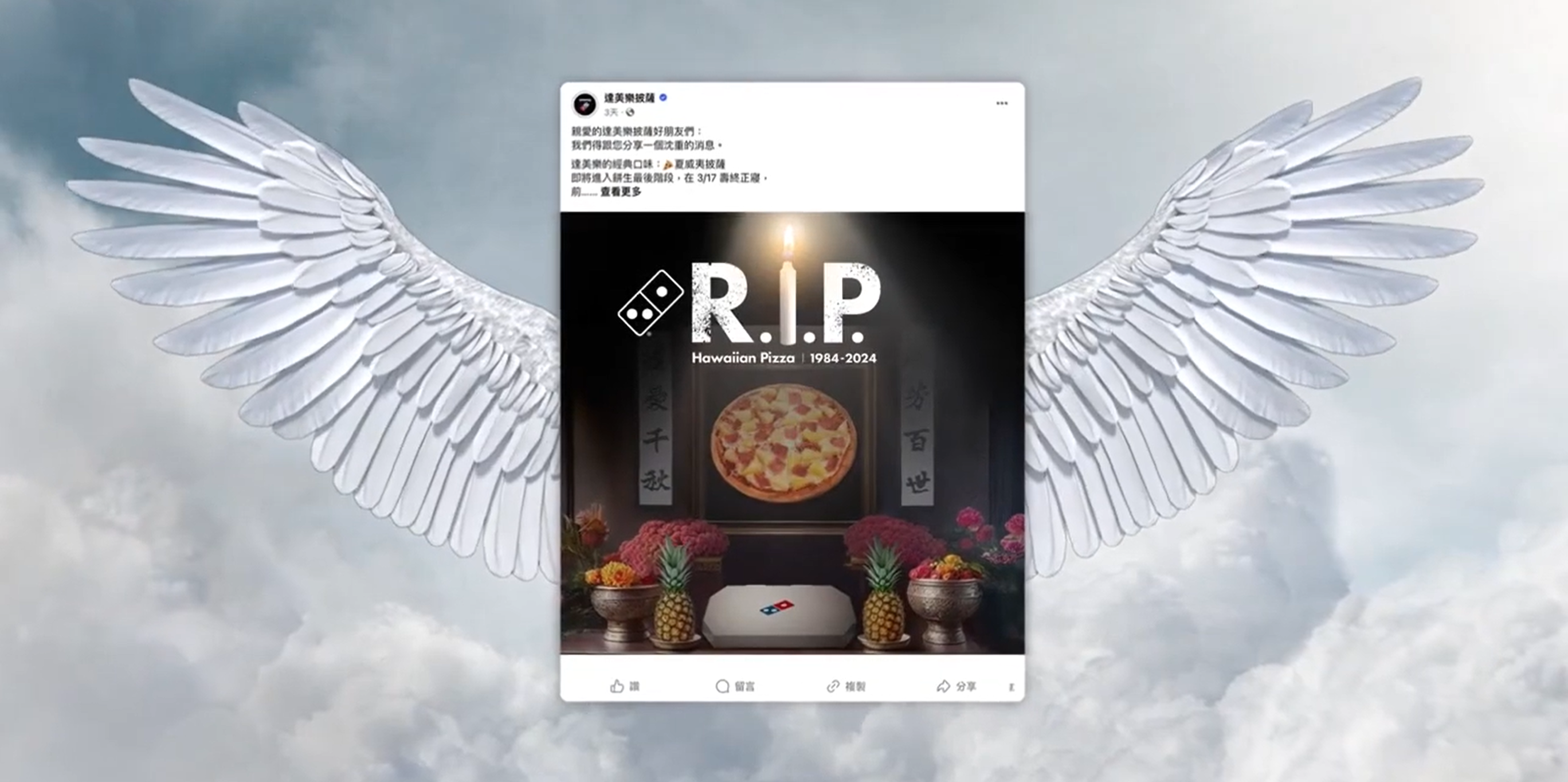
Domino’s advertisements are highly entertaining. The company uses creativity to create impactful ads and make relatable commercials.
Remember the “Paving For Pizza” campaign I mentioned in the digital marketing and innovation section? The company filled potholes in more than 50 U.S. towns to gain publicity.
The campaign was quirky and pleasantly unexpected, bringing extensive press coverage and exposure.
Another example is the “Points for Pies” promo, where customers can earn rewards for submitting a photo of their pizza.
Campaigns like these show Domino’s playful and customer-centric brand personality, driving massive engagement and conversions.
Takeaway
Nontraditional marketing is a great way to stay in the spotlight.
It creates a lasting impression on the public and gives non-monetary value to the company.
Leverage social trends and tech to build viral campaigns. You can go for cause marketing to get better results. From what I have seen, you can attract 85% of your target audience through purpose-driven campaigns alone.
8. Gamification
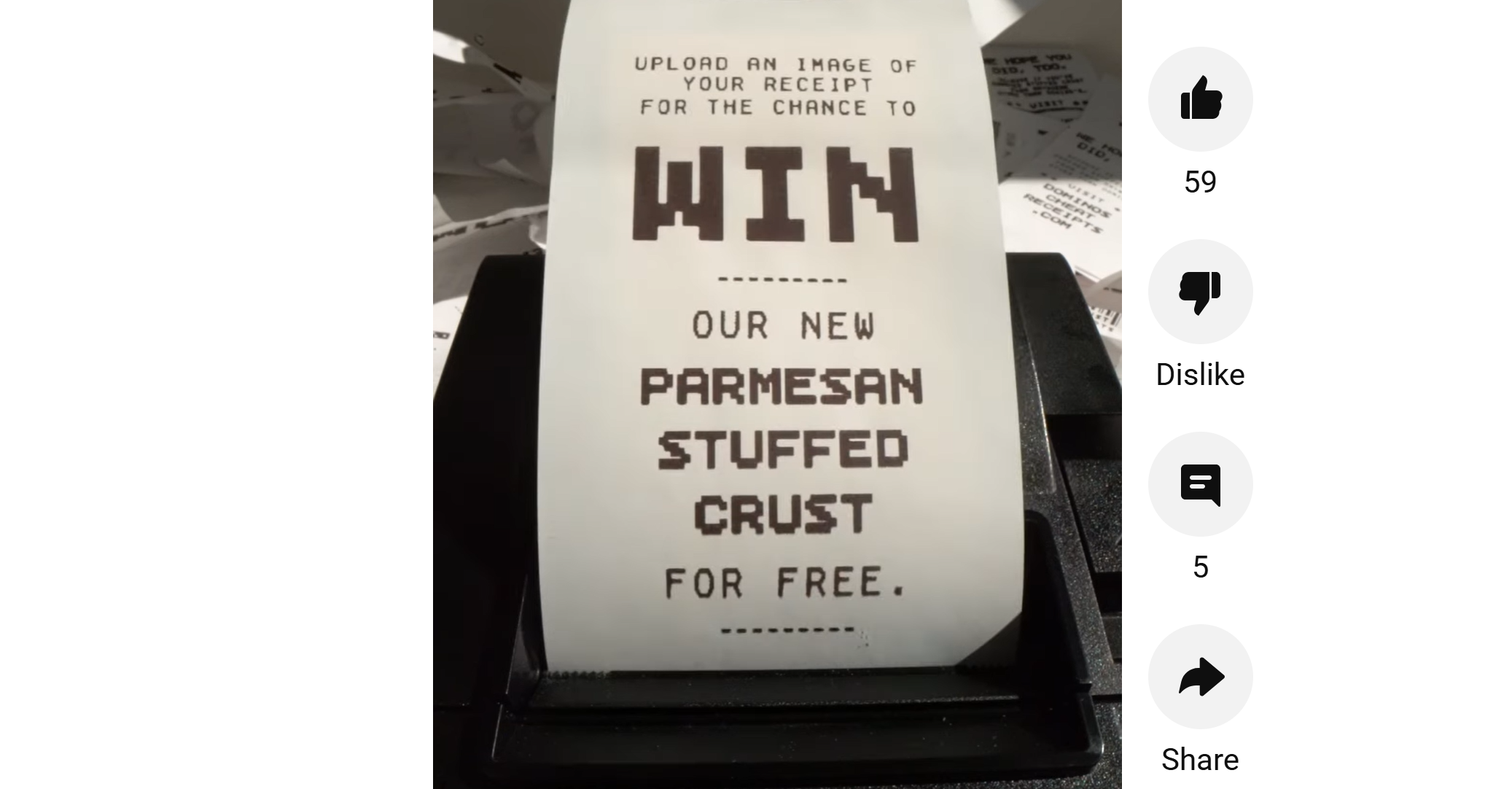
Domino’s frequently uses gamification to increase engagement. This technique generates audience interest and improves the overall buying experience.
Its app, for instance, has interactive elements such as a pizza tracker that gamifies the waiting process. The company runs reward programs as well, like “Piece of the Pie,” which lets customers earn points with every order and get a free pizza.
Domino’s also applies gamification in its operations. For example, it introduced a Pizza Hero app that stimulates real-time pizza making, allowing recruiters to identify good candidates.
The point is, making a standard process feel like a gaming experience generates curiosity, which in turn, brings more revenue.
Takeaway
Gamification has the potential to increase customer retention rates by 30%.
People enjoy challenges and earning prizes. It turns regular purchases into exciting experiences, inciting them to try again.
You can utilize gamification in every aspect of your operation, whether it’s recruitment, production, delivery, or customer service.
9. Brand Collaboration
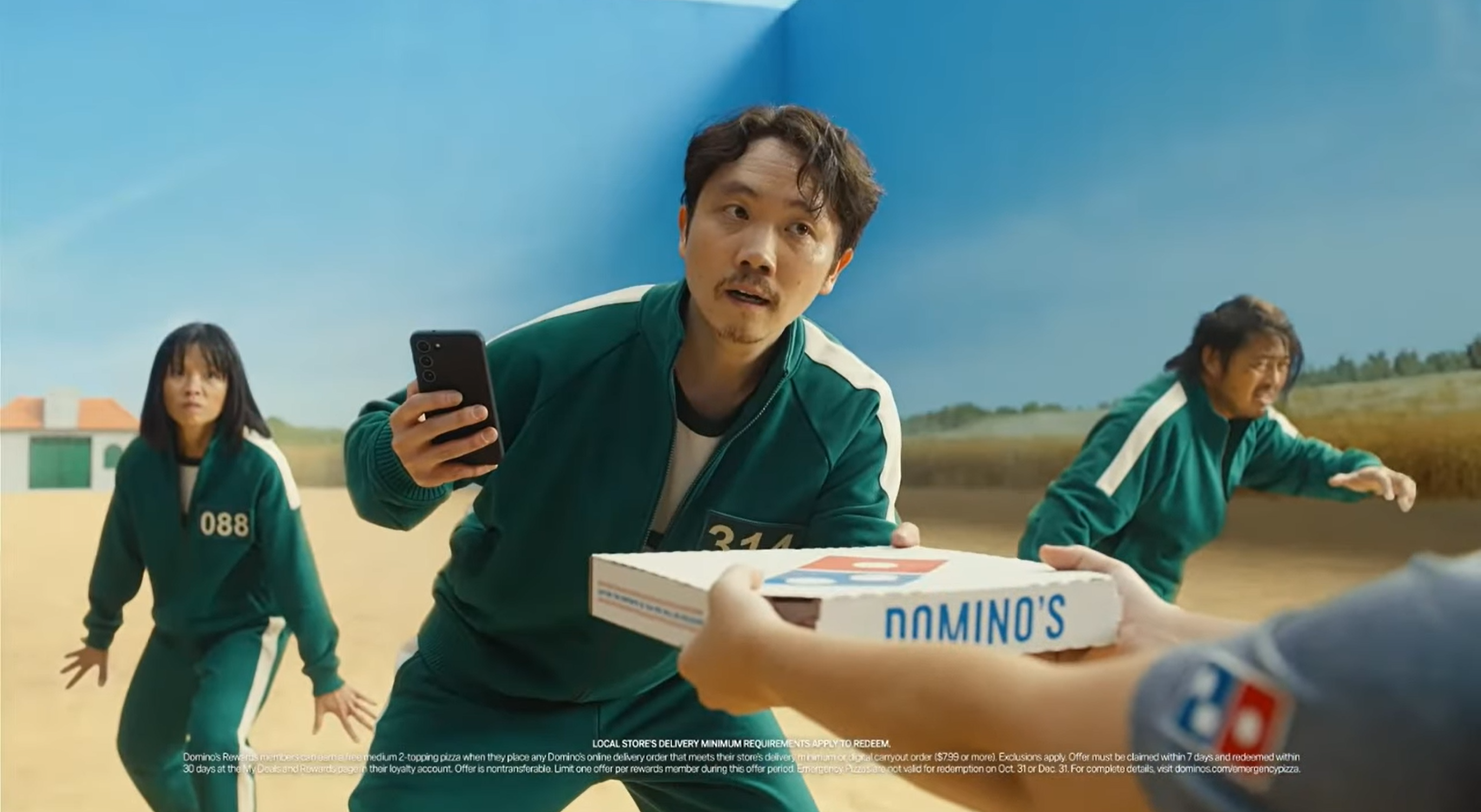
Domino’s has partnered with several popular brands over the years to promote its products and engage customers. While it’s not one of its primary marketing tactics, the strategy has helped the company increase its reach and capture new markets.
One notable collaboration was with Netflix for the “Stranger Things” series.
If you notice, there’s apparently no connection between Netflix and Domino’s, but it generated significant social media buzz and attracted younger audiences. It also allowed Domino’s to increase its mobile app usage.
Takeaway
Brand collaboration offers new promotion and revenue opportunities to both parties. You can get organic traffic, improve your reputation, and launch limited product lines.
Studies have shown that customers find brand collaboration more exciting and entertaining. If your company has limited exposure, you should try a partnership to diversify your audience portfolio and foster meaningful connections.
Conclusion
Domino’s doesn’t sell just a pizza to its customers. It offers convenient and comfortable food at a price that people find worth returning to buy more.
The experience, product value, and brand consistency have made it a favorite pizza brand globally.
Domino’s has also learned to stay in the media with clever marketing tactics.
From bringing product transparency and revamping it to literally fixing potholes to speed up the delivery, it knows how to keep things fresh, fun, and flavorful.
Speaking of fresh and flavorful, I am suddenly carving a pepperoni. Go ahead and explore its various marketing tactics while I enjoy a good old delicious Domino’s.


 A better way to manage projects and clients for freelancers
 Get through busy days like a breeze with Reclaim.ai