
Everyone faces a time in their career when everything feels urgent.
There are last-minute meetings, an instant ping from Slack, a quick approval request, or a priority email.
While these tasks do require your attention, they take away a chunk of your time without creating any meaningful progress.
Because of this, you remain busy all day and end up with nothing to show for it.
Sounds familiar?
The urgency trap is one of those subtle productivity drains that often goes unnoticed until you begin to see its effects.
It hampers your development and limits opportunities, hurting your career in the long run.
If you have already realized this, you have won half the battle. Now, you just need to identify bottlenecks and improve your current system.
I can help you with that.
In this article, I have shared the best productivity system to escape the urgency trap. My system is designed to operationalize deep work and maximize productivity.
Let’s explore it.
What Is Urgency Trap
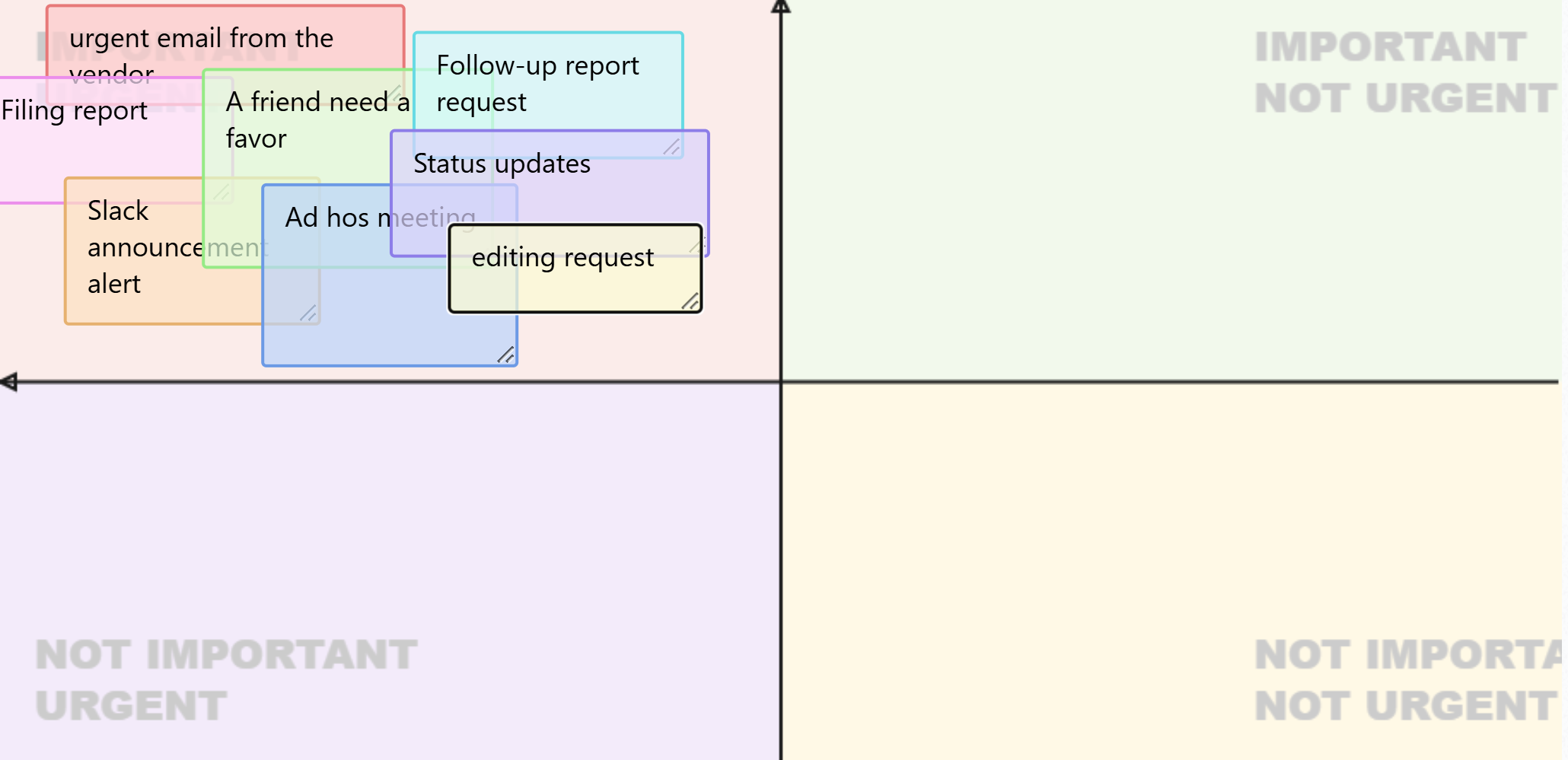
The urgency trap is a common work behavior where you prioritize immediate tasks, spending most of your productive time on trivial jobs.
Those tasks often feel highly demanding, creating a sense of urgency. But in practice, they are typically low-impact jobs that don’t contribute much to your main goals.
Over time, this behavior turns into a work habit, keeping you engaged but unproductive.
Let me give you an example.
I am a content writer, and my core job involves researching, drafting, and editing. Often, while working, I receive messages from peers asking for quick favors or suggestions.
These requests take only a few minutes of my time, so I naturally respond to them before getting back to work.
But then another follows, and before I know it, I’ve resolved a peer conflict, edited a previous article, replied to five messages, and checked my social notifications.
By the time I get back to my main task, I feel too tired to do anything meaningful.
92% of professionals consider an urgency trap the top productivity killer. Frequent interruptions disrupt your focus, and each distraction takes your brain 23 minutes to recover.
As a result, you lose almost 40% of your productive time.
Why, then, do professionals repeatedly fall into the urgency trap? Why do they find it so difficult to resist?
The answer lies in how our brain responds to external signals.
Why People Fall Into The Urgency Trap
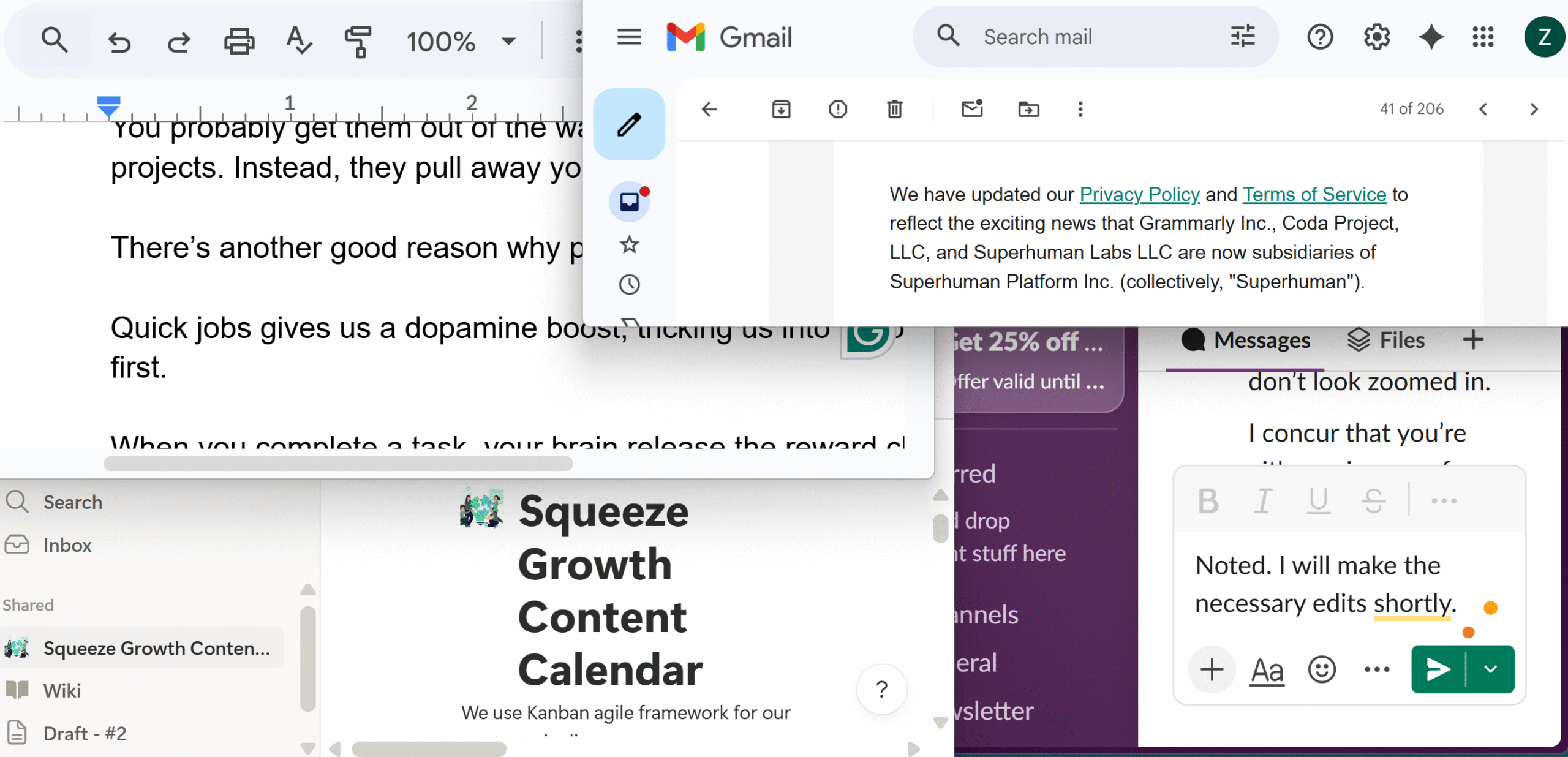
People generally fall into the urgency trap because our minds have trouble distinguishing between real and false urgency.
When you hear a message ping or receive a request from a colleague, your brain thinks the job needs immediate attention. You end up responding to low-priority jobs because they “feel” urgent.
This behavior is called the “Mere Urgency Effect.” It triggers your fight-or-flight response, compelling you to attend to the supposedly pressing matters.
Are you familiar with the term FOMO?
It’s a sales technique called the “fear of missing out” that drives customers to grab the opportunity before the sale ends.
While limited-time offers aren’t urgent matters, they still trigger the brain’s fight-or-flight response.
The Urgency trap works the same way.
It activates the FOMO response, urging you to prioritize short-term jobs.
There are tons of examples in your daily life. Such as tackling a minor administrative issue or giving a quick update to your boss.
You probably get them out of the way, thinking it would help you focus fully on important projects. Instead, they pull away your attention, draining your energy and time.
There’s another good reason why people fall into the urgency trap.
Quick jobs give us a dopamine boost, tricking us into choosing short-term activities first.
When you complete a task, your brain releases the reward chemical called “dopamine,” which makes you feel productive and gratified.
The more jobs you complete, the better you feel about yourself.
Eventually, you fall into the pattern, constantly chasing small chores, overlooking your main job.
If you want to actively avoid the urgency trap, structure your life and operationalize deep work. It will give you more control over your time and help you regain your focus.
What Is Deep Work
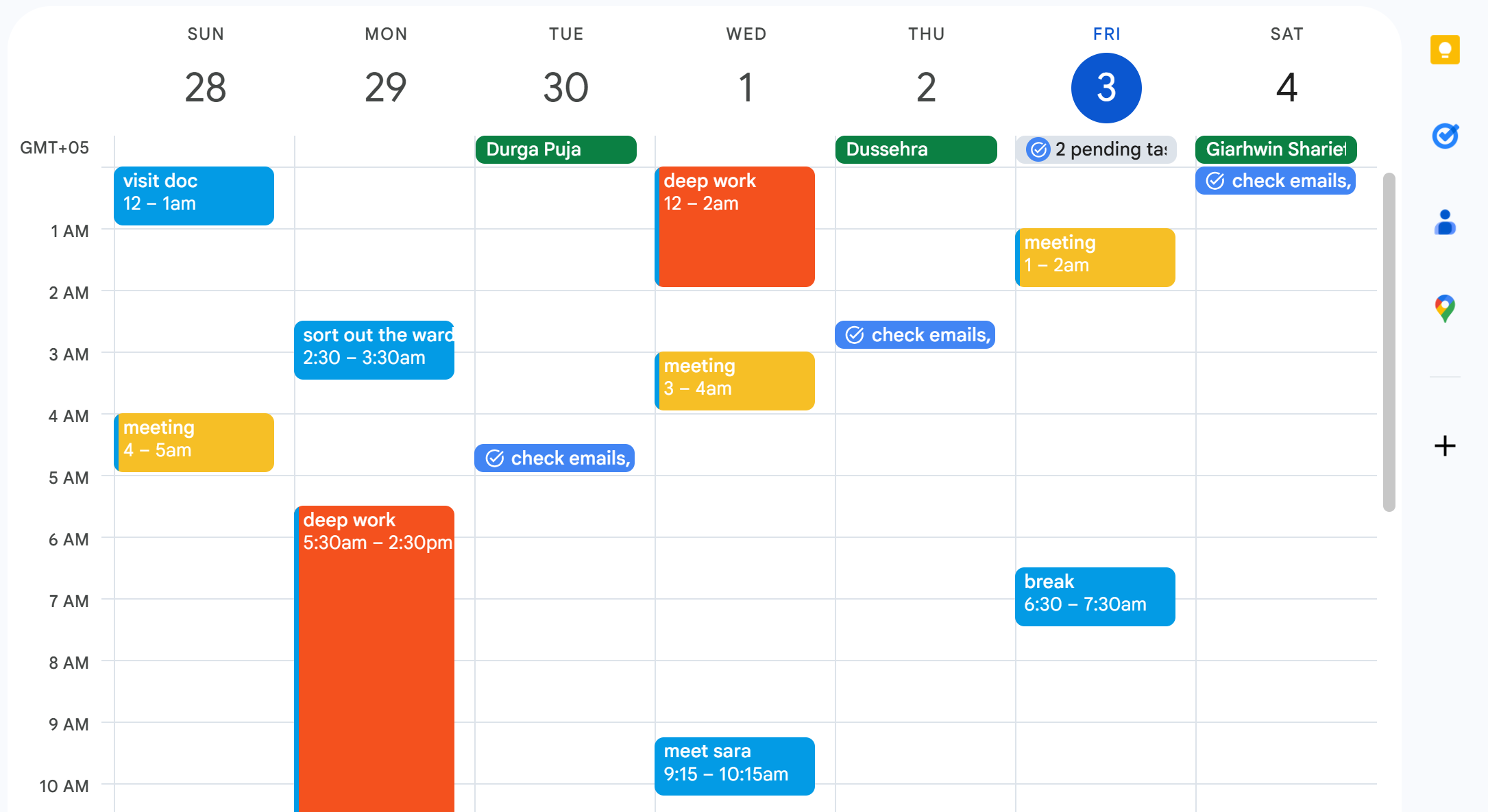
Deep work refers to high-impact tasks.
It’s a kind of work that requires your time and effort and produces meaningful outcomes.
These tasks are the complete opposite of shallow work, which mostly consists of low-impact and reactive chores like filling out reports. When you engage in deep work, you enter into your zone, accomplishing more in less time.
For example, conducting research, solving a complex problem, and working on a project.
You perform deep work in your personal life as well, such as cooking a new dish, planning your monthly budget, doing intense exercise, and painting. They might seem shallow, but they deliver clear and helpful outcomes.
Here are the key elements of deep work;
- Intense Concentration: The job requires a distraction-free environment and your undivided attention.
- Mental Engagement: You have to actively stretch your brain to complete it.
- Focus Time: It often demands uninterrupted time.
- Meaningful Outcome: It produces valuable results.
How To Operationalize Deep Work
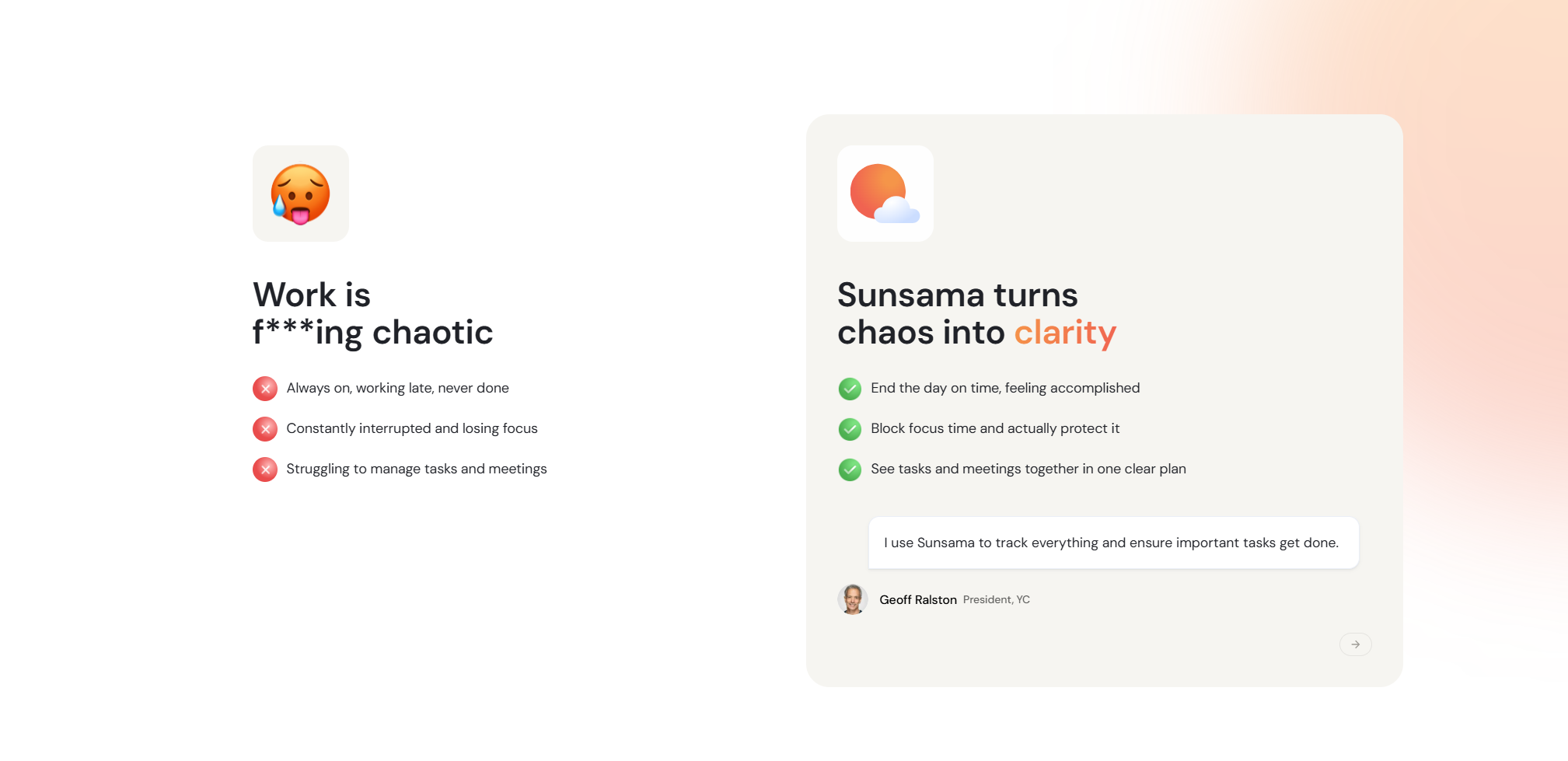
To operationalize deep work, you need to shift your mindset from reactive to proactive first to make space for new habits.
That means training your mind to make planned choices instead of reacting to interruptions.
You mainly start with clear goals, schedule deep work, and then set aside time for small tasks.
This builds a distraction-free environment, allowing you to concentrate on your main tasks.
Why does this system work?
We, humans, love patterns because we consider them safe.
Our brain processes patterns more easily and can predict outcomes without exerting much energy, making them more desirable to us.
That’s why when we see an organized structure, we respond well to it.
Operationizing deep work is like building a pattern.
You categorically structure your day, prioritizing high-value tasks and arranging unimportant jobs around it, forming a distinct daily ritual.
It helps you restrict distractions and focus on what matters.
There are tools available to operationalize deep work and build a realistic daily planner. Most people rely on them to stay on track and work more efficiently.
The Tool I Use to Operationalize Deep Work in 2026
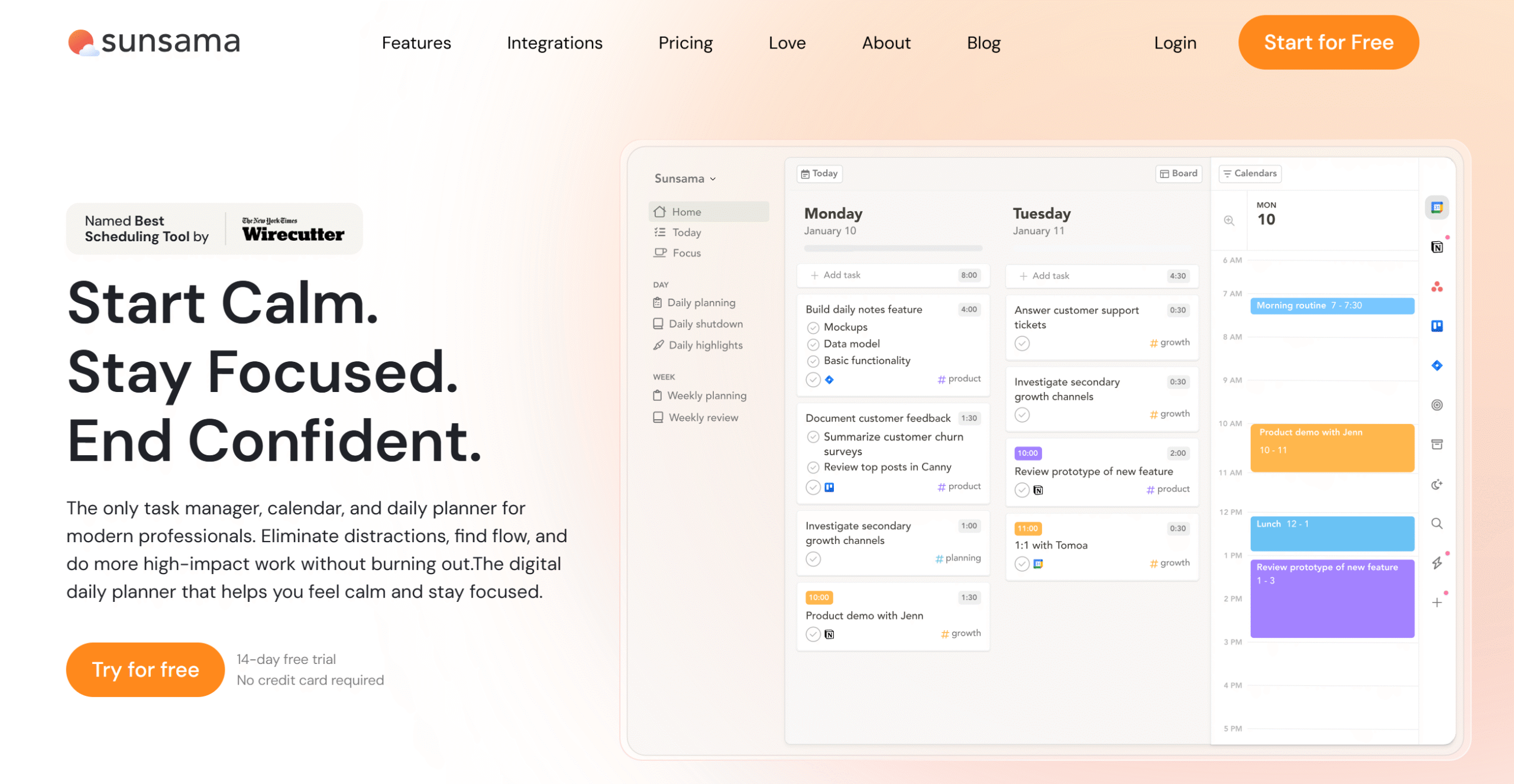
I personally use Sunsama to operationalize deep work and manage my day.
It’s a user-friendly app that comes with all the essential planner features and a smart task manager.
Let me give you a little background on the software.
Sunsama is a daily planner that centralizes your calendar events and tasks to manage everything from one place. You can use it to plan your day intentionally and create a schedule that fits your working style.
Core capabilities of Sunsama include guided planning, time blocking, task tracking, and daily reviews. You can import tasks and emails from other apps and schedule them on your calendar.
A focus mode is built into the system specifically for deep work. You can create a distraction-free environment inside Sumsama or place a floating focus bar at the top corner while working.
An analytics section is also available to track progress. You can see where you spend your time the most and measure your productivity.
Here’s the summary of Sunsama’s core features;
- A step-by-step guide to plan your day.
- Automatic time blocking.
- A visual task manager with easy task creation tools.
- A focus mode with a pomodoro timer.
- Direct integration with emails and project management tools.
- Daily and weekly highlights.
- Two-way calendar syncing.
- Cross-platform functionality.
The app costs $20 per month, and a 14-day free trial is available.
Now that we know a little about Sunsama, here’s how you can use this tool to operationalize deep work and escape the urgency trap in 2026.
1. Use Guided Planning To Organize Your Day
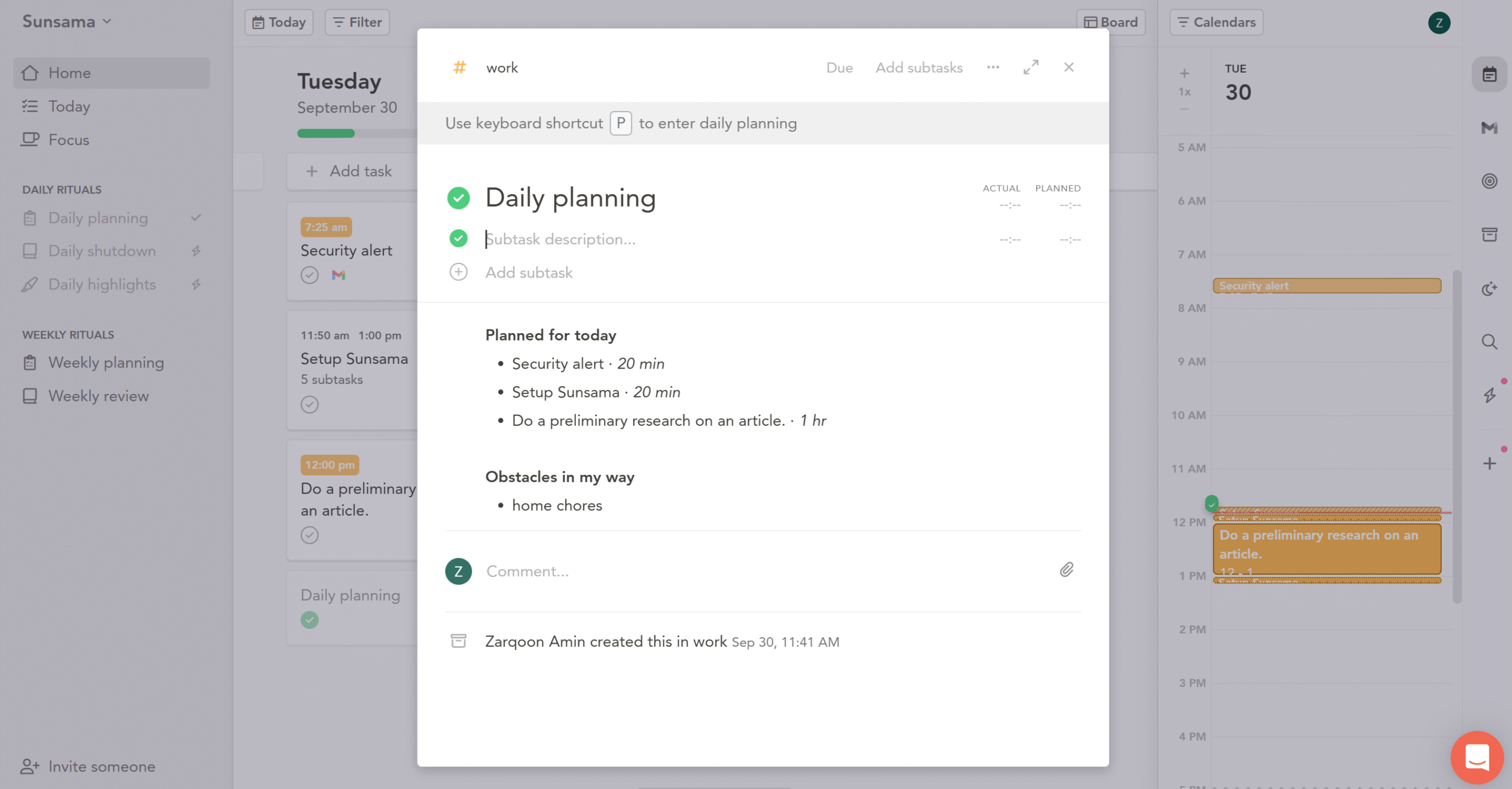
Sunsama provides a morning ritual to plan the day with clear intentions.
You write down a list of daily tasks with possible obstacles to set realistic expectations.
This is called mental contrasting.
The approach is self-regulatory and prevents you from overcommitting.
People who keep possible obstacles in mind while planning perform well, achieve more goals, and stick to their schedules.
Intentional planning also reduces false optimism.
We generally overestimate our abilities because we tend to overlook our limitations. We think we can meet the deadlines, but fail to account for possible interruptions and set up “ideal” expectations, inevitably falling short.
Researchers call this behavior the planning fallacy. You overestimate yourself despite past experiences because you unintentionally think of best-case scenarios.
With Sunsama’s daily ritual, you can train yourself to follow practical schedules.
No doubt, it would be difficult at first, but with time, you can make it work.
2. Block Time For Deep Work
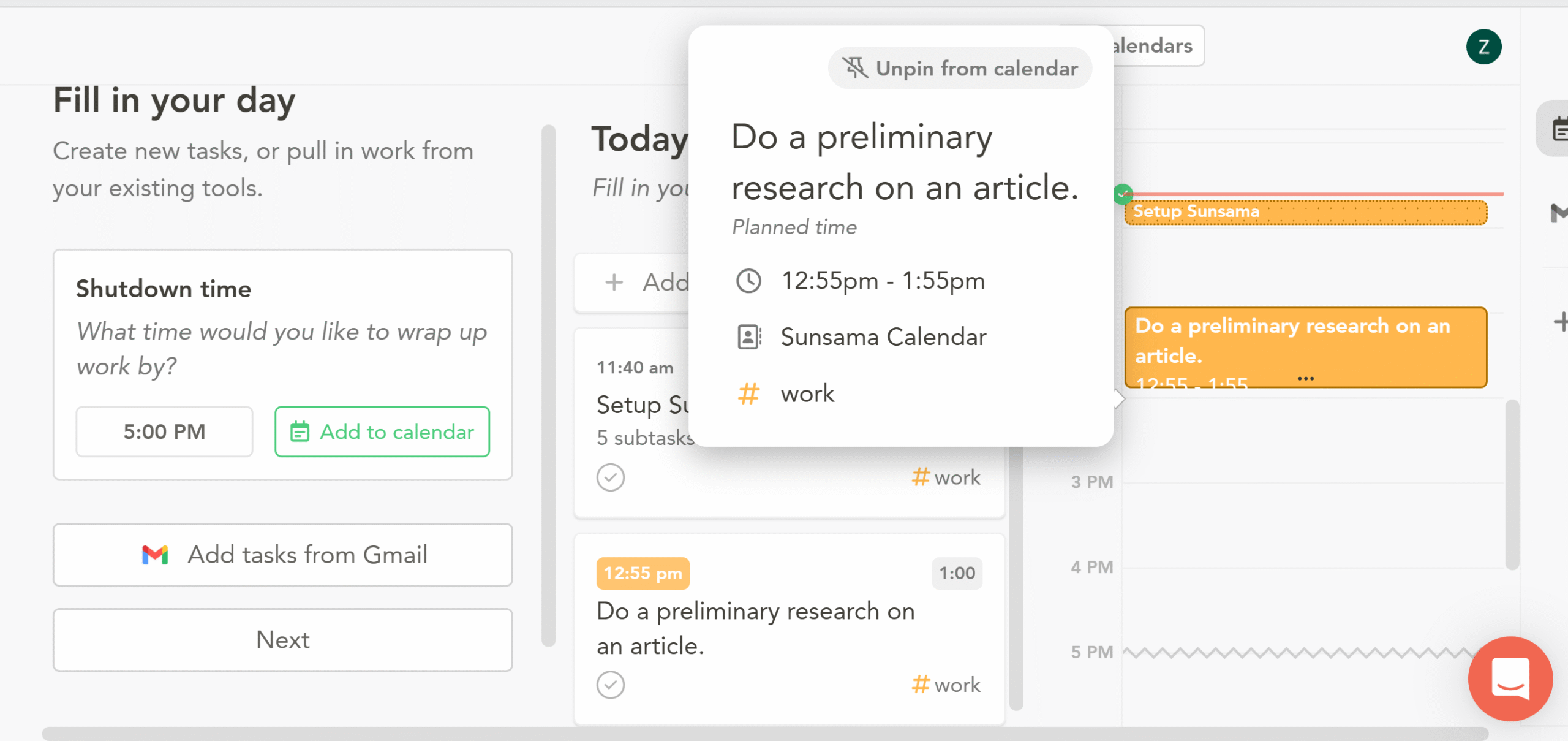
Once you have listed down your daily tasks and limitations, start reserving blocks of time for deep work.
I typically centralize my events, chores, emails, and Slack messages and convert them into tasks before scheduling. It helps me classify deep work and shallow jobs.
After categorizing the tasks, I book my peak hours for the deep work, which is usually between 10 am and 2 am.
Sunsama offers multiple ways to create tasks. You can integrate third-party to-do lists and project management apps and pull tasks from there, or you can create new tasks directly on the visual board.
If you add a new task to the board, Sunsama automatically reserves a block of time on the calendar.
You can also set work hours to protect your personal time. If you accidentally reserve more time, Sunsama immediately sends an alert letting you know that you have overcommitted.
3. Schedule Shallow Tasks
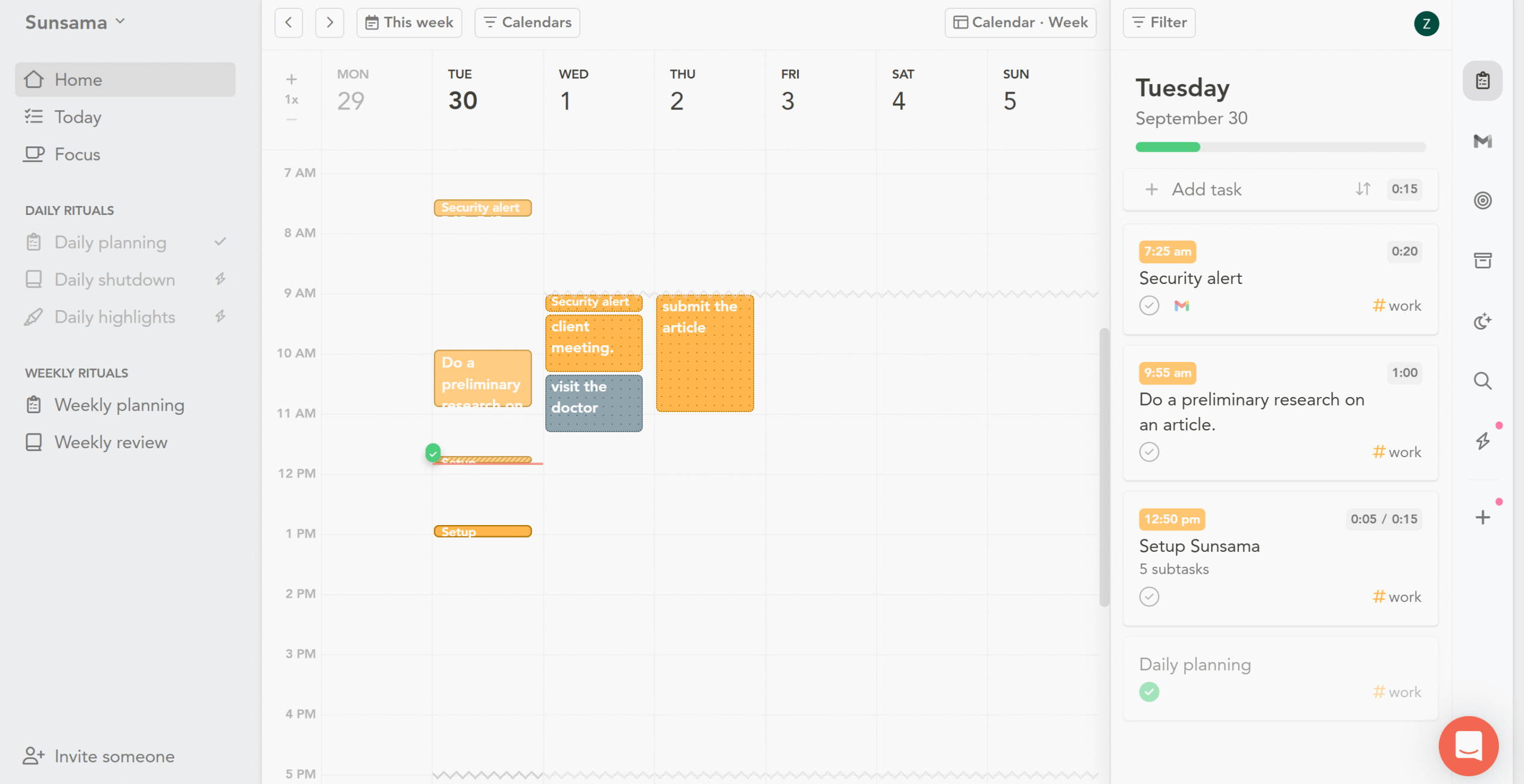
Shallow jobs deserve your equal attention because they consume most of your time and clutter your mind.
By making them a part of your daily planning, you can ensure they don’t spill into your deep work session and trigger the urgency trap.
This allows you to focus on high-priority projects while still managing the day-to-day routine jobs.
Set aside a time for shallow jobs when your energy is low.
I usually read emails in the morning to kickstart my brain and build momentum, schedule minor edits after 2 pm, and save tasks that require muscle memory for the evening. These are the time periods when my energy is low.
Tailor your schedule according to your work pattern. If you are a night owl, tackle deep work in the late hours and handle shallow jobs in the day.
4. Leverage The Focus Mode
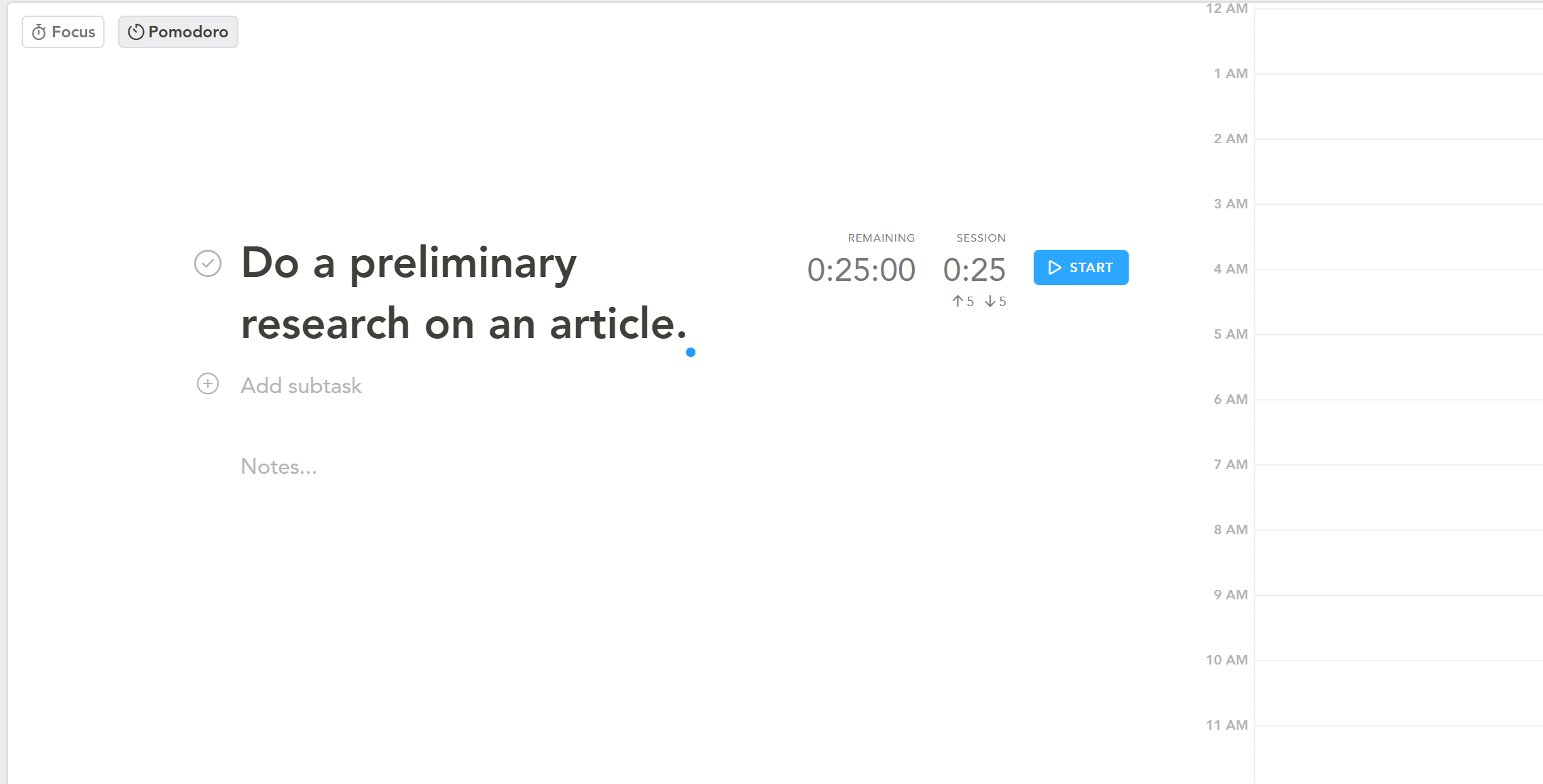
Sunsama delivers a focus mode that hides unnecessary items from the screen, leaving your current tasks in the center. Once you complete the job, the next task on the list shows up without interruption.
You can still access the calendar and other features by hovering on the blank screen, but they fade into the background when you focus back on the project.
The focus mode also has a built-in timer tracker and a Pomodoro timer. When you activate it, it records your actual time against your estimated duration to improve your projection.
A floating focus bar option is available as well. Whenever you work outside the app, you can activate it to keep you on track.
The focus mode is designed to help you escape the urgent trap and concentrate on deep work. With this tool, you can improve your work performance and work 30% faster.
5. Follow A Daily Shutdown Ritual
Operationalizing deep work is more than scheduling high-priority tasks. It includes building consistent rituals to save mental energy for deep work.
The daily shutdown ritual is one among them.
It’s a closing routine that involves self-reflection to see how you spend your day and what you plan to do next.
Why does this exercise matter?
Incomplete jobs often get stuck in our minds as open loops. They don’t close until we either finish them or forward them to the next day.
If we leave them unscheduled, they continue to drain our energy, preventing us from mentally clocking out.
It’s a pretty common cognitive behavior that can be managed through a daily shutdown ritual.
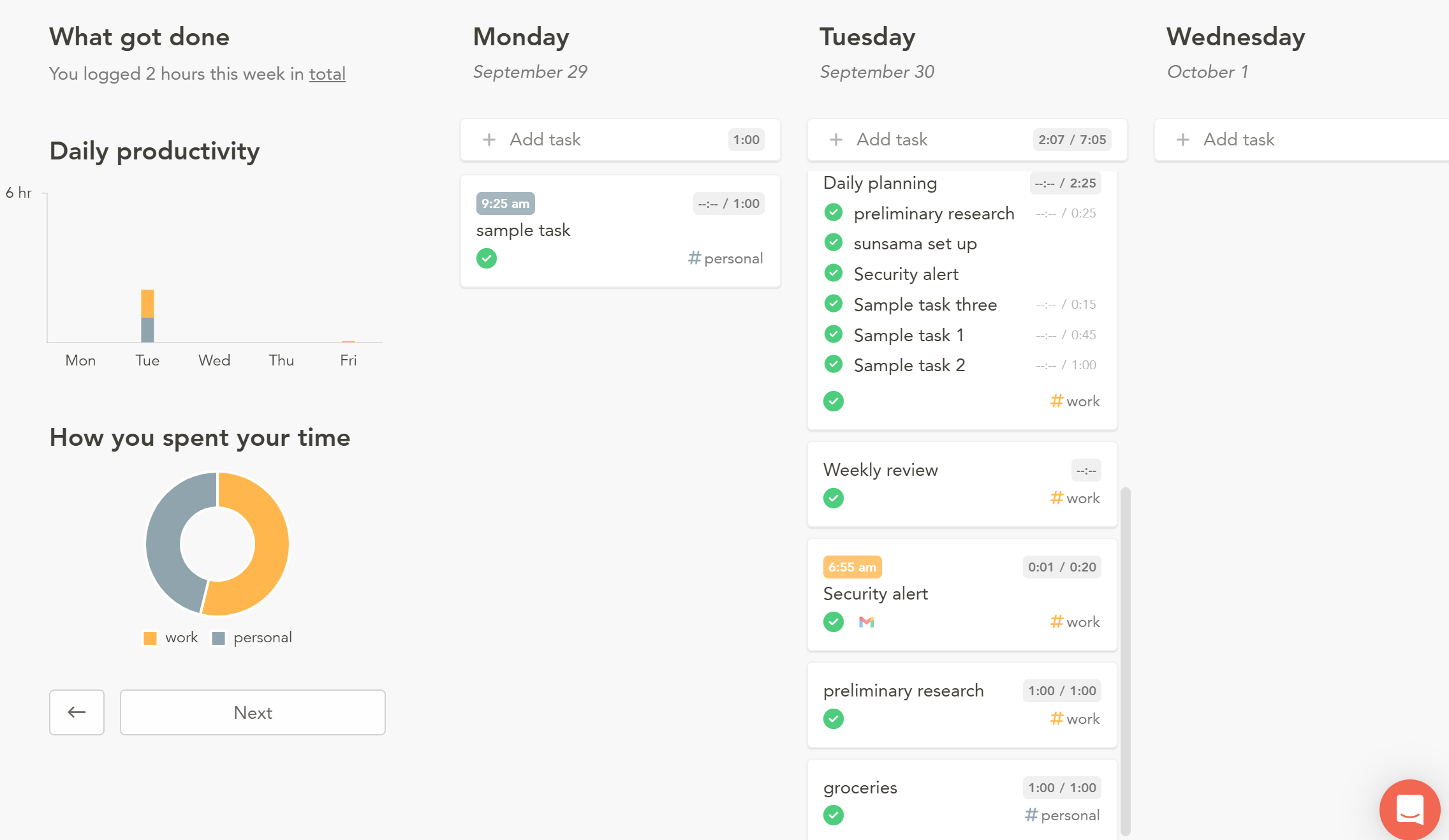
Sunsama offers both daily and weekly review sections for that purpose.
You can create a daily summary of finished and unfinished tasks to assess yourself. And at the end of the week, you can reset your goals to refresh them.
Conclusion
Escaping the urgency trap is attainable if you approach it with a proactive mindset.
When you start your day with deliberate choices instead of reacting to ad hoc jobs, you gain control over your schedule and produce more meaningful results.
The key is to operationalize deep work and focus on what matters the most.
With consistent efforts, you can eventually reduce your reactive responses and improve your productivity.
Try tools like Sunsama to operationalize deep work. Once you have developed a daily ritual, it will be easier to escape the urgency trap. Good luck!


 A better way to manage projects and clients for freelancers
 Get through busy days like a breeze with Reclaim.ai