You know what’s unreliable? Motivation.
One day you’re journaling, running, eating clean, the next you’re doomscrolling on your couch. That’s where progress tracking apps save me. Not because they’re magical. But because they keep score when I forget to care.
They turn “I should do this” into “I did this.” And that tiny feeling of momentum? It’s addictive in a good way.
I’ve used them to write more, run more, and procrastinate less. They don’t just log effort, they make it count.
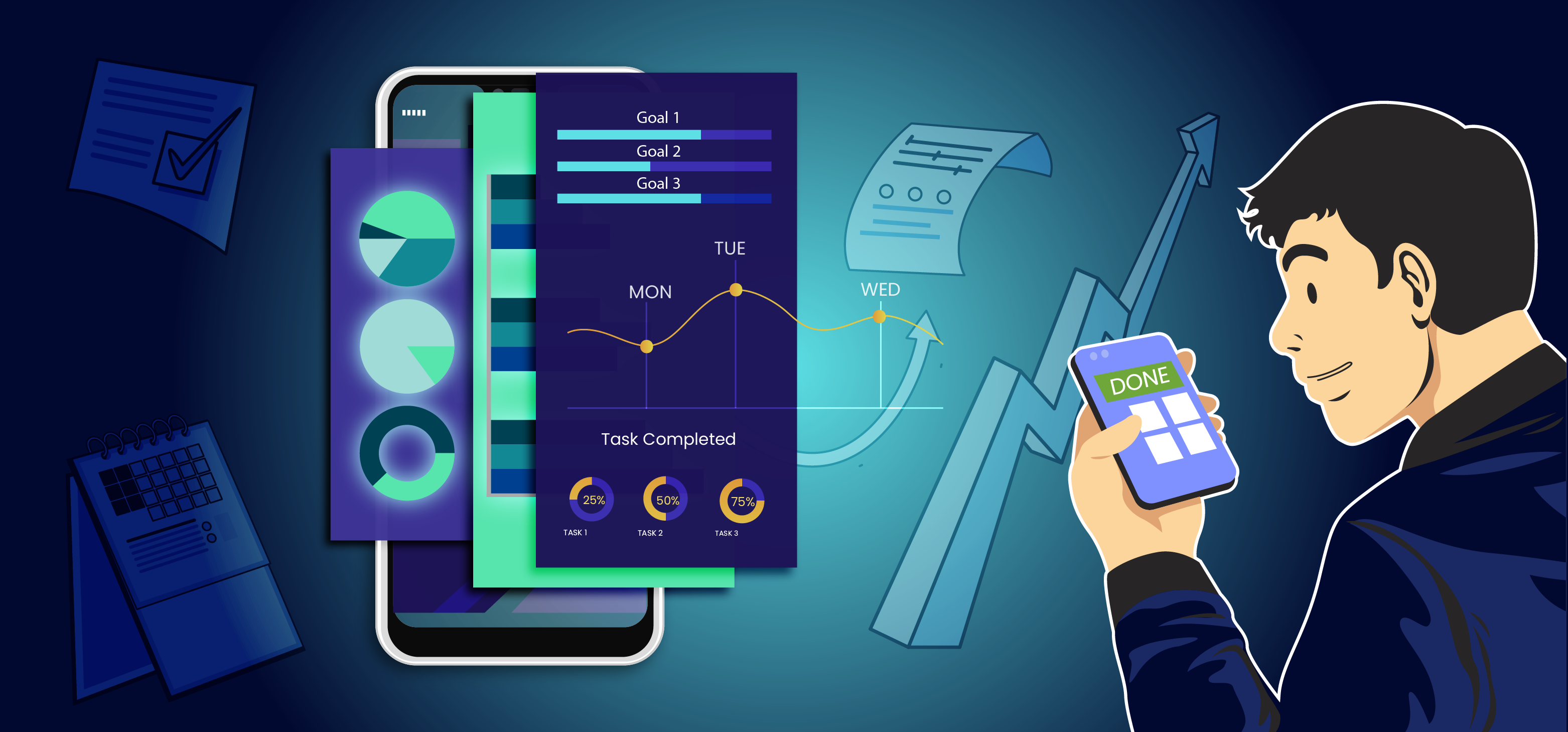
Whether you’re a student, founder, freelancer, or fitness nerd, here are 12 progress tracking apps that will help you in 2025.
What is a Progress Tracking App?
A progress tracking app is a tool that helps you monitor your journey toward a goal. That could mean checking off daily habits, logging time spent on tasks, or breaking big projects into measurable milestones.
Some apps keep things dead simple. Did you do the thing or not? Others give you streak charts, smart reminders, or even turn habits into a kind of game.
Why use one? Because tracking makes goals real. It boosts your chances of following through, builds momentum, and helps you understand what works (and what doesn’t). Whether you’re trying to drink more water or hit key results at work, tracking keeps you honest.
| App Name | Best For | Coolest Features |
| Strides | Habit + goal tracking | Four tracker types, goal templates, progress charts, and reminders |
| ClickUp | Project goal management | Custom dashboards, task dependencies, and goal tracking |
| Habitica | Gamified habit tracking | RPG elements, community quests, rewards |
| Coach.me | Personal development + coaching | Certified coaches, public goals, habit check-ins |
| Way of Life | Simple habit tracking | Yes/no tracking, habit journaling, trend graphs |
| Clockify | Time tracking with goal insights | Billable hours, reports, and project tracking |
| Notion | Custom progress dashboards | Templates, databases, cross-platform, full-page customization |
| DeskTrack | Automatic time + activity tracking | Background logging, screenshots, and productivity scoring |
| GoalsOnTrack | Structured SMART goal setting | Goal templates, habit tracking, and vision board |
| Timelog | Minimalist Pomodoro-style tracking | Focus mode, category tagging, Apple Health sync |
| Todoist | Task + habit combo | Recurring tasks, productivity streaks, calendar sync |
| Reclaim.ai | Calendar-based goal protection | Auto-scheduling, smart routines, and conflict resolution |
| Lifetick | Value-based goal setting | SMART goal tracking, journaling, and value alignment |
1. Reclaim.ai: Best for Smart Scheduling
TL;DR: Reclaim.ai is an AI scheduling assistant that auto-blocks time for your routines, habits, and goals. It works with your calendar to protect focus time and adjust for meetings on the fly.

Reclaim.ai is like having an assistant who protects your time and quietly ensures your priorities don’t fall through the cracks.
I used it during a week packed with meetings, and it instantly became one of my favorite low-effort productivity tools. It connects to your Google Calendar and automatically schedules time for your routines, goals, tasks, and even breaks, based on your availability.
You don’t just plan your week; Reclaim helps you defend it.
You set your goals (like “work on side project” or “read”) and define how often you want to do them, and Reclaim finds the best slots in your calendar no manual dragging or scheduling stress. It even reshuffles things if meetings arise, keeping your goals flexible but still visible.
What stood out is how smooth the experience is.
You manage everything right from your calendar, and it feels like you’re reclaiming time you didn’t know you had. It’s ideal for busy professionals, freelancers, and honestly…anyone who constantly says “I just didn’t have time.”
Key Features:
- Auto-scheduling for habits, goals, and routines
- Smart integration with Google Calendar
- Priority-based task reshuffling
- Shared calendar syncing for teams or partners
- Weekly reports on reclaimed hours
Pricing: Free plan available; paid plans start at $8/month per user.
2. ClickUp: Best for Team Goals and Project Milestones
TL;DR: If you’re leading a team or managing multiple work streams, ClickUp is a no-brainer. But even for individual use, the free tier packs enough power to seriously level your productivity.

If there’s one tool I’ve seen teams repeatedly turn to when goals start slipping through the cracks, it’s ClickUp.
I’ve used it across solo projects and team-wide operations, and honestly, it’s one of the few platforms that makes you feel like you’re getting your life together. The layout is clean but flexible, and everything from goal tracking to recurring tasks feels more customizable than most apps.
ClickUp isn’t just a to-do list on steroids. You can set high-level goals, break them into measurable targets, assign them to team members, and track progress visually. It’s kind of like building your productivity cockpit. You decide which widgets and metrics matter, and your dashboard reflects that.
It shines in collaborative workflows. Comments, task dependencies, and real-time updates make it easy to keep everyone on the same page. Plus, the integrations are solid, you can sync it with Google Calendar, Slack, and even time trackers like Everhour.
Key Features:
- Customizable dashboards for real-time tracking
- Task relationships and dependencies
- Integrations with Slack, Google Workspace, and 1,000+ apps
- Goals with progress bars and sub-targets
- Everything is searchable, down to subtasks
Pricing: Free plan available. Paid tiers start at $7/month per user (billed annually).
3. Habitica: Best for Gamifying Your Life
TL;DR: Habitica is ideal if you struggle to stick to goals with traditional tools. It keeps things playful but surprisingly effective.

If you’ve ever wished your to-do list felt like a game, complete with swords and quests, Habitica is the app for you.
I started using it as a fun experiment, but the gamification works. You create a character, set up your habits and tasks, and earn rewards (or take damage) based on what you complete, or skip. It sounds silly, but there’s something deeply satisfying about checking off a task and watching your avatar level up.
Unlike traditional trackers, Habitica turns your goals into a role-playing game. You can join quests with friends, form parties for accountability, and even fight bosses by being productive. Miss a task? Your team feels it too. It’s social pressure in the best possible way.
The design is more pixel-art nostalgic than sleek and modern, but that’s part of the charm. And under the hood, it’s more flexible than you might think. You can separate recurring habits from daily tasks and long-term to-dos, set custom difficulty levels, and earn gold to “buy” in-game rewards or real-life ones you define.
Key Features:
- RPG-style interface with XP, gold, and boss battles
- Separate tracking for habits, dailies, and to-dos
- Social features like parties, guilds, and challenges
- Custom rewards and difficulty settings
- Web and mobile support with full sync
Pricing: Free with optional subscription ($5/month) and in-app purchases for gems.
4. Coach.me: Best for Personal Development (With a Human Touch)
TL;DR: Coach.me is a great pick if you’re serious about self-improvement and want a mix of structure and motivation without a bloated dashboard.

Coach.me isn’t just about tracking habits, it’s about changing them, especially if you need a little push beyond the usual checkboxes.
I tried it out during a burnout slump, and what stood out was how support-focused the platform is.
You can track habits on your own, but the magic happens when you tap into the coaching ecosystem. You can hire certified coaches (starting at $25 per week) who check in with you, answer questions, and offer genuine accountability.
But even without a coach, the habit tracker itself is solid. You set goals, get daily reminders, and join public communities for everything from meditation to writing. People cheer you on when you check in, which feels good. It’s like social media, but productive.
The interface is minimal, almost too barebones at times, but it keeps the focus on your goals.
Key Features:
- Habit tracker with check-ins and reminders
- Optional coaching from certified professionals
- Community support via public goals and encouragement
- Clean, minimalist design
- iOS, Android, and web access
Pricing: Free for tracking; coaching starts at $25 per week, depending on the coach.
5. Way of Life: Best for Minimalist Habit Tracking
TL;DR: Way of Life doesn’t try to do too much, and that’s kind of the point. It’s ideal for people trying to build consistency without the distractions of an overdesigned app.

Way of Life is the habit tracker I recommend to people who want to start. It does not use gamification or complex dashboards just a dead-simple, color-coded system that helps you build better habits one tap at a time.
When I tested it, I was surprised at how fast it got out of the way.
You open the app, check off your habits for the day, and get a visual streak view that makes it clear where you’re doing great and where you’re slipping. It’s all built around the idea of yes/no habit tracking, which sounds basic but is surprisingly effective.
The real kicker is the built-in journaling. You can jot down quick notes on why you skipped a habit or what triggered a win. Over time, this gives you patterns you can act on. And if you’re into data, the trend charts and pie graphs will keep you engaged.
You open it, swipe green for “done,” red for “missed,” and move on. The charts are surprisingly deep if you want them, but they never overwhelm you.
Key Features:
- Color-coded yes/no tracking system
- Daily reminders and streak views
- Simple habit journaling
- Charts, graphs, and trend analysis
- Works offline
Pricing: Free with up to 3 habits; premium unlocks unlimited tracking ($6.99 one-time purchase on iOS, subscription on Android).
6. Clockify: Best for time tracking with goal insights
TL;DR: If your progress is measured in hours, output, or efficiency, Clockify makes just sense.

If you’ve ever finished a workday and thought, “Where did my time go?”, Clockify answers that, down to the minute.
I’ve used Clockify during some of my busiest stretches, and it’s the app for anyone juggling multiple clients, projects, or even personal productivity goals. Time tracking is dead simple: start a timer, log tasks manually, or let your computer track your activity automatically. It’s like having a GPS for your day.
It stands out how well it connects time tracking to goals. You can set project estimates, monitor billable hours, and generate reports that show how your time aligns with your priorities. It’s not just about logging hours. It helps you work smarter.
The design is clean, the browser extensions are smooth, and the integrations are solid. It syncs with everything from Trello to Asana to Google Calendar. You can even invite your team and get a shared view of how time is spent, making it an excellent fit for small teams and freelancers.
Key Features:
- One-click time tracking and manual entries
- Project estimates and tracked vs. actual reports
- Billable hours and invoicing support
- Chrome, Firefox, and desktop extensions
- Team dashboards and user management
Pricing: Free forever for basic time tracking; paid plans start at $3.99/month per user for advanced features.
7. Notion: Best for custom progress dashboards
TL;DR: Notion is best for visual thinkers or anyone who wants their progress tracker to feel like theirs. Just expect to build before you start tracking.

Notion isn’t built for tracking progress, but it can handle it checklists, tables, habit trackers, and dashboards. You can create your system, whether it’s a daily habit log or a full-on weekly planning board.
I’ve used it to track goals and manage content calendars.
It’s flexible enough for both. You can set up a Kanban board to show weekly habits, a simple checkbox list with streak counters, or layer everything onto one page with toggles.
That said, the learning curve is real.
This isn’t plug-and-play like Habitica or Way of Life. But if you like tinkering and want something that works your way, it’s worth it. There are plenty of free templates out there to get started faster.
Key Features:
- Fully customizable pages and databases
- Goal templates, habit trackers, and dashboards
- Integrations via Notion API + third-party tools
- Rich content blocks (text, tables, charts, embeds)
- Cross-platform sync (desktop, mobile, web)
Pricing: Free for personal use. The Plus plan starts at $ 8 per month per user.
8. DeskTrack: Best for automatic time + activity tracking
TL;DR: If you want an unfiltered look at how you spend your time on a computer, DeskTrack gets the job done with almost no input.

DeskTrack is one of those tools that quietly watches your digital life and gives you receipts.
I tested it while juggling a few freelance projects, and it was honestly a wake-up call. DeskTrack runs in the background and logs your application usage, websites visited, file activity, and even time spent on idle screens.
Unlike manual trackers, where you have to start a timer or hit “record,” DeskTrack does it all on its own.
That makes it especially helpful for teams or individuals who want transparency without micromanagement. If enabled, you get categorized reports (productive vs. non-productive apps), screenshots, and even document titles to track billable work.
It’s not the most design-forward app on this list, some parts feel more utilitarian than polished, but it’s spot on if your goal is data-backed accountability.
If you’re using it with a team, be mindful of privacy settings.
Key Features:
- Automatic tracking of app usage, websites, and files
- Categorized reports with productivity scores
- Optional screenshots and document title tracking
- Offline tracking with later sync
- Employee monitoring features for teams
Pricing: Starts at $2.99 per month per user (with a free trial available).
9. GoalsOnTrack: Best for structured goal-setting with SMART templates
TL;DR: GoalsOnTrack is a powerful goal-setting system built entirely around SMART goals. It’s great for breaking big goals into actionable steps, tracking habits, and visualizing progress.

If you like structure, frameworks, and a system that holds you accountable, GoalsOnTrack is a hidden gem.
It’s built entirely around the SMART goal methodology (Specific, Measurable, Achievable, Relevant, Time-bound) and guides you in breaking goals into actionable steps from the start.
I gave it a spin during a quarterly planning phase and was impressed by its thoroughness. You don’t just list goals, you define success metrics, break things into sub-goals, set deadlines, and even visualize the whole plan with built-in charts.
It’s like a personal OKR dashboard, minus the corporate bloat.
One of my favorite parts is the habit tracker. You can link daily habits directly to your larger goals, so you’re constantly reminded why you’re building those routines in the first place.
There’s also a vision board and a journal feature if you’re into more holistic tracking.
The UI feels dated in some places, but the functionality is rock-solid. It’s made for people serious about goal-setting, not just casual habit tracking.
Key Features:
- SMART goal framework with templates
- Sub-goals, deadlines, and progress tracking
- Habit tracker tied to long-term objectives.
- Vision board and journaling tools
- Web-based with mobile access
Pricing: $68/year (no free plan, but 30-day money-back guarantee)
10. Strides: Best for customizable goal + habit tracking
TL;DR: Strides is a solid pick if you’re trying to stay consistent and want real visibility into how you’re trending (instead of just checking boxes).

I’ve mainly used Strides on and off over the past year to track long-term habits, such as reading, fitness, and writing output.
What makes it stand out is how flexible the tracking system is. You’re not locked into just streaks or checkboxes. Strides lets you build trackers around specific outcomes, averages, milestones, or consistency.
For example, I created a “Write 1,000 words a day” tracker using the target option and a “30-day gym streak” using habit mode. The app turns this into clean progress bars and charts that show exactly how I’m doing, without overcomplicating anything.
The UI is straightforward but detailed.
You can set reminders, use goal templates to skip setup, and check stats anytime. It’s more minimal than something like ClickUp, but that’s part of the appeal. Strides is for individuals, not teams—and it does that job well.
Key Features:
- Four tracker types: habit, target, average, milestone
- Progress reports and charts
- Goal templates for quick setup
- Daily reminders and smart notifications
Pricing: A free plan is available. Premium starts at $4.99 per month for advanced features like tags, filters, and unlimited trackers.
11. Todoist: Best for task + habit tracking in one clean app
TL;DR: Todoist is a sleek, reliable task manager that doubles as a habit tracker with recurring tasks. Great for blending personal and work tasks without the clutter. Ideal if you want a simple, all-in-one tool.

Todoist has been around forever, and for good reason, it’s one of the most balanced tools for managing tasks and habits without overwhelming you.
I’ve personally used it for everything from daily routines to multi-phase projects. Its minimalist design and powerful features under the hood set it apart.
To stay focused, you can create recurring tasks, use natural language input (“every Monday at 9 am”), and apply filters and priority levels.
But the real kicker? You can turn recurring tasks into a pseudo-habit tracker.
Just set a repeating daily task like “Drink water” or “Write for 30 mins,” and Todoist tracks your streak automatically. You won’t get charts or gamification, but this is it if you want a unified system for work and life that respects your time and brainpower.
It syncs beautifully across devices, and the integrations (Gmail, Google Calendar, Zapier, etc.) make it easy to integrate with whatever ecosystem you already use.
Key Features:
- Task lists with natural language input
- Recurring tasks + productivity streaks
- Labels, filters, and priority levels
- Beautiful UI across web, mobile, and desktop
- Deep integrations (Calendar, Zapier, Gmail, more)
Pricing: Free plan available; Pro starts at $5/month.
12. Lifetick: Best for Reflective Goal Setting
TL;DR: Lifetick is a values-based goal tracker that connects your goals to what matters most. Includes SMART templates, journaling, and progress reports. Best for thoughtful planning over quick task management.

Lifetick takes a more reflective, intentional approach to goal tracking. Instead of jumping straight into tasks, it starts by asking you to define your core values, then builds your goals around them. It’s like journaling and productivity had a thoughtful baby.
I used it during a planning week when I wanted more than just a list of things to do.
Lifetick had me list my values first (like health, creativity, or relationships) and then helped me map goals back to those. It’s a subtle shift, but it makes your goals feel more grounded and less like busywork.
The interface feels dated, but it gets the job done.
You get SMART goal templates, milestone tracking, and a journaling section where you can reflect on your progress. There’s also a solid reporting dashboard to see how aligned your actions are with your long-term values.
Lifetick isn’t built for daily to-dos or rapid iteration. It’s for people who want clarity, structure, and a deeper connection to what they’re working toward.
Key Features:
- Value-driven goal framework
- SMART goals with milestones
- Progress charts and reports
- Built-in journaling
- Team accounts for shared goal-setting
Pricing: Free trial available; personal plan starts at $16/year.
How to Choose the Right Progress Tracking App
Hundreds of apps out there promise to help you “stay productive” or “hit your goals.” But here’s the truth, most of them won’t stick unless you pick one that fits how your brain (and life) works.
Here’s what I look at when helping friends or clients choose the right progress tracker:
1. Identify Your Goals
Before opening the App Store, get clear on what you’re trying to track. If your focus is on personal habits like reading, journaling, or getting better sleep, habit trackers like Way of Life, Habitica, or Coach.me are solid choices.
For managing a work project or side hustle, you’ll need more structured tools like ClickUp, Notion, or Todoist, which are better suited for that. And if you’re working with a team, consider options like Reclaim.ai or Lattice, which offer visibility across shared goals.
The clearer you are about the type of progress you’re tracking, the easier it is to find a tool that fits.
2. Consider the Features You’ll Use
Every app has a laundry list of features, but only a few will move the needle for you. If you need nudges to stay on track, look for apps with reminders or notification-based tracking like GoalsOnTrack or Timelog.
Already using tools like Google Calendar, Slack, or Trello? Choose something that integrates well. ClickUp, Reclaim, and DeskTrack all play nicely with others.
If you’re motivated by streaks or rewards, a gamified app like Habitica might help you stick with it longer. And if you’re into data, look for tools with dashboards and reports, like Clockify, Lifetick, or DeskTrack.
Don’t pick something because it can do a lot. Pick it because it does the one thing you need, really well.
3. Know Your Budget
Most apps offer a free tier, and for many people, that’s enough. But the real magic, analytics, automation, and team features often live behind a paywall.
If you’re just getting started, it’s smart to test-drive the free version for a few weeks. On the other hand, if you’re managing work or leading a team, paying $5–$10 a month for clarity and focus is usually worth it.
Don’t fall for the trap of thinking a more expensive app equals better results. Progress still comes down to doing the thing.
4. Pay Attention to the UX
This one’s huge, pay attention to the user experience (UX). You’ll be opening this app every day, maybe multiple times a day, so if it feels clunky, confusing, or ugly, you won’t stick with it.
Look for something you enjoy opening. A clean layout, good mobile design, and fast sync all make a difference. If an app looks like it hasn’t been updated since 2014, it probably won’t keep up with your workflow. Bonus points if it syncs across devices, tools like Todoist, Notion, and Clockify make it easier to stay consistent.
No app will make progress for you. But the right one will make it easier to show up, stay organized, and see how far you’ve come.
Final Take
Progress tracking isn’t about being perfect. It’s about building momentum one small win at a time.
Find an app that fits your brain and nudges you forward when motivation drops. For me, it’s Strides for personal habits, ClickUp for team goals, and Habitica when I want to make productivity feel like a game.
Whether you’re trying to build healthier habits, manage a busy project calendar, or just figure out where your time goes, a tool here can help. But no single app works for everyone.
Try a few and see what sticks. The right app is the one you’ll use, not the one with the most features.
And once you find that fit? You’ll be surprised how much easier it becomes to stay consistent, stay focused, and hit your goals with less stress.


 A better way to manage projects and clients for freelancers
 Get through busy days like a breeze with Reclaim.ai