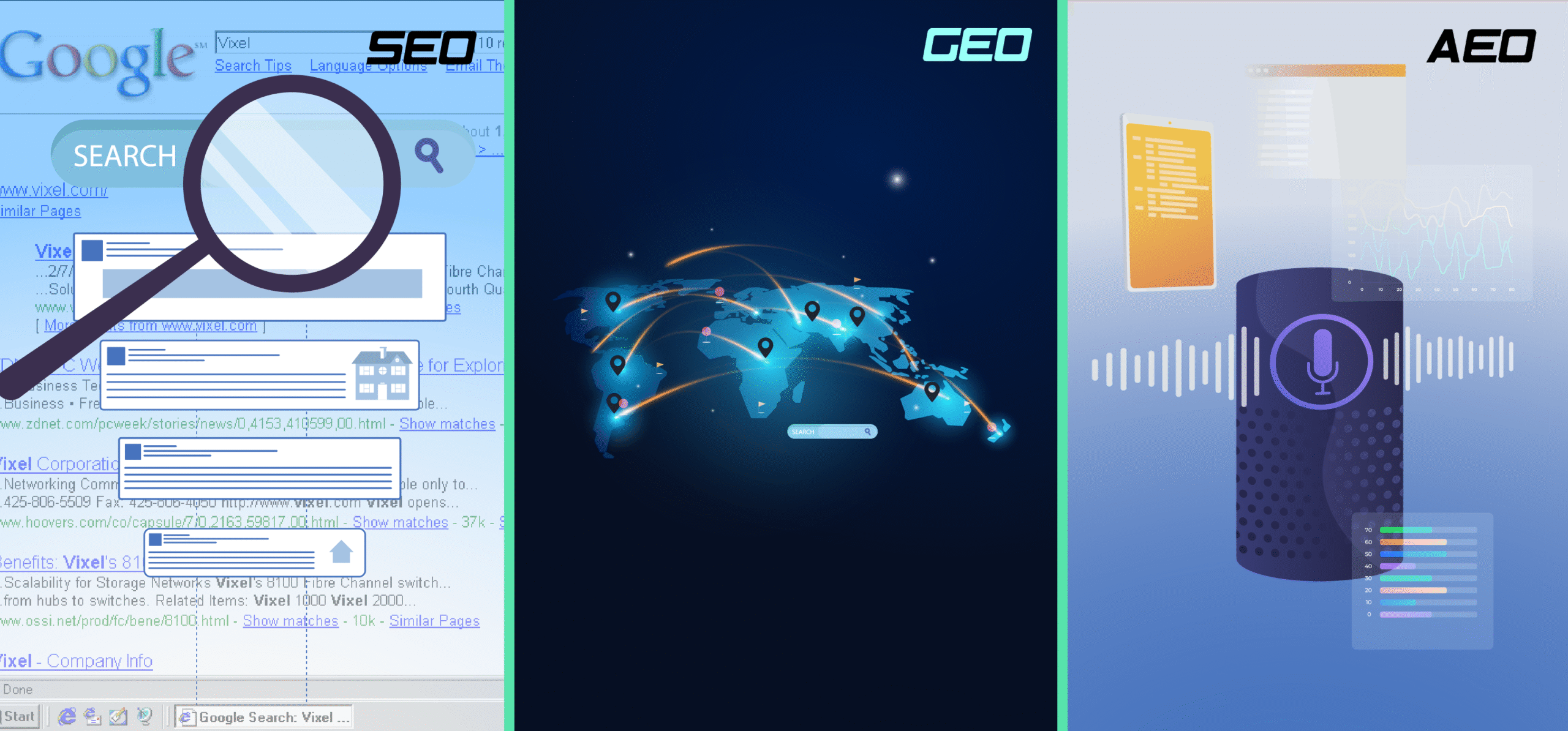
“SEO is dead!”
You must have read this on the internet.
Well, the truth is, Google caters to ~14 billion searches daily. That’s ~80% of the total searches around the globe.
So, SEO is still pretty important.
However, 58-60% of searches in America and Europe now end with zero clicks. The data must not be very different for the rest of the world.
Meanwhile, voice assistants like Alexa, Siri, and Google Assistant have also gained massive popularity, helping millions of people find instant answers without even looking at a screen or visiting a website.
On top of that, ChatGPT alone responds to more than 2.5 billion queries daily. That’s just one tool. Add other Gen AI tools, and the total number of queries would be far higher. Around 8–10% of these queries are estimated to be similar to traditional search.
So, the point is, the way people search has changed drastically.
That’s why search engine optimisation alone isn’t enough anymore.
What matters today is Search Everywhere Optimisation.
In this article, we’ll explore SEO, AEO, and GEO, how the top tools rank content, and what really sets them apart.
Let’s get started!
What is SEO?
SEO (Search Engine Optimisation) means improving your website and its content so it ranks higher on search engines like Google or Bing.
In simple terms, SEO helps your website show up when someone searches for what you provide.
The end goal is to rank on the first page of Google search ranking for the topics relevant to your business. When you do, more people discover your website, traffic grows organically, and your chances of turning visitors into customers increase naturally since people see you as more credible in your niche.
How does SEO work?
When someone types a query, search engines crawl billions of pages, index them, and then rank results using hundreds of signals. They decide which content best matches the intent and deserves the top spot.
SEO helps search engines find, understand, prioritise and rank your content higher. It does so by aligning on-page, off-page, and technical aspects of a website with how search algorithms work.
How Google Ranks Content On Search Engines?
Google analyzes over 200 factors to decide which pages appear first. The goal is to deliver the most relevant, well-organized, and trustworthy answers to every query.
According to research by First Page Sage, one of the largest digital marketing agencies in the U.S., here’s how those ranking factors are weighted in Google’s 2025 algorithm:
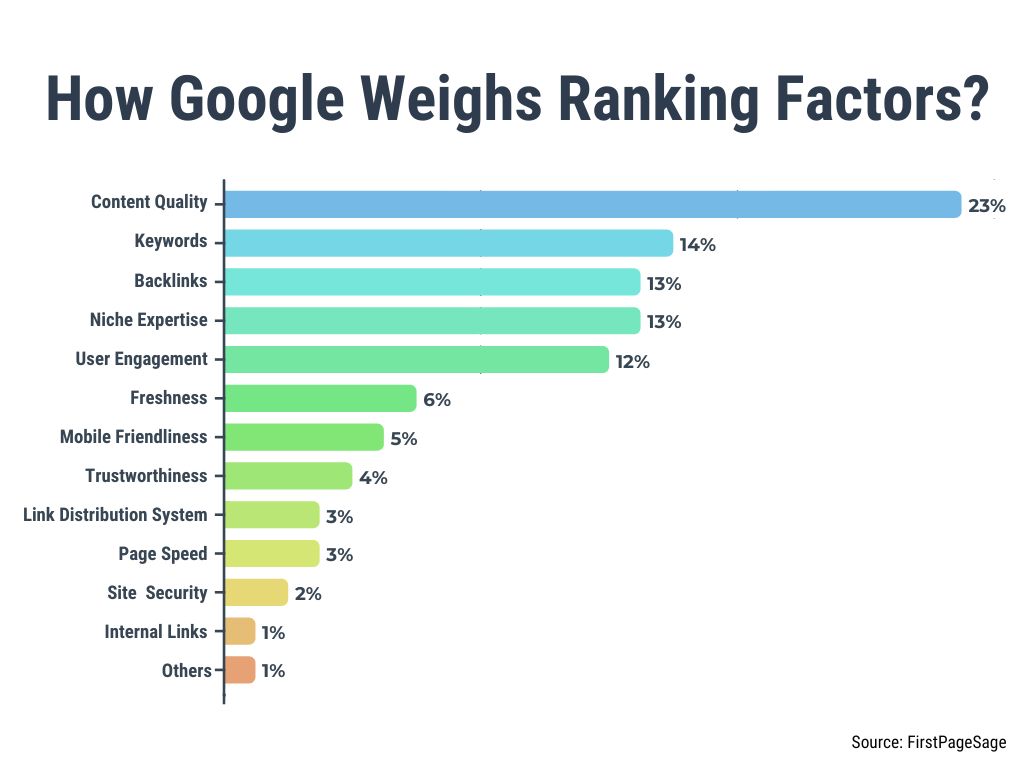
Let’s look at the top 5 factors that determine ranking on Google Search!
1. Content
Google ranks content by evaluating its relevance, originality, clarity, and trustworthiness to ensure users get the most accurate and helpful answers.
What matters most?
Originality: Avoiding duplicate content is a must. Copying can hurt rankings, stop indexing, and may even reduce your website’s crawl rate.
E-E-A-T: Google has been emphasising the importance of content that shows Experience, Expertise, Authoritativeness, and Trustworthiness. Personal stories, reviews, and real insights rank better than generic text.
Depth over length: Blogs in the first 10 positions on Google search have 1,447 words on average. It’s easy to assume that longer posts often rank better. However, depth is the real driver. Content that covers a topic thoroughly ranks higher.
Structure: Clear headings, lists, and subheadings boost readability, which is crucial for ranking.
2. Keywords
Keyword optimization helps Google understand your content and match it with user searches. Done right, it boosts relevance, rankings, and clicks.
3. Backlinks
These are links that redirect users from other websites to your website.
They tell Google your content is trustworthy, which helps push your page higher in search results. In fact, pages with fewer backlinks get far less organic traffic.
Each backlink is valuable, but links from high-authority sites add more value.
4. Niche Expertise
Google values the overall expertise a website shows around a topic.
This is where niche expertise comes in. It’s like building a library where every piece connects to a central theme.
The Hub and Spoke SEO strategy captures this idea perfectly. The main topic acts as the hub, while related topics form the spokes that branch out to cover everything relevant.
5. On-Page Experience
Google looks beyond content to see how users interact with your page.
Strong engagement tells Google your content is useful and deserves higher rankings.
But how does Google track engagement?
Google primarily considers these 3 KPIs to track engagement:
- Click-through rate (CTR): Do your titles and descriptions attract clicks?
- Bounce rate: Do visitors leave immediately without interacting?
- Dwell time: How long do they stay before returning to search?
Few non-negotiables
Here are a few essentials your website needs to even qualify for ranking on Google:
1. Mobile Friendliness
Since 2019, Google has ranked sites based on their mobile version, not desktop.
Improving the responsiveness and mobile friendliness of your website is a no-brainer to maximise rankings.
2. Website Structure
Google scans your site through “crawlers.” A simple, organized structure makes it easier for these crawlers to discover, index, and rank your content.
If your site is messy or buried in too many subfolders, Google may miss important pages.
3. Site Speed & Performance
Google favors sites that load fast, respond quickly, and display content smoothly across devices.
Fast-loading, responsive pages improve both user experience and rankings.
What is AEO?
AEO (Answer Engine Optimisation) means optimising your content so answer engines like Google Overviews, Alexa, and Siri can recommend it directly to users.
Instead of pointing people to websites, answer engines deliver direct answers on the spot.
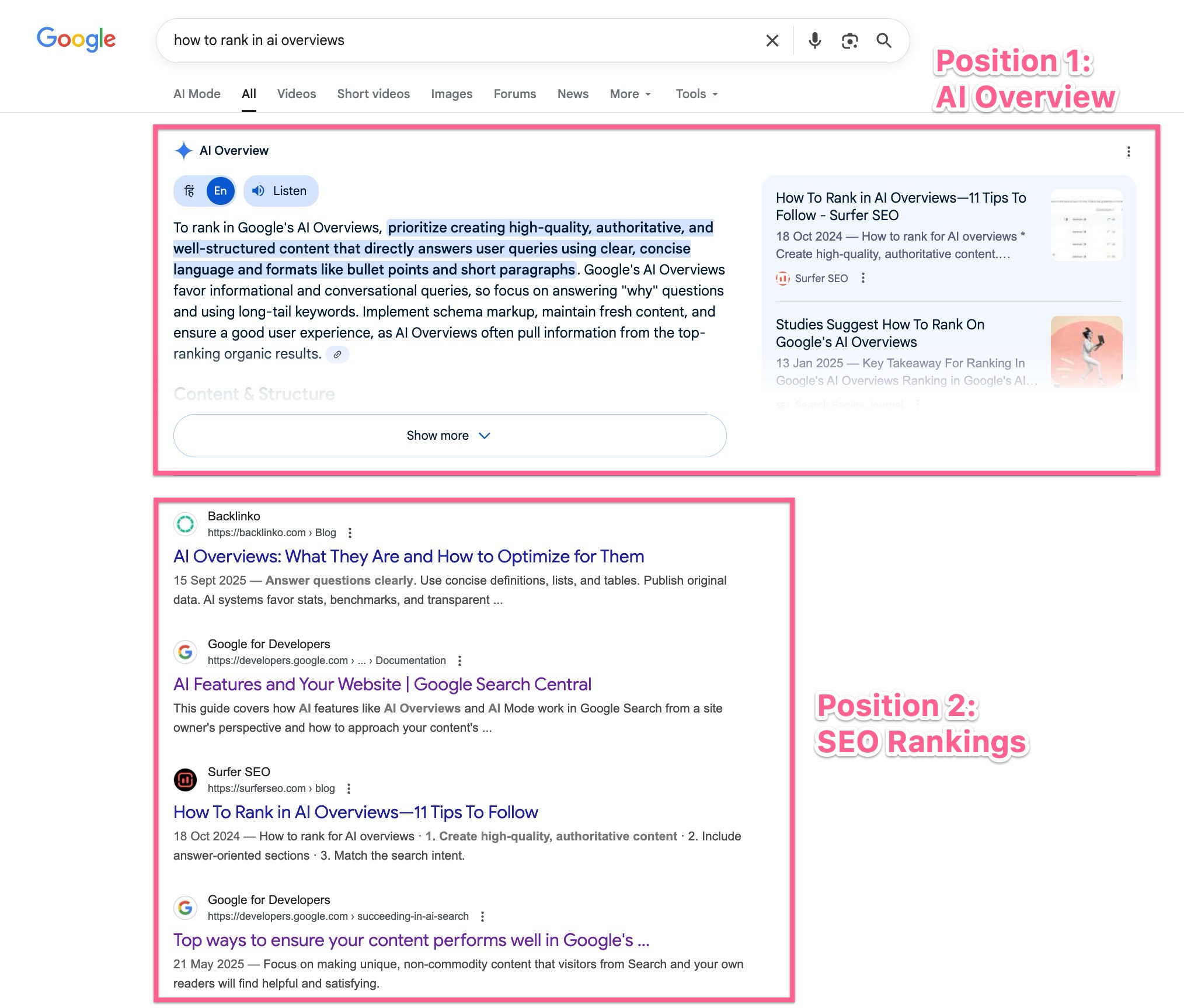
Interestingly, AI Overviews show up before articles ranked by SEO, featuring instant responses while citing a handful of sources. This shift is a major reason behind the surge in zero-click searches.
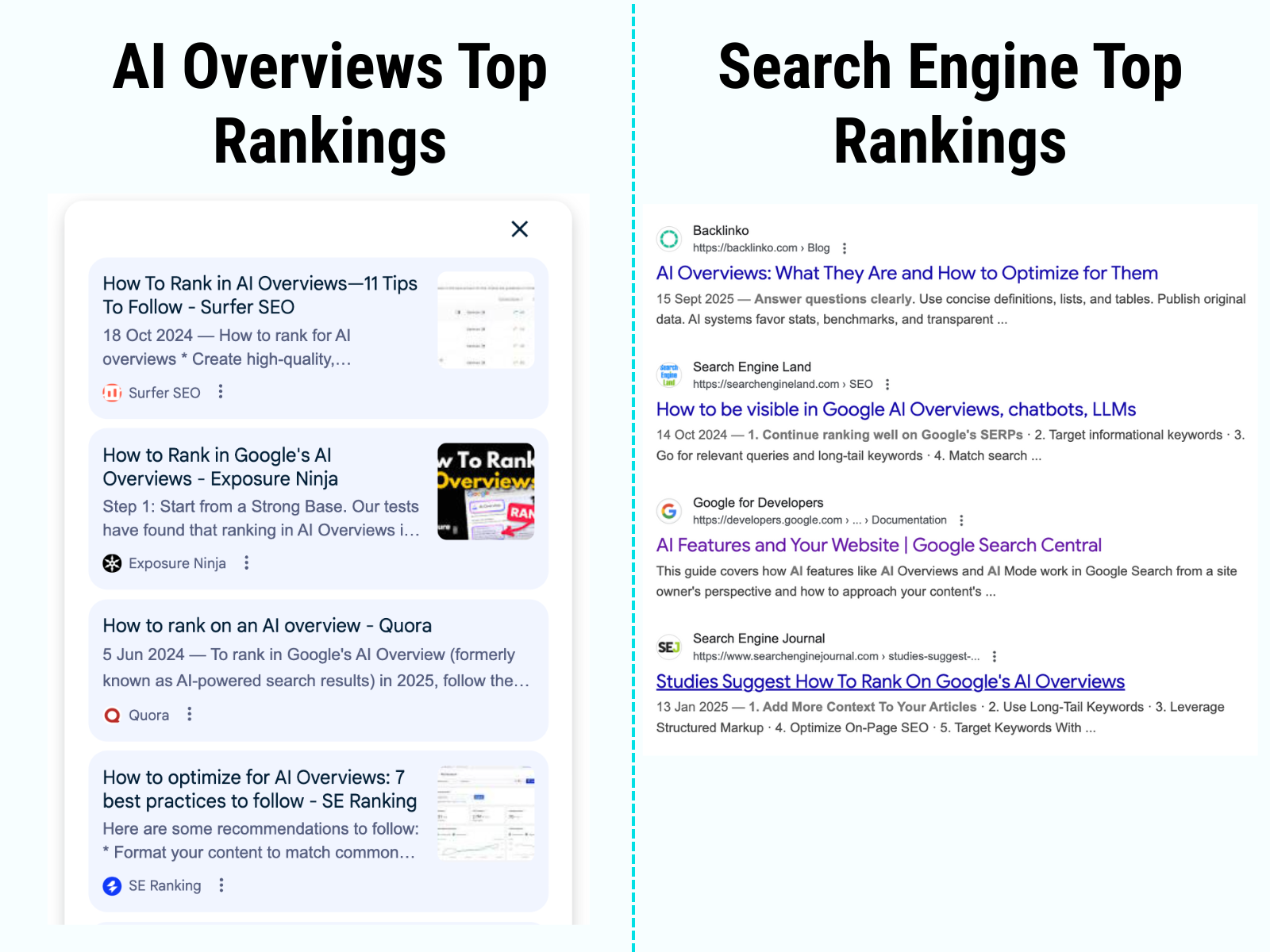
Also, what ranks in AI Overviews is not at all the same as what ranks in Google’s search results.
Take a look:
How does AEO work?
AEO is about creating content that Answer engines can use directly to answer questions.
Unlike SEO, which focuses on ranking pages, AEO focuses on supplying precise, context-rich answers that Answer engines can parse.
These tools analyze content using NLP (natural language processing), semantic similarity, and embeddings to decide if it fits the query. The clearer and direct your explanation, the higher the chances it gets surfaced.
How does Google rank content on AI Overviews?
AI Overviews pull from the same signals as classic Google Search, but, with extra weight on clarity, structured data, and multimodal usefulness.
As per Google, here’s what matters most:
1. Unique, valuable content
Pages that give original, people-first answers are prioritized. Generic or repetitive content is less likely to appear.
2. Relevance to the query
AI Overviews look for content that directly addresses user intent, especially longer or follow-up questions.
3. Page experience signals
Fast loading, mobile-friendly layouts, and uncluttered pages make it easier for Google to include your content.
4. Technical accessibility
If Google can’t crawl or index your page, it won’t rank. Basic requirements like allowing Googlebot, valid status codes, and indexable content are mandatory.
5. Structured data alignment
Correct, validated markup that matches visible content helps Google’s systems understand and trust your page.
6. Multimodal readiness
Supporting text with images, videos, or product data improves chances in AI-driven searches that use photos or voice.
7. Trust and authority
Content cited across credible sources has a higher chance of surfacing.
How does Siri rank content?
Apple uses Applebot, its web crawler, to discover and index content across the web.
This content powers search results on Siri, Spotlight, and Safari. If you want your site to show up for Apple users, here are the key factors that matter most:
1. User Engagement
Apple considers how people interact with search results. Pages that attract clicks, time on site, and positive engagement signals tend to rank higher.
2. Relevance to Search Terms
The closer your page’s content and topic match a user’s query, the stronger your chances of ranking. Clear, keyword-aligned content is essential.
3. Links from Other Sites
Just like Google, Siri values the number and quality of links pointing to your page. Backlinks signal authority and trustworthiness.
4. User Location Signals
Local relevance matters. Siri may prioritize results based on the user’s approximate location, especially for services, businesses, or local content.
5. Page Design and Usability
A clean, well-structured page that loads quickly and works across devices always has an edge.
What is GEO?
GEO (Generative Engine Optimisation) is a strategy to help your content be ranked, referred, and shown to users while generating answers on Generative AI tools like ChatGPT and Perplexity.
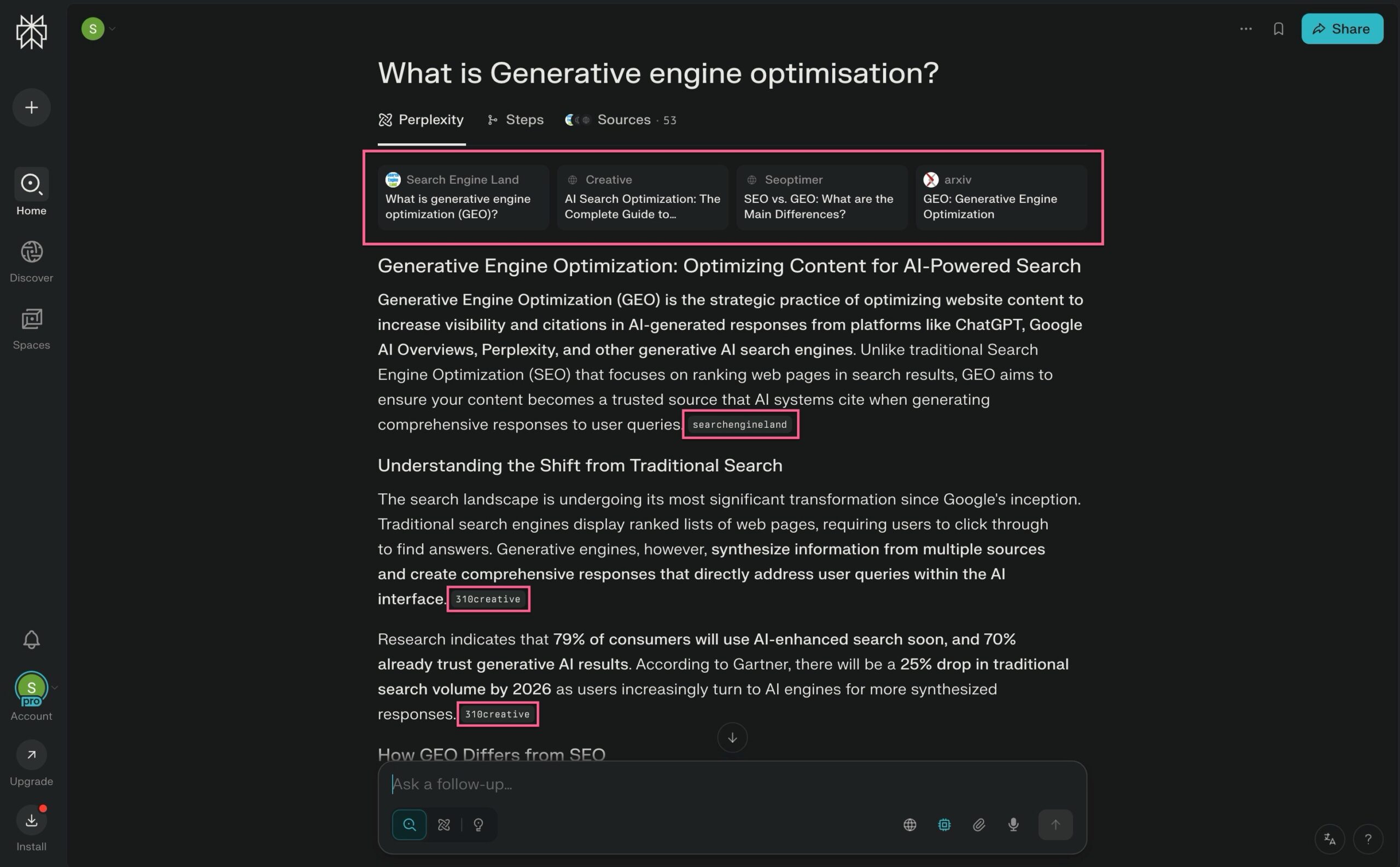
How does Generative Engine Optimisation work?
GEO tunes your content to be selected inside AI’s responses, not just listed in search results.
When a user asks a question, generative LLMs synthesize answers using multiple sources, context, and semantic understanding.
It cites what it sees as most credible.
That’s why LLMs often pull from community platforms, reference sites, and well-established domains, instead of just the top-ranking blogs. It also explains why AI results can look very different from traditional search rankings.
GEO makes your content readable and usable by those systems using clear structure, factual clarity, context signals, and authoritative references. It also leans on being “cited” by trusted domains or recognized sources to boost your chance of inclusion.
While Gen AI companies haven’t made any official disclosures about their ranking systems, we have found out crucial information about how they rank content.
How does Perplexity rank content?
A growth marketer dug into Perplexity AI’s browser code and uncovered 59+ hidden ranking factors that show how Perplexity really decides which content comes first.
Here’s what matters for ranking on Perplexity:
1. Core Ranking Triggers
Early Engagement
New posts enter a short trial window. Click-throughs and impressions during this period decide long-term visibility.
Topic Multipliers
High-value topics like AI, tech, and science receive visibility boosts, while low-priority areas like sports face penalties.
Time Decay
Content naturally loses visibility as it ages, making freshness, updates and early distribution essential.
2. Quality & Relevance
Semantic Analysis
Content must achieve strong embedding similarity with queries. Also, it must fully cover a query’s intent or it won’t surface.
Entity Reranker
An extra layer evaluates topical authority. Content below the threshold is dropped, even if it is ranked initially. Niche expertise is essential to gain authority.
3. Engagement & Networks
User Interaction
Clicks, dwell time, and repeat visits feed long-term rankings.
Memory Effect
Interconnected articles on related topics gain collective visibility.
Negative engagement
Content is filtered based on dislikes and no-click data. Negative engagement above thresholds means content gets dropped.
4. Authority & Signals
Manual Domain Lists
References from a manually curated list of domains (GitHub, LinkedIn, Amazon, etc.) get authority boosts.
Cross-Platform Validation
YouTube titles synced with trending queries on Perplexity strengthen ranking power.
How does ChatGPT rank content?
Here’s what the configuration settings of ChatGPT reveal about ranking content:
1. Freshness Is a Ranking Priority
Content that’s recently published or updated is systematically prioritised over older material, even if the older version is more comprehensive.
This explains why evergreen guides from 2022 lose to lightweight updates from 2025.
2. Intent Detection Shapes Retrieval
Before fetching results, ChatGPT first figures out what the user actually wants: a definition, a step-by-step guide, a comparison, etc.
If your page structure doesn’t clearly match that intent, you’ll likely get filtered out early.
3. Vocabulary Signals Matter
GPT-5 favors content that uses accurate domain-specific terminology. The more technically correct and well-defined your language, the better your chances.
4. Multi-Layer Filtering Before Reranking
Enable_source_filtering: Blocks sources based on internal quality rules
Enable_mimetype_filtering: Excludes certain content types/categories
Enable_mclick_dates: May use historical click or date interaction data
Each layer removes a percentage of possible results.
5. Reranking Decides What Gets Seen
If you check ChatGPT’s source code and search for “reranker,” you’ll find it there.
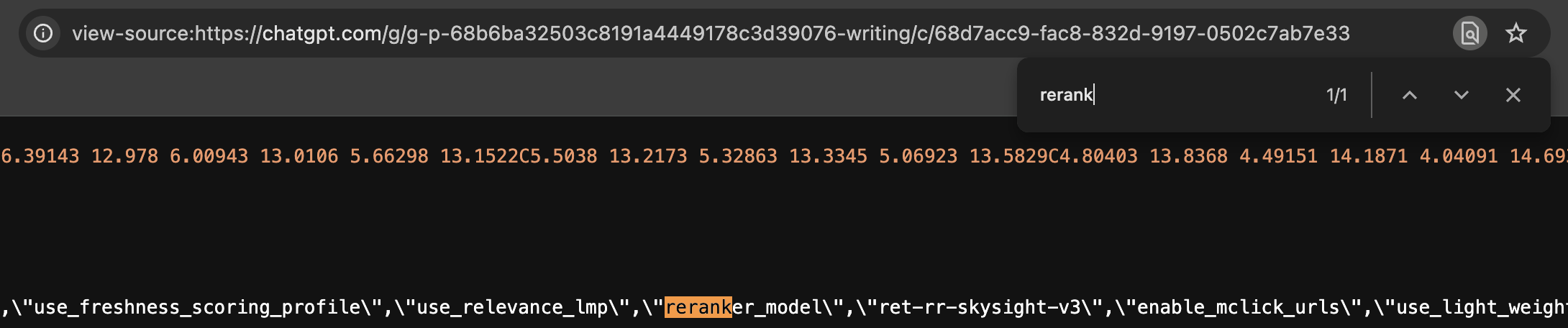
There’s no official explanation of how reranker works.
But it’s clear that your content might appear in the first set of results; however, if it doesn’t meet the reranker’s quality standards, it gets pushed down or dropped completely.
That could be the reason some sources visible while generating responses don’t show up once the answer is complete.
SEO vs AEO vs GEO
Though all three share the same goal, the difference lies in how different systems find, interpret, and rank information.
Here’s where these three approaches diverge:
1. Intent
Search engines primarily rank content based on keywords. People type queries, and Google matches those words to the closest and most reputed content.
Answer engines focus on direct answers. The clearer and direct your response to a question, the more likely it appears.
Generative engines go further by ranking content that supports conversational flow, enabling back-and-forth dialogue and addressing follow-up questions with greater depth.
2. Content Formats
Search engines mostly reward written pages such as blogs, guides, and articles. Other content formats barely show up unless you specifically look for it.
Answer engines rank content differently by giving preference to formats that can be trusted, read aloud, used for answering or summarized quickly, such as videos, FAQs, and concise snippets.
Generative engines are more flexible. Generative engines happily cite PDFs, research reports, videos, and even e-books, as long as the system can crawl and extract the content accurately to build precise, in-depth responses.
3. Freshness
In traditional search rankings, evergreen content can continue to perform well. Older but authoritative pages are often kept visible by Google’s algorithm if they remain relevant.
In contrast, answer engines and generative engines factor freshness directly into their ranking systems.
We have already found out that ChatGPT, Perplexity, Google overviews as well as Siri use a freshness scoring profile that biases towards newer content.
4. Mentions vs Links
Search engine rankings are heavily influenced by backlinks. A site with more links from reputable domains is seen as more trustworthy and ranks higher. Whereas mentions without any backlinks don’t mean anything.
But answer engines and generative engines apply broader authority checks. Mentions alone, even without hyperlinks, can influence visibility.
In fact, simply referencing or citing data from well-known sources is enough to elevate credibility and rankings.
5. Mechanism
Search engines rely on keyword matching and traditional ranking signals. They understand queries, but often in a mechanical way.
Answer engines lean on natural language processing (NLP). It favors content that’s conversational, direct, and easy for AI to read aloud.
Generative engines combine NLP with their underlying training data. They are more likely to surface content that aligns with what the model already “knows” while rewarding fresh, authoritative information that adds depth to those responses.
SEO, AEO, and GEO share the same goal: to help your content get discovered.
In fact, answer engine and generative engine ranking models are built on top of search engine principles, establishing SEO as the solid foundation for online visibility.
It’s also essential to understand that these aren’t competing approaches, but complementary pillars of a complete and future-ready digital marketing strategy.
When SEO, AEO, and GEO work together, they strengthen each other and ensure your content stays relevant and easily discoverable.
That’s it!
Hope it helps.


 A better way to manage projects and clients for freelancers
 Get through busy days like a breeze with Reclaim.ai