If you’re trying to decide between Omnisend and Brevo for your email marketing, you’re probably feeling a bit overwhelmed.
Both platforms promise great results, both have loyal users, and both seem to offer similar features at first glance.
So how do you actually choose?
I’ve spent considerable time working with both platforms, digging through their features, testing their builders, setting up automations, and comparing what you actually get at each price point.
What I found is that these two platforms serve very different types of businesses, and picking the wrong one could mean overpaying for features you don’t need or missing out on tools that could genuinely grow your revenue.
In this comparison, I’ll walk you through every major feature, show you exactly what each platform costs at different list sizes, and help you figure out which one actually fits your business.
By the end, you’ll know which platform deserves your money.
Let’s start with a quick side-by-side look at the key differences, then dive deeper into each area.
Omnisend Overview
Omnisend is an email and SMS marketing platform.
With this tool, you can create stunning emails, automate your workflows, and measure your performance.
The app comes with pre-built workflow templates to help you get started and offers user-friendly builders for customization.
You can connect it with your e-commerce platform and automate a variety of campaigns, such as welcome series, abandoned cart recovery, and post-purchase follow-ups.
Omnisend is compatible with all the major e-commerce platforms, including Shopify, WooCommerce, and BigCommerce.
It also supports multiple channels. You can add SMS, pop-ups, and web push notification channels to your email campaign.
Currently, over 150,000 stores are active on Omnisend. The platform is well-established and has a good reputation in the market.
Core Features of Omnisend
- Email marketing
- Multichannel support.
- Marketing automation.
- Sign-up forms.
- Segmentation and personalization.
- A/B testing and campaign boosting.
- Analytics and reporting.
- Third-party integration.
Create a free Omnisend account
Brevo Overview
 Brevo is comparatively more diverse. It provides a marketing automation platform with a built-in CRM for contact management.
Some of its notable functions include email and SMS marketing, workflow automation, A/B testing, and reporting. It supports multiple communication channels and integrates with third-party applications, including popular e-commerce platforms.
Brevo’s unique selling point is its versatility. You can use it exclusively for campaign management or buy it with a conversation platform to handle your website communication.
You’ll also find a separate sales product, providing more communication tools like a chatbot and a phone.
The platform, overall, is quite popular in the market and entertains over 500,000 customers.
Core Features of Brevo
- Email and SMS marketing.
- Transactional emails.
- Multichannel support.
- Marketing automation.
- Sign-up forms.
- Segmentation and personalization.
- A/B testing.
- Conversation and sales platform.
- CRM.
- Analytics and reporting.
- Third-party integrations.
Omnisend Vs. Brevo–Feature Comparison
Below, I have compared Omnisend’s and Brevo’s core features and prices.
The comparison will cover email campaigns, multichannel support, pop-up forms, automation, reporting, and integrations. I have also highlighted their unique selling points.
Let’s check them out.
1. Email Campaigns
Omnisend and Brevo both specialize in email marketing, offering user-friendly campaign management features.
You’ll get builders, templates, and dynamic content blocks to create personalized campaigns.
Let’s compare their features.
Omnisend
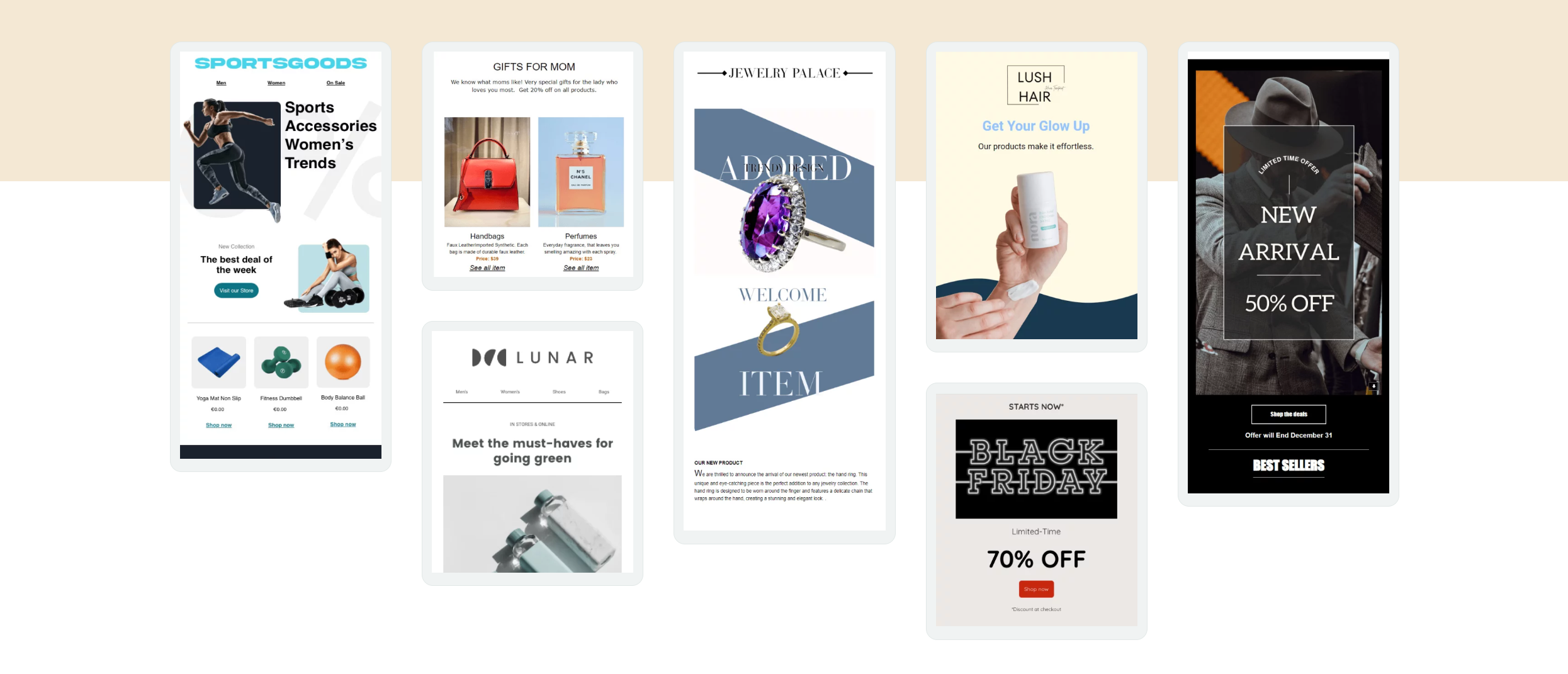
Through Omnisend, you can create professionally designed emails and send them to your target audience.
Its editor has a drag-and-drop interface that makes it easier to build an attractive layout for your email and arrange elements how you want them.
You can also access a diverse selection of pre-made newsletter templates for your campaign. They are specifically built for e-commerce stores, providing ready-made layouts with customization options.
For campaign personalization, Omnisend has an advanced segmentation section. You can target people based on several factors, such as their purchase history, browsing behavior, shopping cart list, and email engagement.
Omnisend also lets you run A/B tests to optimize your campaigns.
Brevo
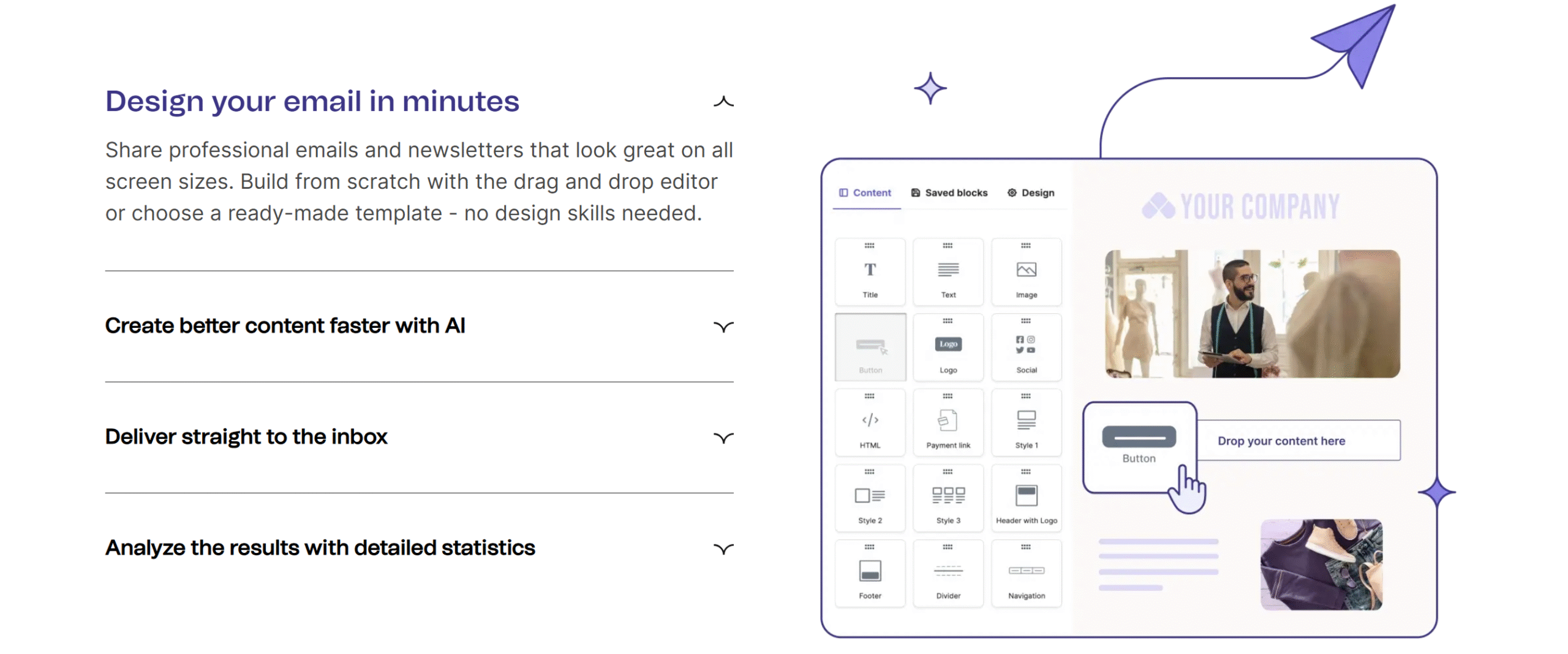
Brevo’s campaign management features are almost similar.
You’ll get a drag-and-drop builder, around 40 professional email templates, and a segmentation tool for targeting.
You can add dynamic content blocks to personalize your emails and A/B test subject lines to optimize your campaigns.
A CRM is built into the system to help you organize and manage your contacts. You can manage up to 2 million contacts on the premium plan and send unlimited emails per day.
Verdict
Omnisend’s email builder and segmentation tools are pretty robust. Its template gallery is also comparatively large.
Brevo, on the other hand, is best for high-volume emails. It’s more flexible, places no limit on the daily sending, and delivers a CRM for contact management.
2. Multichannel Support
Multichannel support means a software’s ability to integrate various communication channels into email campaigns, such as SMS, pop-ups, and push notifications.
Both Omnisend and Brevo have that capability. They allow you to connect with your target audience via different communication channels.
Here’s their feature comparison.
Omnisend
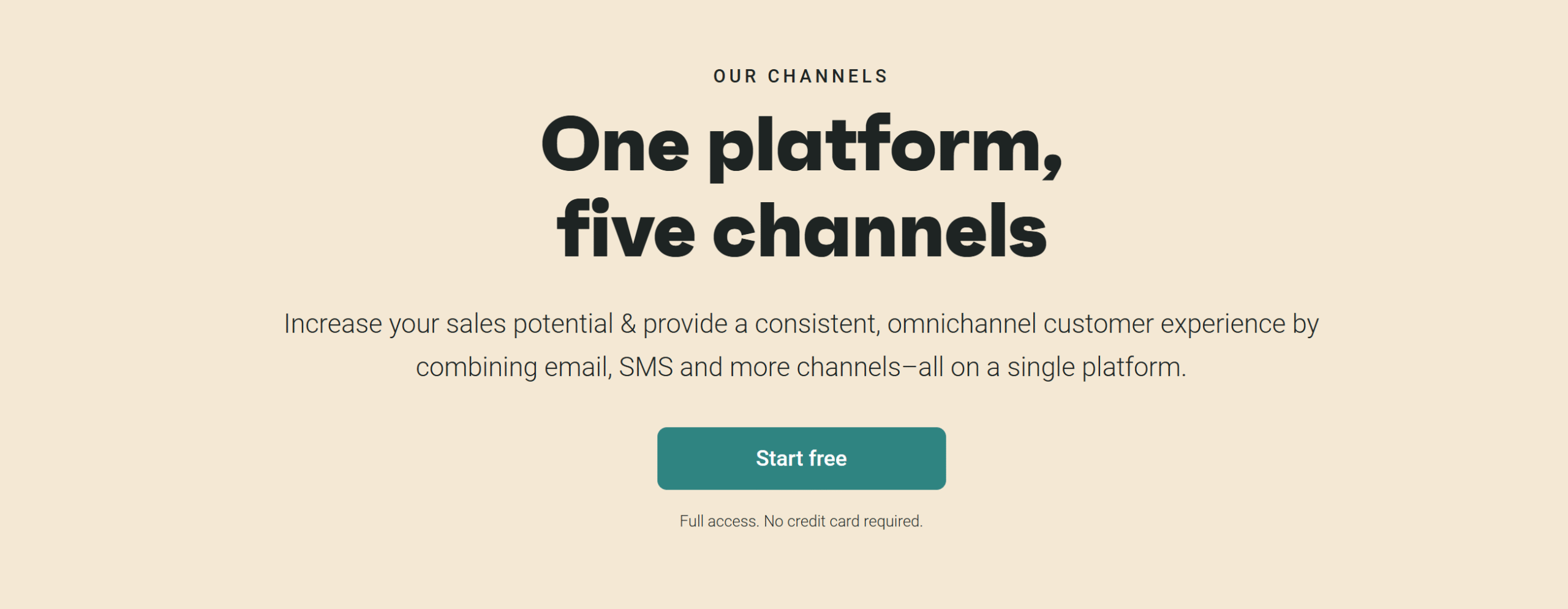
Omnisend supports around three to four marketing channels, including email, SMS, push notifications, and pop-ups. You can create separate campaigns or combine them in your email sequence.
For example, you can convert leads into customers through a series of text and email messages. You can use the same combination to create follow-up campaigns, like reminding someone about an abandoned cart.
You can also connect your multichannel campaign to your Facebook and Google Ads.
Brevo
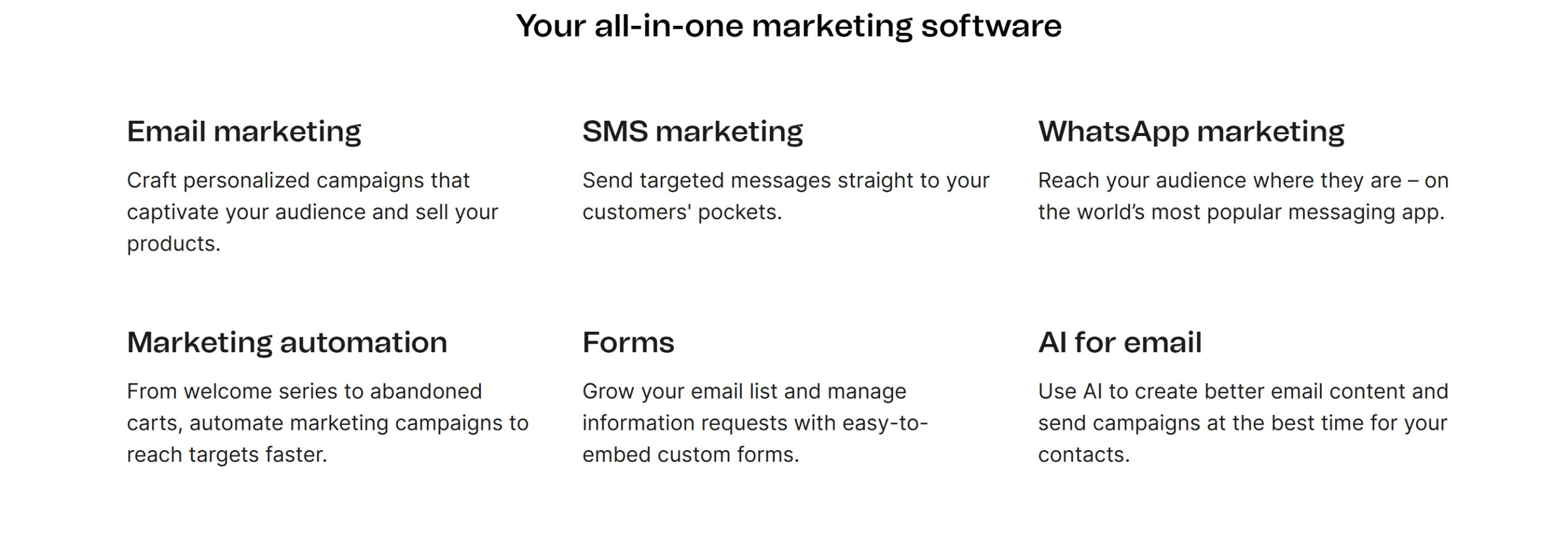
Brevo, like Omnisend, supports email, SMS, and web. But it also allows you to utilize WhatsApp and mobile push notifications in your marketing campaigns.
That’s not all.
You’ll find a separate section for customer service support. You can deploy a chatbot to your website and use a phone to connect with potential leads.
Verdict
Brevo’s multichannel option is comparatively better.
It provides not only marketing channels but also several communication tools.
3. Pop-up Forms
Pop-up forms are small windows that appear on your website to catch visitors’ attention.
They are lead generation tools designed to announce a message or capture visitor information, such as email addresses or phone numbers.
Here’s a summary of Omnisend and Brevo’s pop-up form feature.
Omnisend
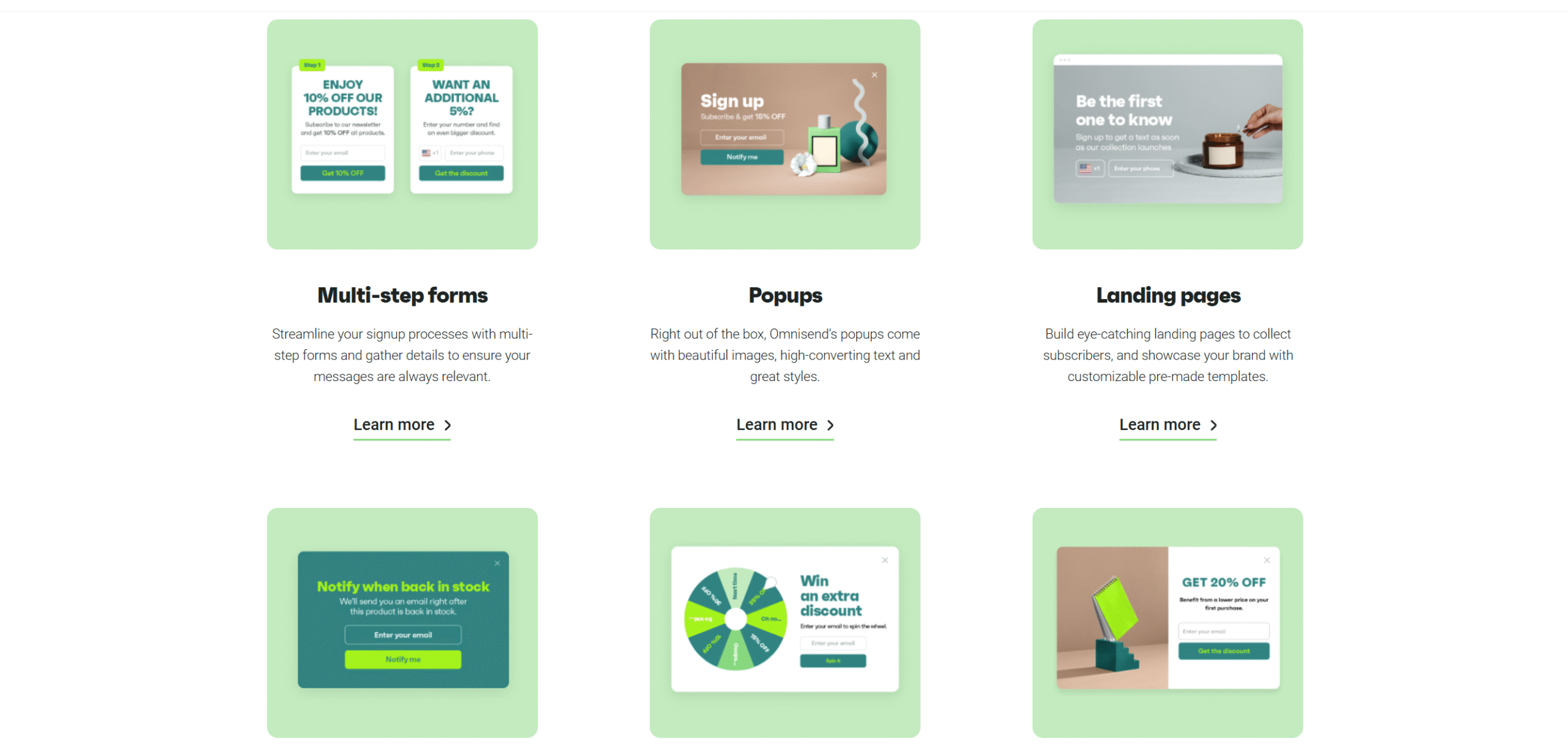
Omnisend provides an advanced visual builder for landing pages and pop-up forms. You can create around four types of forms and design both single and multistep pop-ups.
You’ll get several templates and promotion elements to personalize your pop-up forms. You can create a teaser, a Wheel of Fortune, or a sales announcement with a countdown timer.
You can also control when they appear to visitors. For example, you can ask Omnisend to display pop-ups when someone abandons the cart, checks a particular page, or spends a certain amount of time on your website.
Brevo
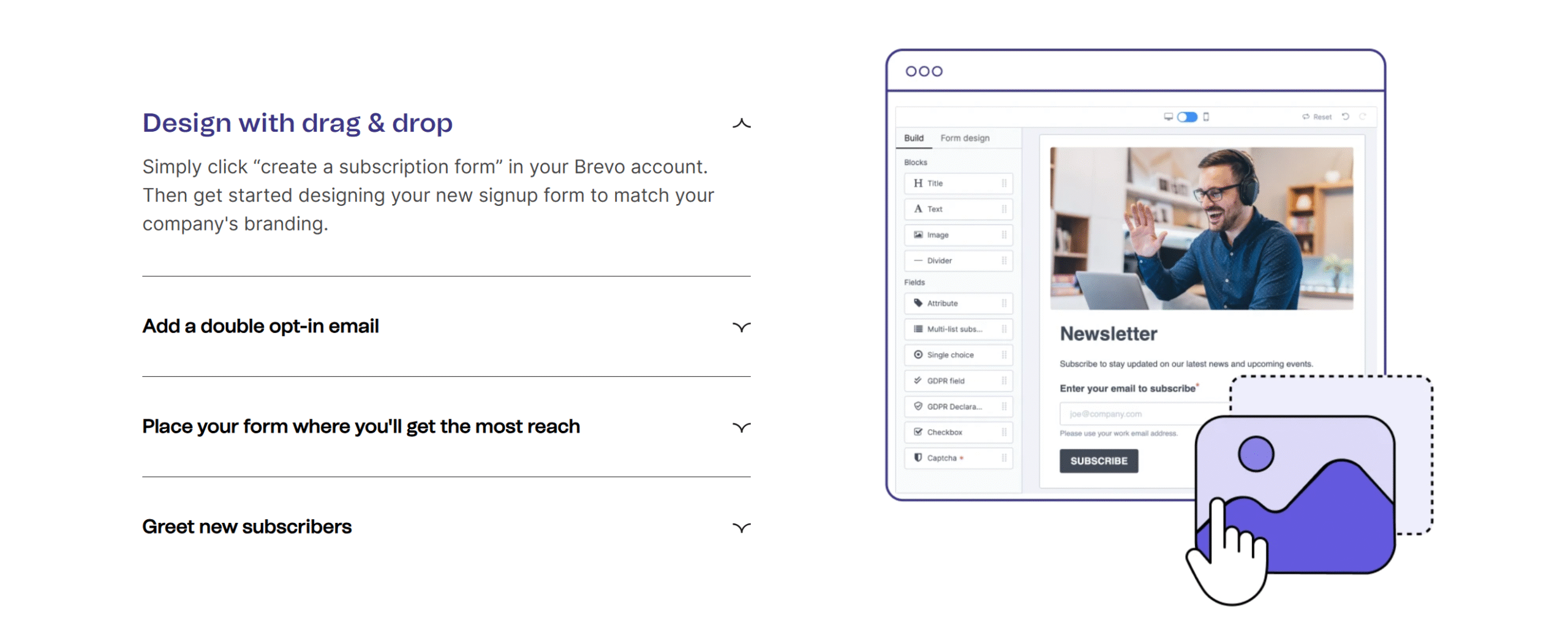
Brevo also lets you create both pop-up forms and landing pages. You can embed the form into your website, email, and social media post.
The module is comparatively basic, but it comes with all the standard elements and triggers.
You’ll have the flexibility to decide where you place your pop-up forms and when to display them.
Verdict
Omnisend’s pop-up form function is excellent. You can create a variety of forms and add triggers to automate the display.
While Brevo also has built-in triggers in its pop-up form builder, its customization options are limited.
4. AI and Automation
AI and automation refer to tools that use artificial intelligence and preset templates to automate your workflows.
They speed up the processes and reduce your administrative workload.
Both Omnisend and Brevo are AI-powered automation platforms. AI is built into their builders, and marketing automation is a core part of their software.
Here’s their feature comparison.
Omnisend
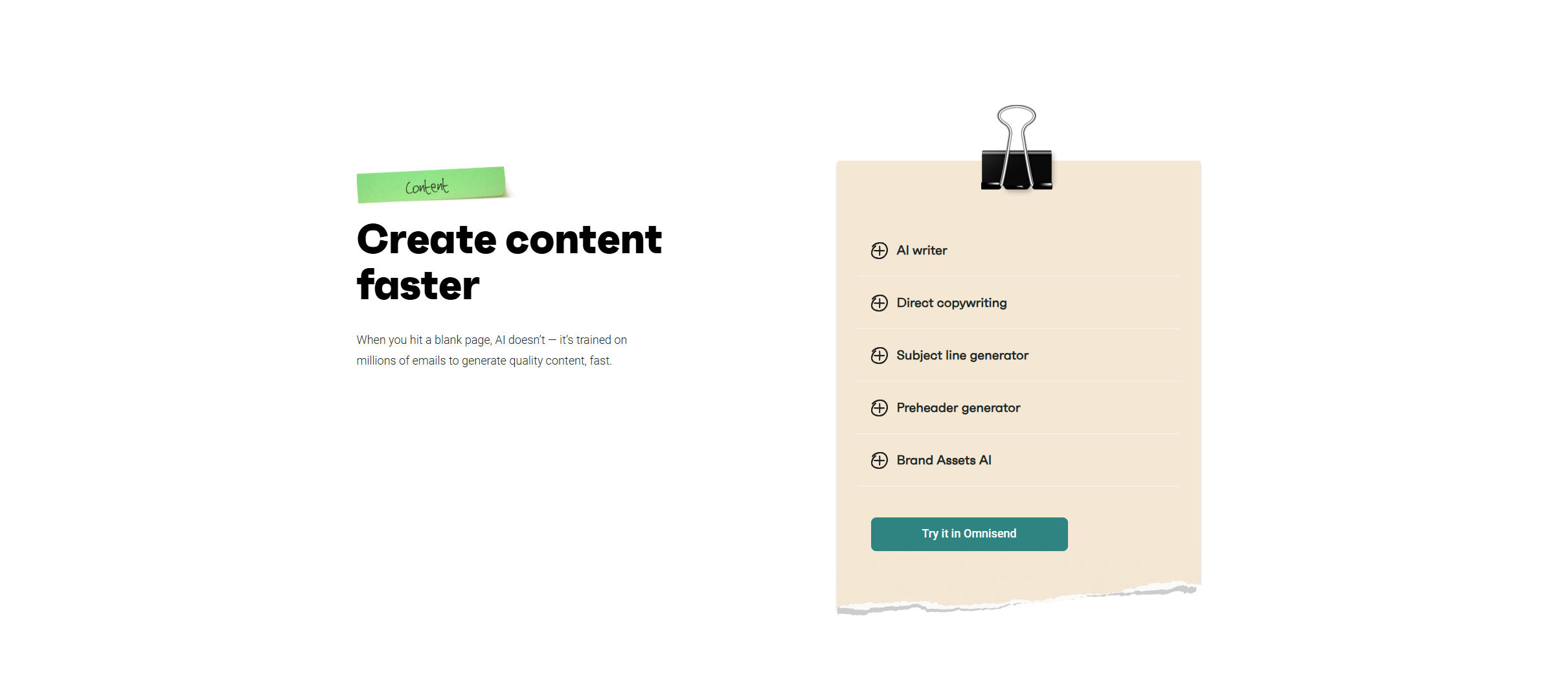
With Omnisend, you can automate your emails, SMS, push notifications, and pop-ups.
The app lets you create a sequence of actions, add triggers, and apply split automations.
Whether it’s a welcome message, order confirmation, product reviews, or cart abandonment, you can automate pretty much every workflow.
Both predefined and custom workflows are supported by Omnisend.
You can use standard templates for common scenarios and use the workflow editor to create custom workflows.
Omnisend also offers a few AI-powered tools. You can generate email content, create auto-segments, and embed a product recommender into your email.
Brevo
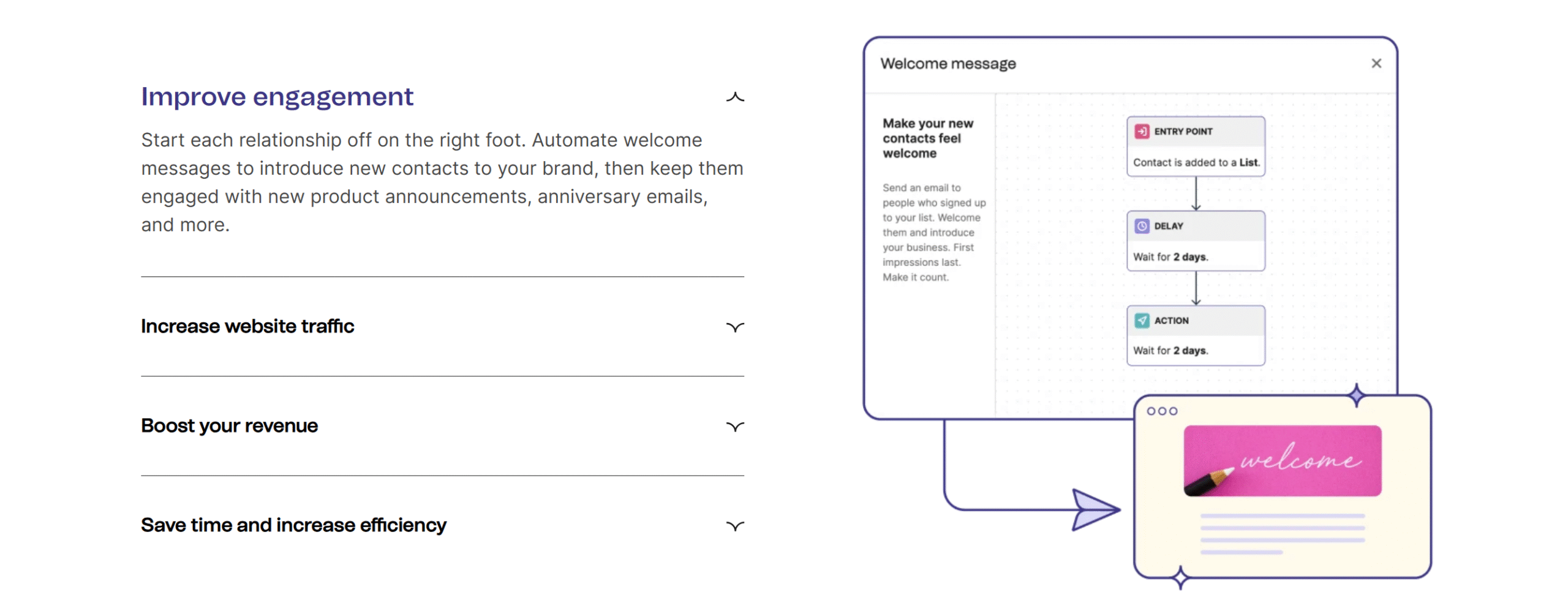
Brevo also delivers predefined workflows for standard scenarios and a visual builder to create custom workflows.
You can add several types of triggers to set your workflows on autopilot, like displaying a pop-up when someone visits a page or sending an email to lost leads.
Tons of AI tools are available as well. You can generate text, personalize your email and SMS campaigns, and send brand messages at the right time.
Verdict
Omnisend’s automation is ideal for e-commerce workflows, while Brevo’s covers more ground, providing automation features for marketing, sales, and CRM.
From a purely automation perspective, Brevo appears to have better tools.
5. Reporting
One of Omnisend and Brevo’s core modules is reporting.
It delivers insights into several key areas to help you track your marketing efforts.
Let’s look at their reporting features.
Omnisend
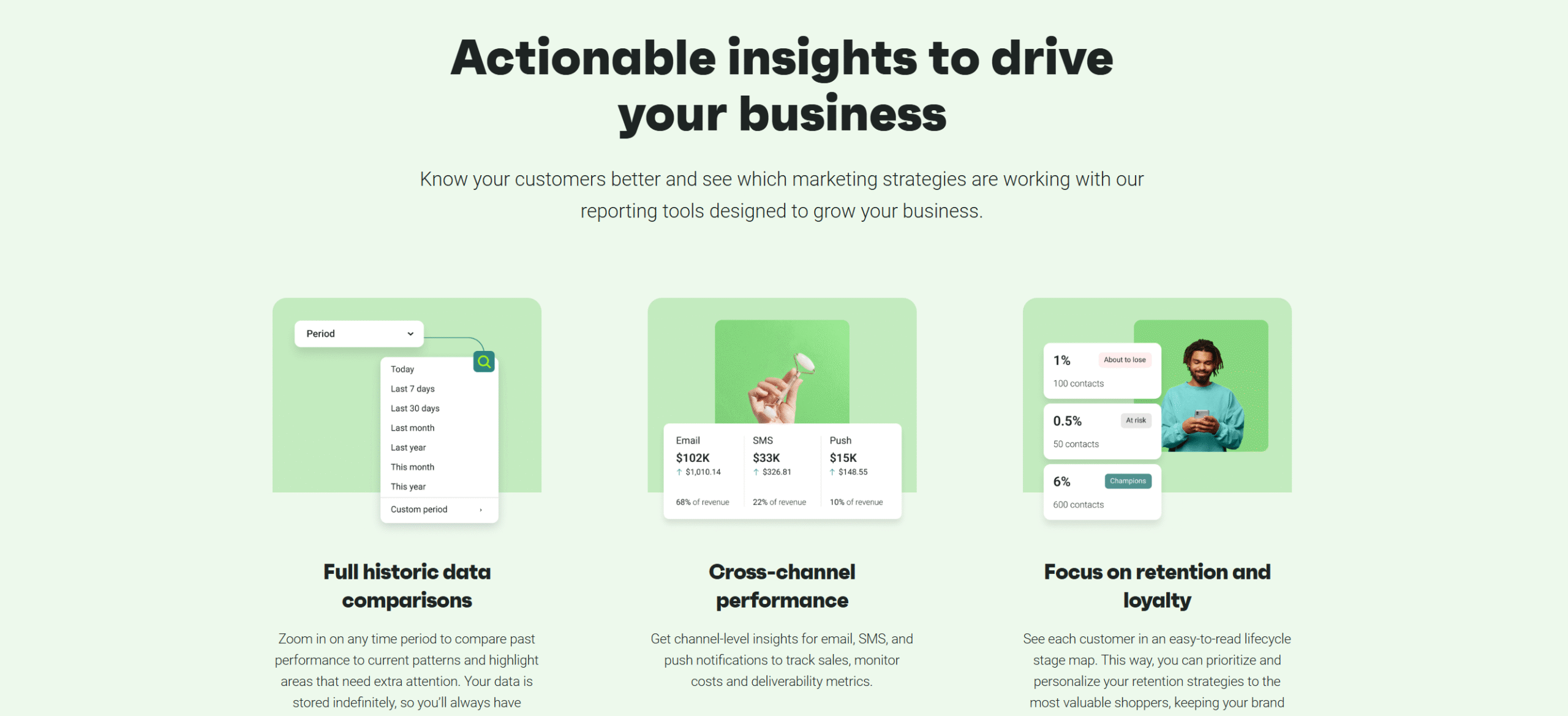
Omnisend’s reporting is tailored for online stores. It focuses not only on your email deliverability and subscribers but also on store revenues.
For example, you can break down your sales by campaign and channel to see how much revenue comes from email and SMS campaigns.
Omnisend also offers individual-level reporting, providing a click map to see what attracts your target audience.
Overall, you can generate reports on campaigns, sign-up forms, target audience, and automation.
Brevo
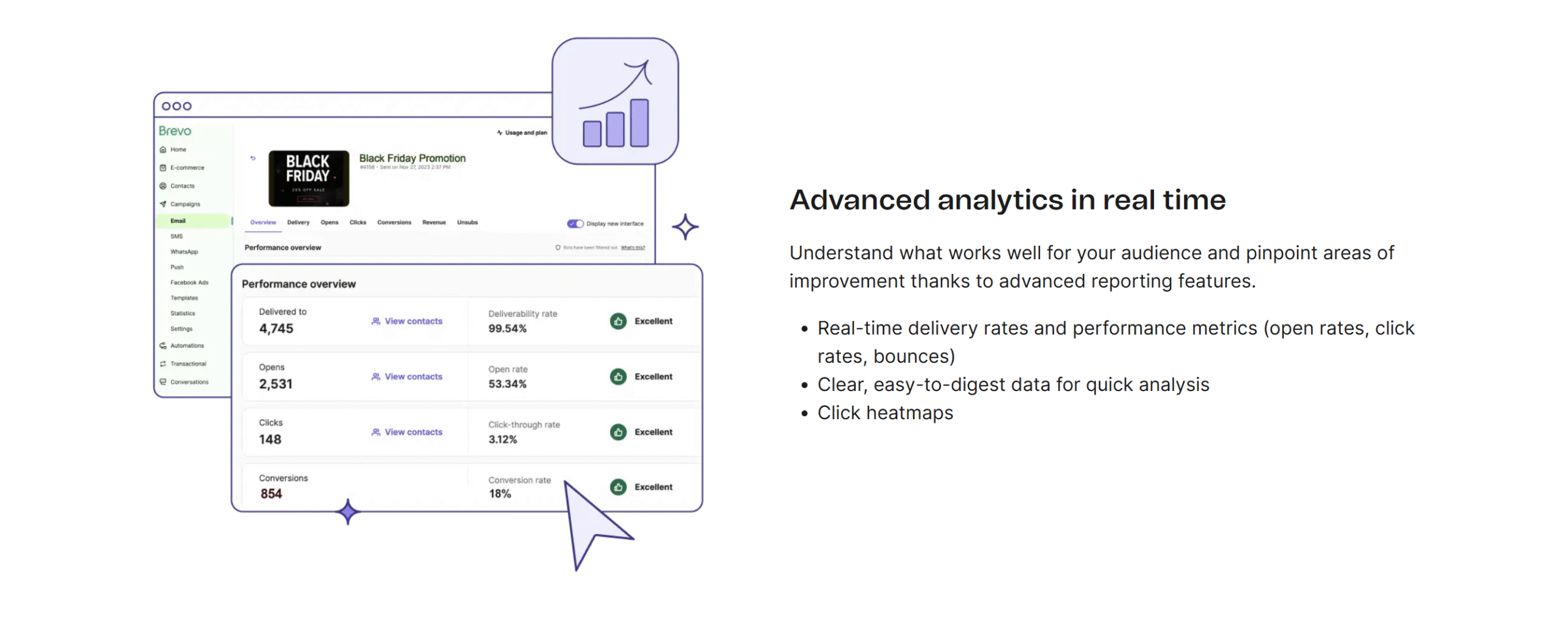
Brevo monitors your audience by demography and engagement level.
You can track open, click, and bounce rates in real time and see your audience engagement in a visual heatmap.
You can also analyze individual contacts and get a 360° view of your customer’s interaction.
Verdict
From an email marketing point of view, Omnisend is a better option. Its reporting section is robust and user-friendly.
Brevo, on the other hand, provides a data platform to analyze your contacts with a basic reporting section for emails.
6. Unique Selling Points
As competitors, Omnisend and Brevo have their own unique selling points.
These features give them an edge over each other and make their products stand out.
Here are a few unique selling points of Omnisend and Brevo.
Omnisend

Omnisend’s core focus is e-commerce marketing.
Its email, SMS, and automation tools are tailored to support an online store’s workflows.
Some unique features I found on Omnisend are pop-up designs, automation splits, campaign boosters, and product listings.
Omnisend also has comparatively better templates and design tools.
Brevo
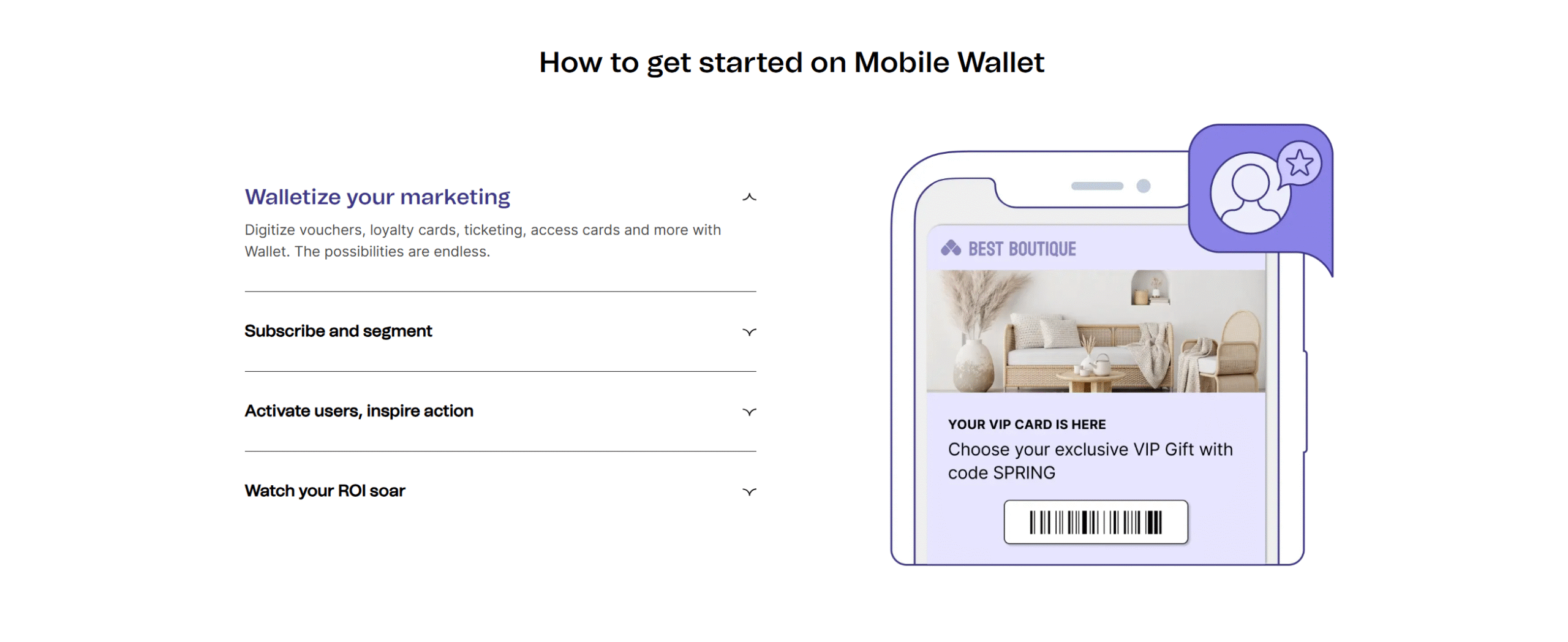
Brevo is designed for both B2B and B2C brands.
It specializes in customer relationships, offering a CRM with marketing tools, sales workflows, and a conversation platform.
You’ll also get flexible workflows, collaboration tools, more marketing channels, and a separate module for transactional emails.
One of its unique selling points is its affordability. Its packages are budget-friendly and support high volume.
Verdict
Brevo has more features and affordable packages.
You can get the standard email marketing tools at a comparatively lower price and buy sales and customer communication products from the same platform.
7. Integration
Omnisend and Brevo both have strong integration capabilities.
You can connect them with many software products and leverage your third-party app’s data to create marketing automation.
Here’s the summary of their integrations.
Omnisend
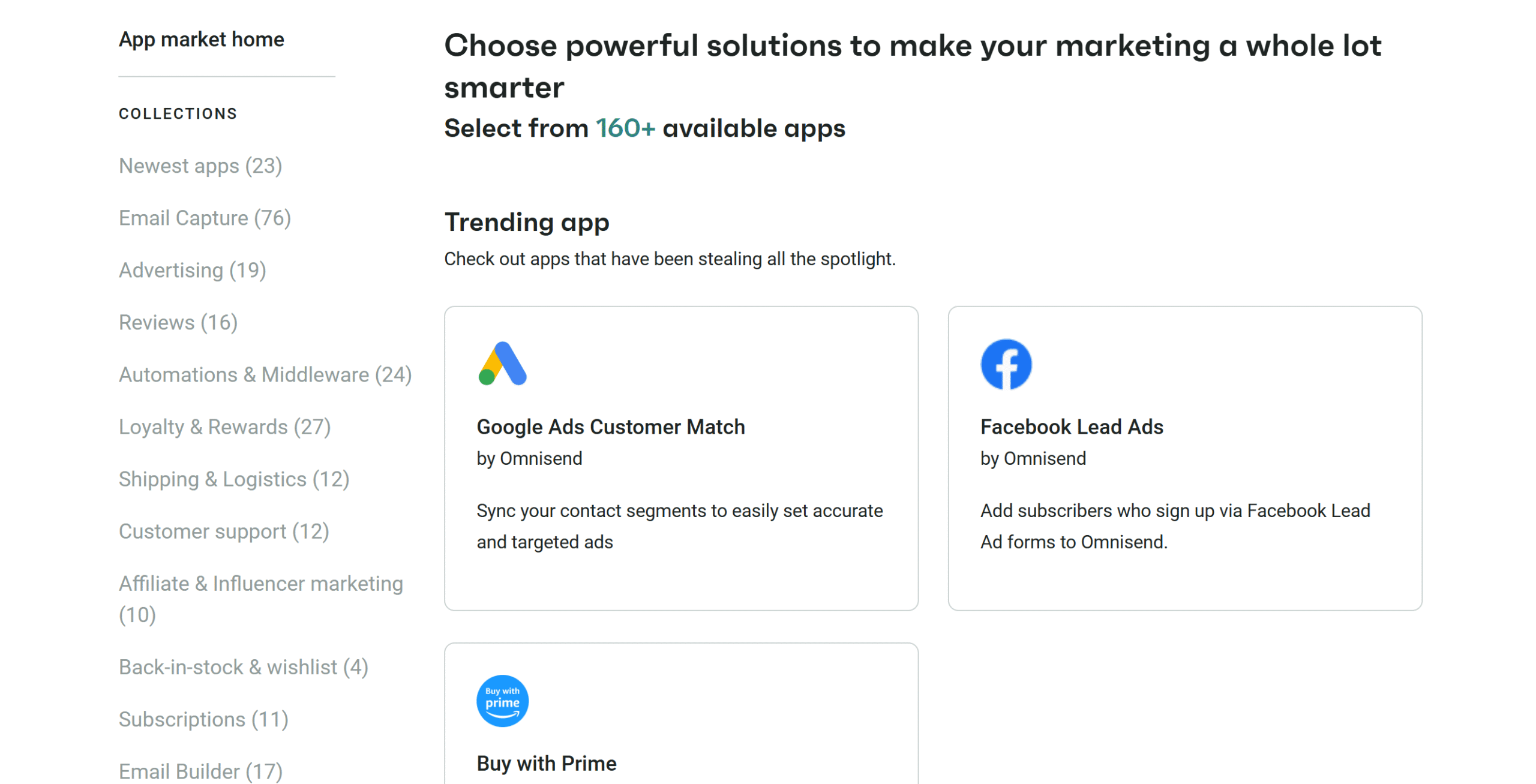
Omnisend offers over 160 integrations.
You can sync it with all major e-commerce platforms, such as Shopify, BigCommerce, WooCommerce, and Magento.
You can also sync it with third-party tools that are essential for an e-commerce business, like loyalty programs, logistics apps, customer support, and influencer marketing tools.
Here’s a list of apps that are compatible with Omnisend.
Brevo
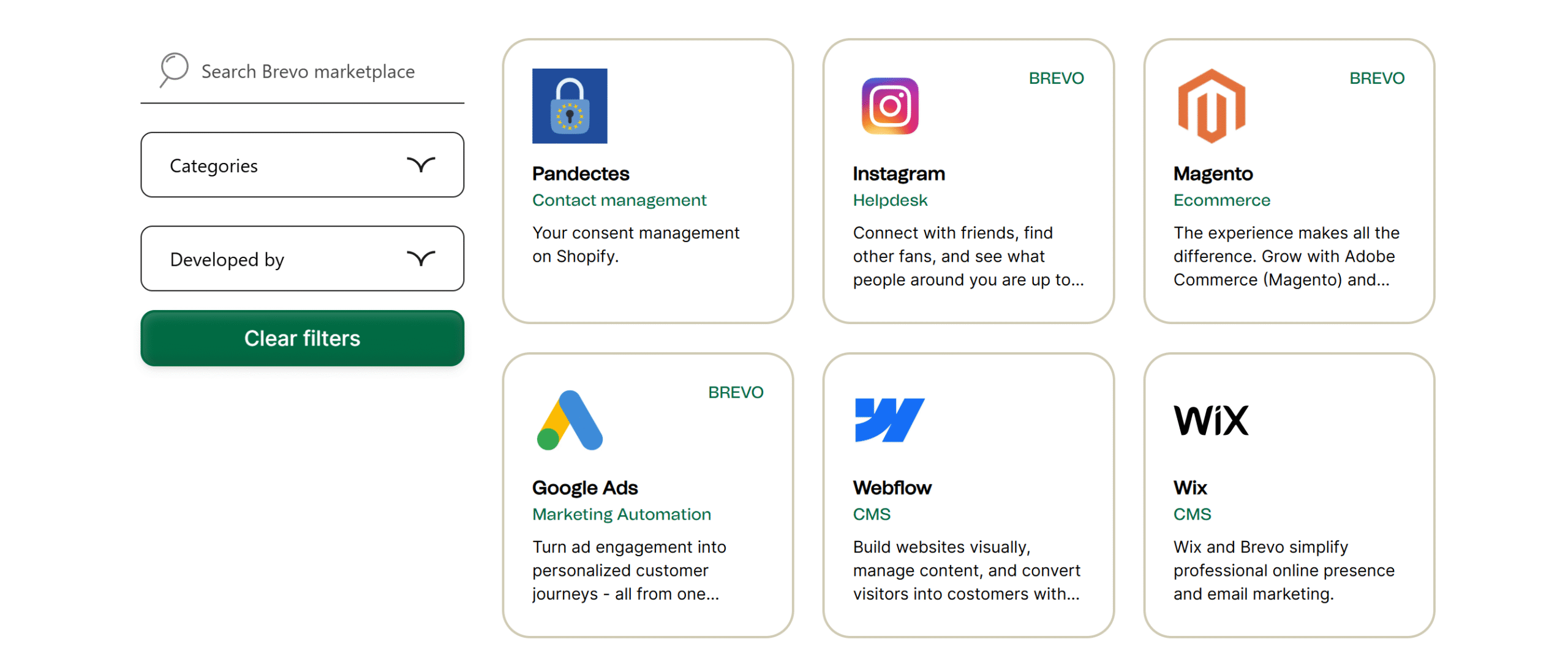
Brevo’s app market features a diverse range of applications.
You can connect it with e-commerce platforms, lead generation tools, marketing apps, and payment services.
In addition to that, Brevo works well with productivity software, project management apps, and analytics tools.
Verdict
Omnisend offers integrations specifically for e-commerce, while Brevo provides a variety of integrations, making it suitable for both B2B and B2C.
8. Pricing
Omnisend and Brevo are SaaS platforms.
Their prices are contact-based, and they sell monthly subscription packages.
Here’s their pricing summary.
Omnisend
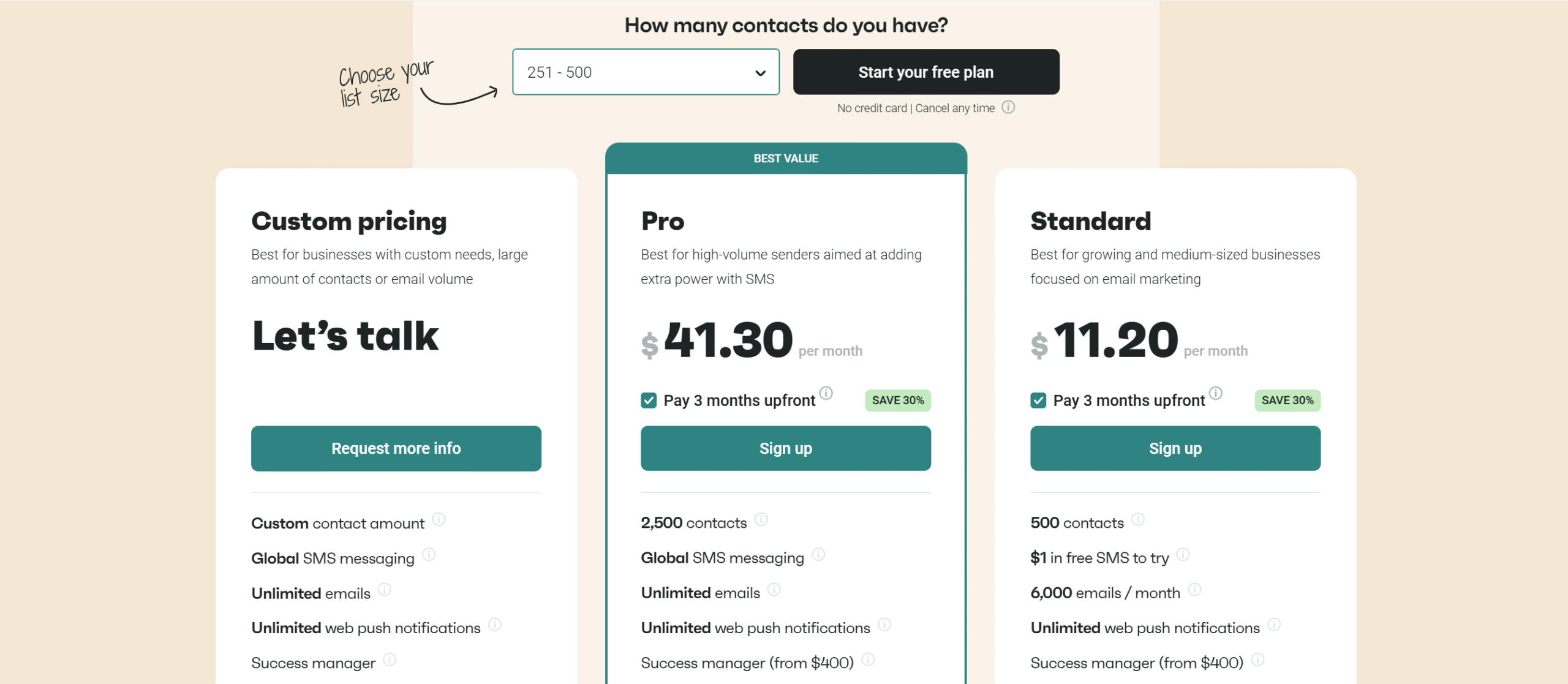
Omnisend offers three premium packages and a basic free plan. The packages start at 250 contacts and can reach up to 150k.
- Standard Plan: It costs around $12 per month for 500 contacts. You can get a 30% discount on three three-month upfront payments.
- Pro Plan: It costs $42 per month for 2500 contacts and provides free credits for SMS.
- Custom Plan: It’s a scalable plan that allows unlimited emails, custom contact volume, and free migration support. For prices, contact sales here.
All packages provide templates, automation, reporting, and customer support.
Brevo
Brevo sells its marketing, sales, and conversion platform as standalone products. You can get started for free and scale your package.
Below are the subscription packages for its marketing platform.
- Starter Plan: It costs $9 per month for 500 contacts. It covers only email and SMS marketing, and you can add custom branding for an extra $12.
- Business Plan: It costs $18 per month for 500 contacts. It unlocks some premium features, like a landing page, A/B testing, and reporting.
- Enterprise Plan: This plan covers all the features. For prices, you can reach out to the sales here.
Verdict
Brevo allows unlimited emails at budget-friendly prices. Omnisend, on the other hand, gives you access to almost all its features in the basic plan.
Omnisend Vs. Brevo: Pros & Cons
Let’s look at Omnisend’s and Brevo’s key strengths and weaknesses.
Each app has its core advantages, making them attractive to their target audience.
Omnisend
Pros:
- E-commerce-focused tools.
- A large selection of templates.
- Good AI-powered features.
- Easy to use.
- Robust reporting.
Cons:
- Comparatively expensive.
- A monthly cap on emails.
- Limited CRM tools.
Brevo
Pros:
- A comparatively versatile platform.
- Powerful contact management and sales pipeline.
- Transactional email API.
- Affordable packages.
Cons:
- Fewer templates.
- Basic email reporting.
- Limited access to all its features.
Conclusion
Omnisend and Brevo are both powerful automation platforms.
They deliver predefined automation and multichannel support to help you run various marketing campaigns with ease.
If you want an email marketing tool specifically for e-commerce campaigns, Omnisend is perfect for you. But if you have a high volume and need a budget-friendly option, choose Brevo.


 A better way to manage projects and clients for freelancers
 Get through busy days like a breeze with Reclaim.ai