
If you run an online store, there are only two ways to get traffic: you either pay for it or earn it.
Paid ads offer instant visibility, but the moment you stop spending, the traffic stops too. On the other hand, organic traffic earned through search engine optimization (SEO) builds over time and keeps delivering results even when you’re not actively working on it.
In today’s e-commerce landscape, where customer acquisition costs are rising and digital competition is cutthroat, SEO is more than a growth lever.
Brands that invest early in organic visibility show up exactly when it matters: in search results, where buying intent is the highest.
But unlike blog or local SEO, e-commerce SEO brings its complexity with thousands of products, duplicate content risks, technical dead ends, and a need for scalable architecture.
This guide covers e-commerce SEO from keyword strategy to technical architecture
What is E-commerce SEO?
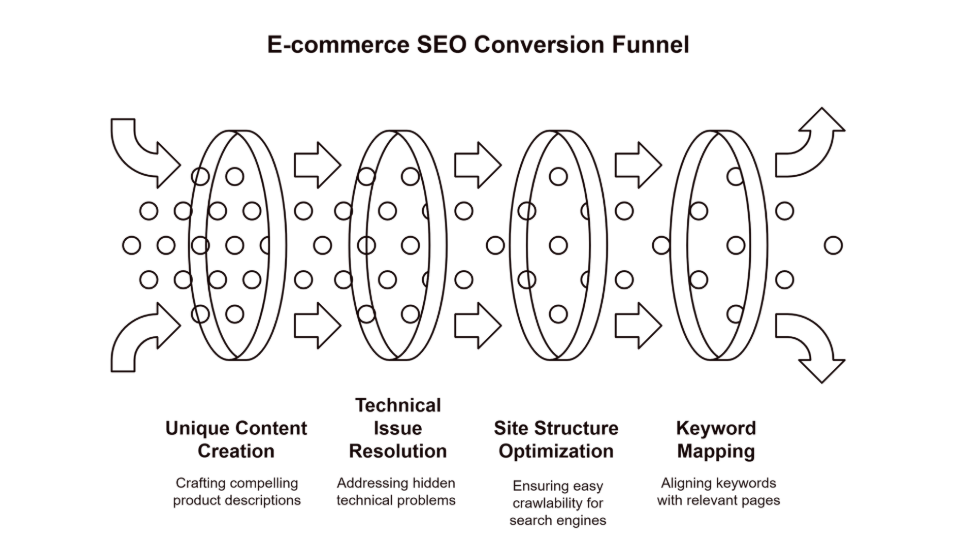
At its core, e-commerce SEO ensures your online store is understood and favored by search engines, not just as a website, but as a structured, crawlable, and value-driven product catalog. It’s a blend of technical precision and user-centric design.
You’re not just optimizing for visibility. You’re designing an architecture where every product, category, and content page speaks clearly to search engines and human buyers alike. That includes:
- Writing unique, compelling product content at scale
- Fixing the hidden technical issues that quietly kill rankings
- Structuring your site so Google can crawl it without friction
- Mapping commercial and transactional keywords to the right pages
When done right, e-commerce SEO drives steady, high-intent traffic that converts into revenue.
Why SEO Matters More Than You Think in E-commerce
When a customer types “best trail running shoes for men” into Google, they’re not casually browsing. They’re already halfway down the buying funnel. Ranking for that kind of query means you’re showing up right when people are ready to spend money.
According to Google, over 40% of product discovery still starts with search. But this isn’t just about traffic. It’s about attracting the right kind of traffic, that is, people with purchase intent. And SEO touches everything that matters to your bottom line:
- Customer acquisition cost (CAC): Organic traffic means you’re not burning ad spend to win every click.
- Lifetime value (LTV): SEO-driven customers tend to be more intentional, and when they find you through search, they often return.
- Brand perception: Ranking organically gives your store credibility. You don’t need a huge ad budget to build trust. Just consistent visibility is enough.
- Margin control: With SEO, you own your channel. That gives you pricing power and protection as paid ad platforms become more expensive and competitive.
SEO is often seen as a back-office task. It’s not. For e-commerce, it’s a front-line strategy.
Step 1: Nail Keyword Research
One of the biggest mistakes I see in online stores is treating keyword research like a copy-paste job from blog SEO. It’s not the same game. You’re not optimizing for curiosity. You’re optimizing for conversions.
Where blog SEO targets informational queries like “how to clean leather boots,” e-commerce SEO is about ranking for transactional intent. That means understanding how buyers search when they’re ready to act.
You’ll Typically Work With Three Keyword Buckets:
- Category-Level Keywords: These are broad but still indicate intent to buy. Think “wireless headphones under 3000” or “organic skincare kits.” These are your category or subcategory anchors.
- Product-Level Keywords: These are precise, often low-volume but high-converting. Someone searching “Sony WH-CH520 Bluetooth headset review” or “Nike white Air Force 1 size 8” already knows what they want. These keywords belong on your product pages.
- Informational Keywords: Often overlooked, but important for long-term SEO strength. These show up earlier in the buying journey. For instance, “best running shoes for flat feet” can be addressed in blog posts or guides that build internal link equity.
Relevance, intent, and conversion potential are the key factors. Start with Google auto-suggest and the “People also ask” section. They reflect how people phrase their searches.
Then use tools like Ahrefs or SEMrush to explore keyword variations, competitor gaps, and long-tail queries.
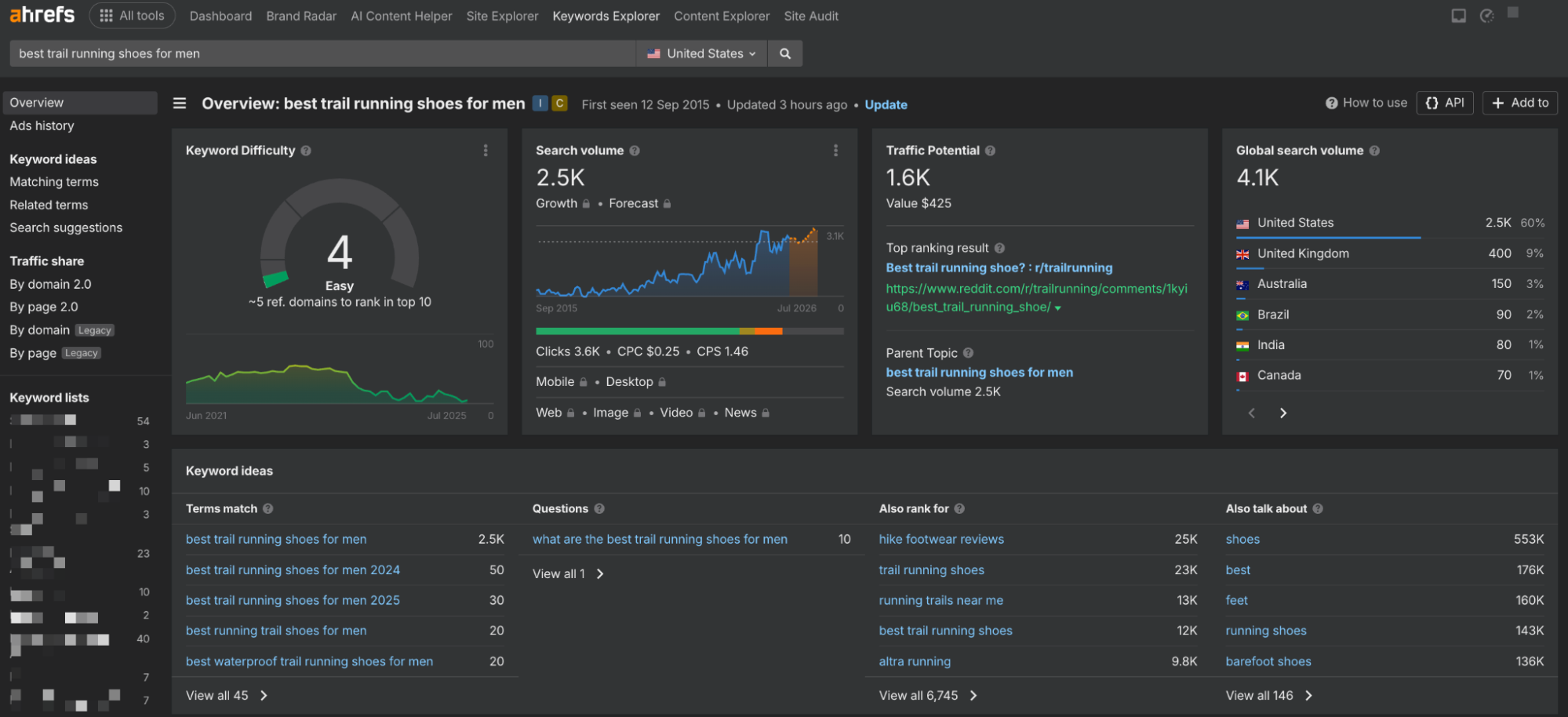
More importantly, reverse-engineer what’s already working. Look at which pages on your competitors’ websites are ranking and for which terms.
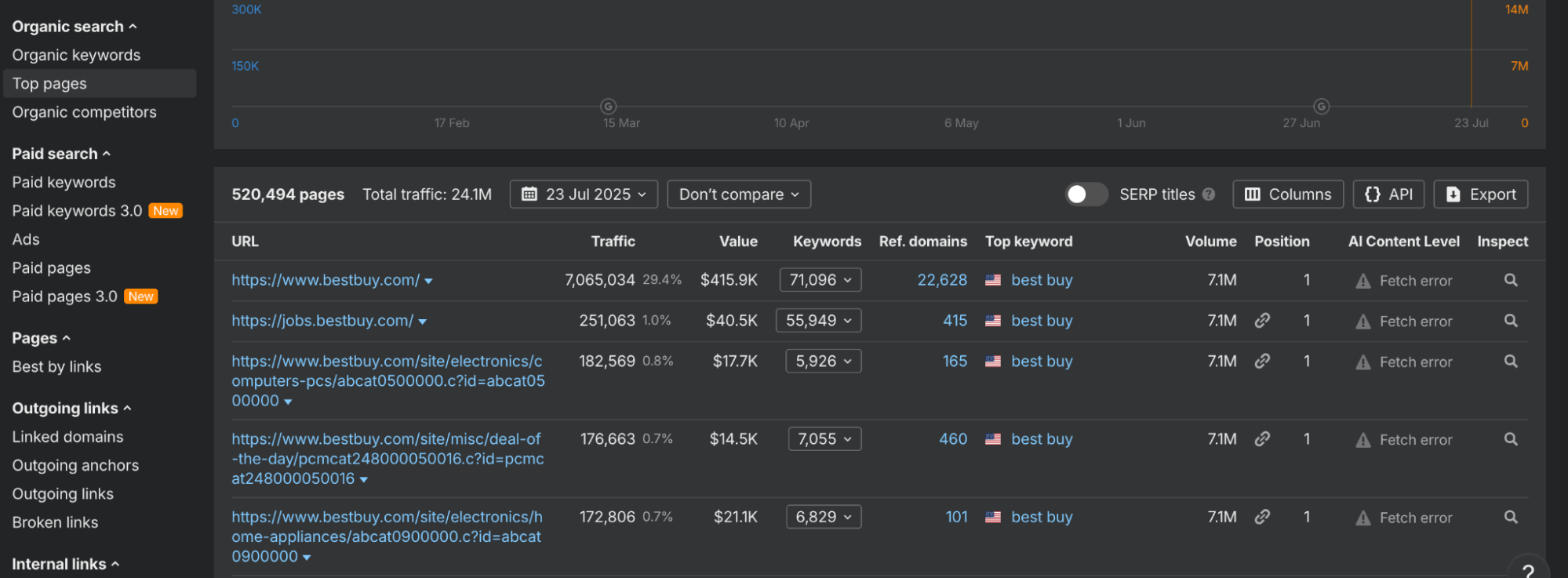
SEO is not just about finding keywords. It’s about mapping the right keywords to the right pages, without overlap.
Step 2: Site Structure: Think Like a Librarian, Not a Designer
Your site structure isn’t just about user experience. It’s also how search engines discover, understand, and index your store. And if that structure is messy, say, 5,000 products sitting in a single “Shop All” category, Google won’t make sense of it either.
A scalable SEO-friendly structure is flat, logical, and intentional. You want every product to be no more than 3–4 clicks from the homepage.
Like, here, this cap brand has neatly listed their product categories on their landing page.

With a single click, a customer will instantly reach their product catalog.
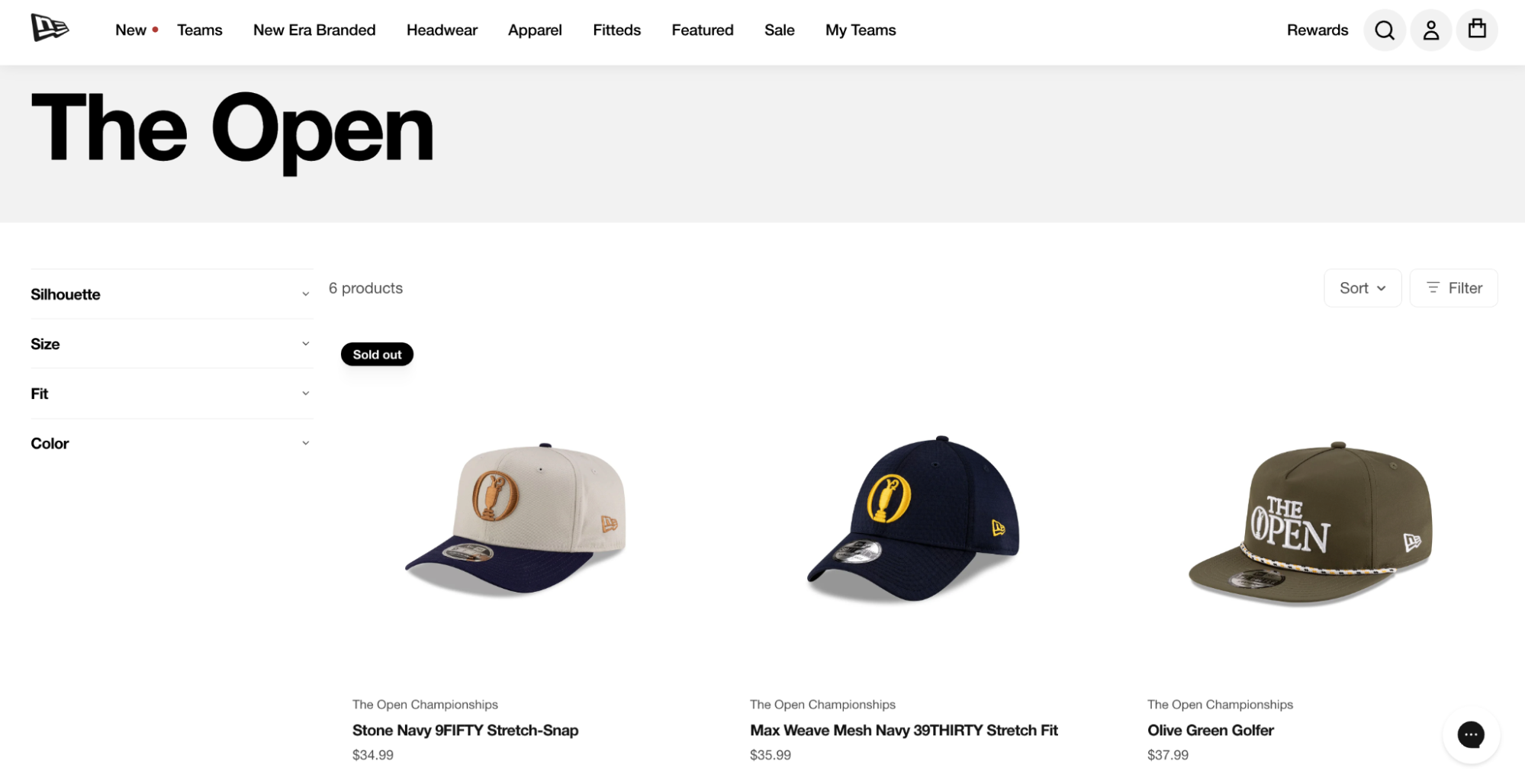
This reduces the friction between a customer’s intent to buy something and getting distracted to eventually backing off.
Adding to this, you want URLs that reflect a meaningful hierarchy. You want internal links that help distribute authority and not just through your navigation bar, but through body content and breadcrumbs.
Let’s say you sell caps. The structure might look like this:


Each of those pages should have a dedicated keyword and its unique content.
Avoid generic URL slugs like /product?id=1234.
They tell Google nothing and make your store look like a spreadsheet.
One more thing is that internal linking is your best-kept secret. Don’t just rely on menus. Link from your blogs to product collections. Link from out-of-stock products to in-stock alternatives. Link from category descriptions to relevant guides. These links keep authority flowing and users engaged.
Step 3: On-Page SEO: Don’t Just Stuff Keywords, Add Clarity
Many online store owners think SEO ends with slapping a keyword into the title tag and calling it a day.
It doesn’t. On-page SEO is where strategy meets execution, and it’s where most e-commerce sites fail quietly.
Let’s take a product page. What should it include to rank well?
- A title tag that reflects the keyword, brand, and value proposition
Example: “Men’s Trail Running Shoes | TrailFlex 5000 | Free Shipping in India” - A meta description that entices clicks
Use this space to add urgency or USPs like “Ships in 24 hours” or “Free returns.” - A clean, keyword-focused H1 tag
This should match the user’s search intent and clearly describe the product. - Product copy that sells
Go beyond specs. Explain the use cases, materials, sizing info, and buying concerns. If you’re selling a rain jacket, mention breathability, waterproof rating, and how it fits. - Alt text for every image
This isn’t just for accessibility. It also helps you rank in image search. - Schema markup for products
Add structured data for reviews, pricing, and availability. This helps you earn rich snippets in search.
But one area many e-commerce brands overlook is user-generated content.
Customer reviews, ratings, and Q&A sections do more than build buyer confidence. They also help your SEO. These sections add naturally occurring keywords and keep your content fresh over time.
When someone asks, “Will this bag fit a 15-inch laptop?” or leaves a detailed review with product use cases, that’s content Google can crawl. It’s relevant, authentic, and valuable, which is exactly what modern search engines reward.
Make sure your reviews and Q&A content are indexable, and use structured data (Product and Review schema) to help Google understand what’s on the page.
You don’t need long essays, just enough original content to stand out. Just don’t rely on the manufacturer’s description. Write your own. Even 150 well-written words can make the difference between page two and page one.
Step 4: Technical SEO: The Hidden Lever That Can Break Your Store
This is the part of SEO most people skip because it’s not as visible. But it matters. If Google can’t crawl your site, it won’t rank it. No matter how good your content is.
Here’s what you need to prioritize:
- Site Speed: Your site should load in under 3 seconds. Use free tools like Pingdom to find it.
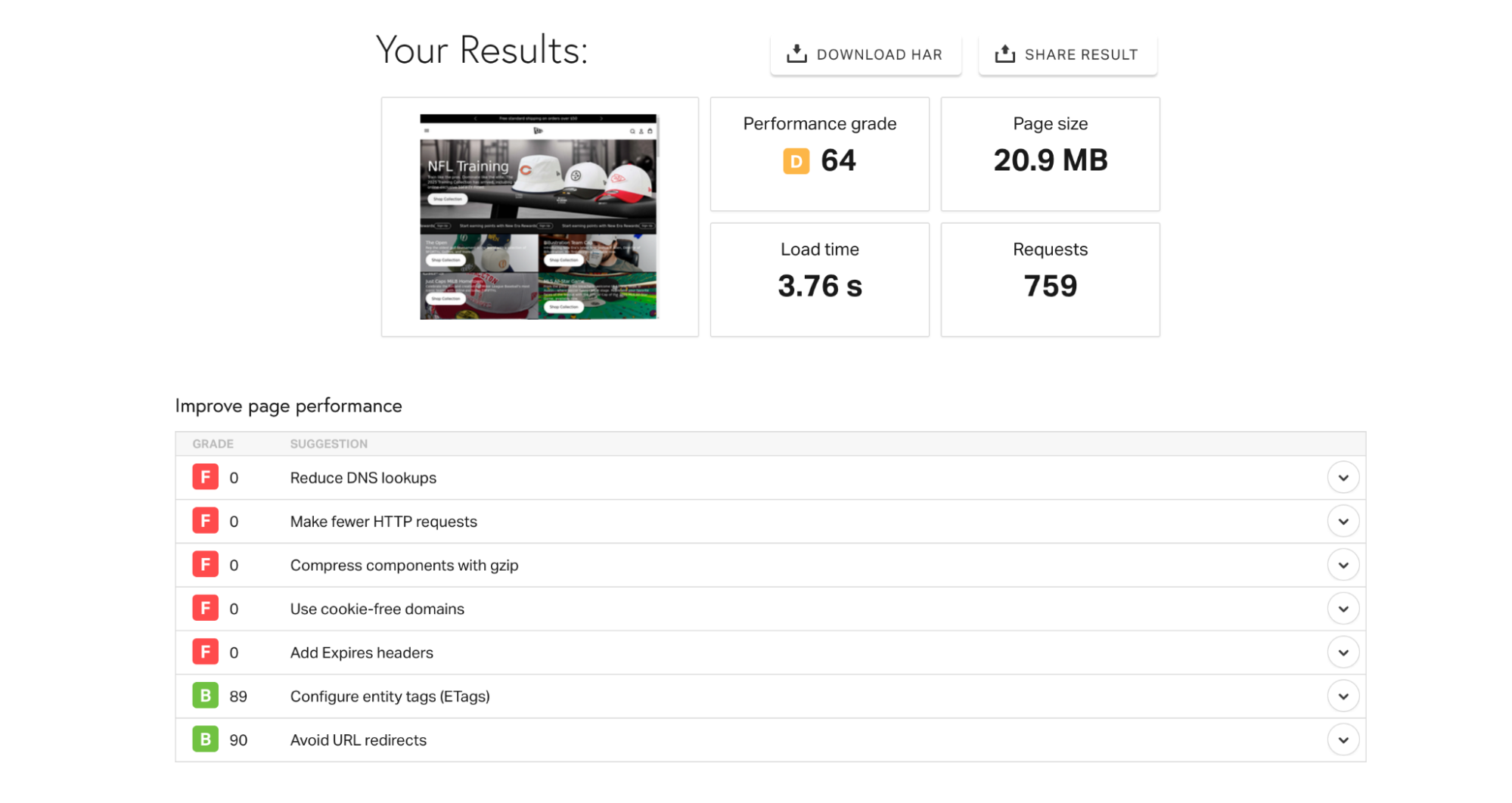
If it’s not good, compress images, use lazy loading, minimize third-party scripts, and host heavy files on a CDN. Google also looks at page experience signals like layout shifts and responsiveness. These are part of what it calls Core Web Vitals, and they’re now baked into rankings.
- Mobile Performance: Google uses mobile-first indexing, so your mobile version is your real site. If anything breaks, overlaps, or slows down on a phone, it’s going to hurt both rankings and conversions.
- Duplicate Content Management: Size, color, and price are great for users but terrible for crawl efficiency if unmanaged. These filters create thousands of duplicate-looking pages. That’s where canonical tags come in. Use them to tell Google which version of the page is primary. Block useless URL combinations in robots.txt and only index filter pages if they serve real search demand.
- Secure Browsing: Keep your site secure with HTTPS, and make sure your XML sitemap includes only valuable, indexable pages. Submit it to Google Search Console and review it regularly. Use robots.txt to keep Google out of thin or duplicate pages, like internal search results or filter junk.
- Repurpose Out-of-Stock Pages: And don’t delete out-of-stock product pages. If the item is temporarily unavailable, keep the page live and mark it as “Out of Stock” using schema. Suggest alternatives. Only redirect if the product is discontinued for good. Otherwise, you’re throwing away link equity and page history.
Step 5: Content That Builds Authority (and Converts Later)
A lot of e-commerce founders ask me: “Why would I invest in blog content when I’m selling products?” The answer is simple. Because content is what builds topical authority, internal links, and trust across the funnel.
Let’s say you sell skincare. A customer searching “best routine for oily skin” might find your guide but not your product page. But if that guide links to your oil-free moisturizer collection? You’ve just pulled them into your ecosystem.
Types of Content That Work:
- Buying guides: These help customers make decisions. Add comparisons, testimonials, and product links.
- Product roundups: Great for seasonal demand or niche segments. (“Top 10 Hair Dryers Under ₹2000”)
- Tutorials and how-tos: These position your store as helpful, not just transactional.
- FAQs and policy pages: Often ignored, but powerful for SEO and conversions alike.
Make your content useful, not generic.
If you’re creating guides or blog posts, be specific, show experience, and back claims with credible sources. Pages that demonstrate expertise and clarity tend to perform better, especially for products that require more trust, like wellness, personal care, or electronics.
And while AI can help speed up content creation, avoid publishing raw outputs. Review everything. Rewrite if needed. Google doesn’t reward AI-written fluff. It ranks as helpful, human-quality content.
Your blog doesn’t need to churn out articles weekly. It just needs to answer real questions, support your products, and keep people on your site longer.
Step 6: Link Building: The Hardest Part, But Still Essential
Links remain one of Google’s top-ranking signals, but earning them as an e-commerce brand is hard. People rarely link to product pages unless there’s value attached.
That’s why your strategy has to revolve around linkable content including guides, trend pieces, tools, and even curated gift lists.
- Reclaim broken links using Ahrefs.
- Partner with manufacturers and influencers.
- Offer quotes via HARO or Featured to get mentioned in niche publications.
Link building is slow. But if you do it right, it pays off long after your competitors’ ad budgets dry up.
Step 7: Track What Matters: Because SEO Isn’t Set-and-Forget
SEO is not a one-time setup. If you’re not tracking performance regularly, you’ll have no idea what’s working, what’s broken, or where to focus next. For e-commerce stores, this isn’t optional. It’s how you protect and grow the value of your SEO investment.
Start by using three core toolsets:
- Google Search Console for visibility and crawl issues
- Google Analytics 4 (GA4) for traffic behavior and revenue attribution
- Use rank tracking tools like SEMrush or Ahrefs to monitor keyword positions
Together, they give you the full picture: how you’re showing up in search, how visitors are behaving, and whether all that effort is leading to actual sales.
Here’s what you should be tracking:
- Organic sessions: Monitor how much of your traffic comes from search and how it’s trending over time. This tells you if your SEO efforts are gaining traction.
- Keyword rankings: Focus on core commercial terms, especially your category-level keywords and high-performing product phrases. Use a rank tracker to watch for gains, losses, and new opportunities.
- Click-through rate (CTR): A low CTR could mean your meta titles or descriptions aren’t compelling enough, even if you’re ranking well.
- Conversion rate (CVR) from organic traffic: Traffic doesn’t mean much unless it converts. Look at which organic pages lead to checkouts or add-to-carts.
- Revenue from organic: This is the bottom line. Use UTM parameters or multi-touch attribution to isolate how much of your revenue comes from unpaid search traffic.
Bonus tip: Run technical audits monthly using tools like Screaming Frog or Sitebulb. These catch silent killers such as broken links, duplicate tags, and crawl issues before they snowball into bigger problems.
Step 8: Avoid the Most Common (and Costly) SEO Mistakes
Even experienced e-commerce teams fall into traps that quietly erode SEO performance. These minor oversights can tank rankings and cut off your organic growth at the knees.
Here are the ones I see most often:
Using duplicate product descriptions: Copying manufacturer blurbs or reusing content across similar SKUs makes your site look thin and unoriginal. Google won’t rank what it sees as duplicate or low-value.
→ Fix: Write short, original descriptions. Focus on benefits, use cases, or differentiators. Even 150 words of custom copy can give you an edge.
Keyword cannibalization: When multiple pages target the same keyword, they compete against each other. This confuses Google and splits your authority.
→ Fix: Assign one core keyword per page. Use canonical tags for near-duplicates and consolidate where needed.
Deleting out-of-stock pages: A common mistake is to 404 product pages when items go out of stock. That breaks backlinks, loses ranking history, and frustrates returning users.
→ Fix: Keep the page live with an “Out of Stock” label. Suggest related items. If you must remove it, use a 301 redirect to the closest alternative.
Ignoring mobile performance: If your mobile layout breaks, overlaps, or loads slowly, it directly impacts both rankings and conversions.
→ Fix: Test your site regularly on mobile devices and optimize for speed, layout, and tap-friendly design.
Avoiding these issues won’t make you shoot to page one overnight, but they will keep you from silently losing ground while your competitors climb.
Most growth tactics, such as ads, influencer campaigns, and giveaways, give you a spike and then fade. SEO, when done right, is the opposite. It compounds. It scales. And it continues to work even when your budget is tight.
But that only happens if you treat it like infrastructure. Not a “project” with a start and end date, but a core part of how your store is built and maintained. The truth is, organic visibility isn’t just about traffic. It’s about control.
You don’t need to do everything at once. Just start with the basics:
- Clean up your site structure
- Map the right keywords to each page
- Create a few useful guides that link to your products
- Earn a few solid backlinks from partners or directories
- Optimize your most important category and product pages
And then? Keep going. SEO rewards consistency. Build it step by step, and it’ll become your most reliable growth engine.


 A better way to manage projects and clients for freelancers
 Get through busy days like a breeze with Reclaim.ai