EMR software is an incredibly convenient tool for healthcare providers.
It gives you quick access to your patients’ health records and helps you optimize patient care.
If you’re exploring user-friendly and feature-rich platforms, I’ve reviewed some of the top EMR software options for you. Compare their core features, extended functions, and prices to pick the best apps for your clinic.
What Is EMR Software and What Are the Best EMR Platforms?
EMR software is a healthcare system that enables you to record, store, and manage your patient records online. The app makes it easier to access patient data from anywhere and provides reporting capabilities to keep track of everything.
Most EMR platforms come with extended functionalities.
You’ll typically find practice management and billing tools with EMR modules, but some also offer marketing features.
The idea is to deliver an integrated system to help you streamline your operations.
Top Features To Look For In EMR Software;
- Digital patient medical records.
- A built-in billing system.
- Telehealth capabilities.
- ePrescribing.
- Lab and Imaging Center integration.
Here’s the list of the best EMR platforms available in the market.
1. NextGen
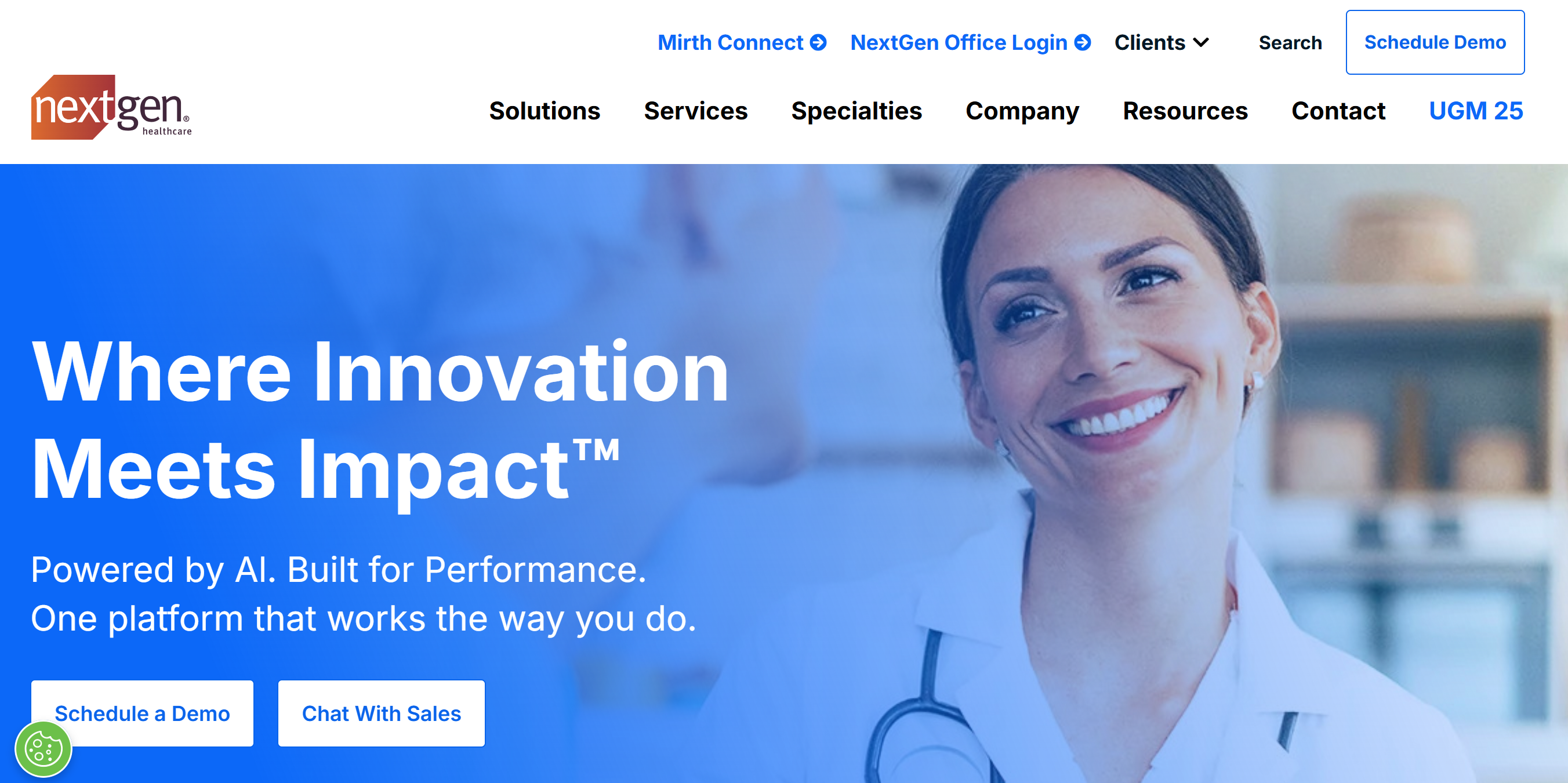
NextGen sells both software and services.
Its digital solution includes electronic medical records (EMR), practice management, patient engagement, and provider experience.
If you purchase its services, you’ll get care management support, consultation, process optimization, and managed cloud services.
With NextGen AI capabilities, you can streamline your operations and cut your administrative work. The software automatically documents your conversation, generates summaries for context, and offers smart suggestions on medication and documentation.
Mobile EMR is also available. You can convert your mobile into a documentation device to dictate notes, share information, access patient data, and prescribe medicines.
One more thing. Billing is built into the system. You can collect patient payments, handle claims, and automate billing.
Core Features
- Electronic medical records.
- Mobile EMR.
- Accessibility and data sharing.
- Intelligent documentation.
- AI and automation.
- Operations management.
- Telehealth.
- Patient care.
- Billing.
- Analytics and insights.
- Integrations.
- Managed services.
Price
NextGen shares prices on request. Book a demo to know more.
2. Epic
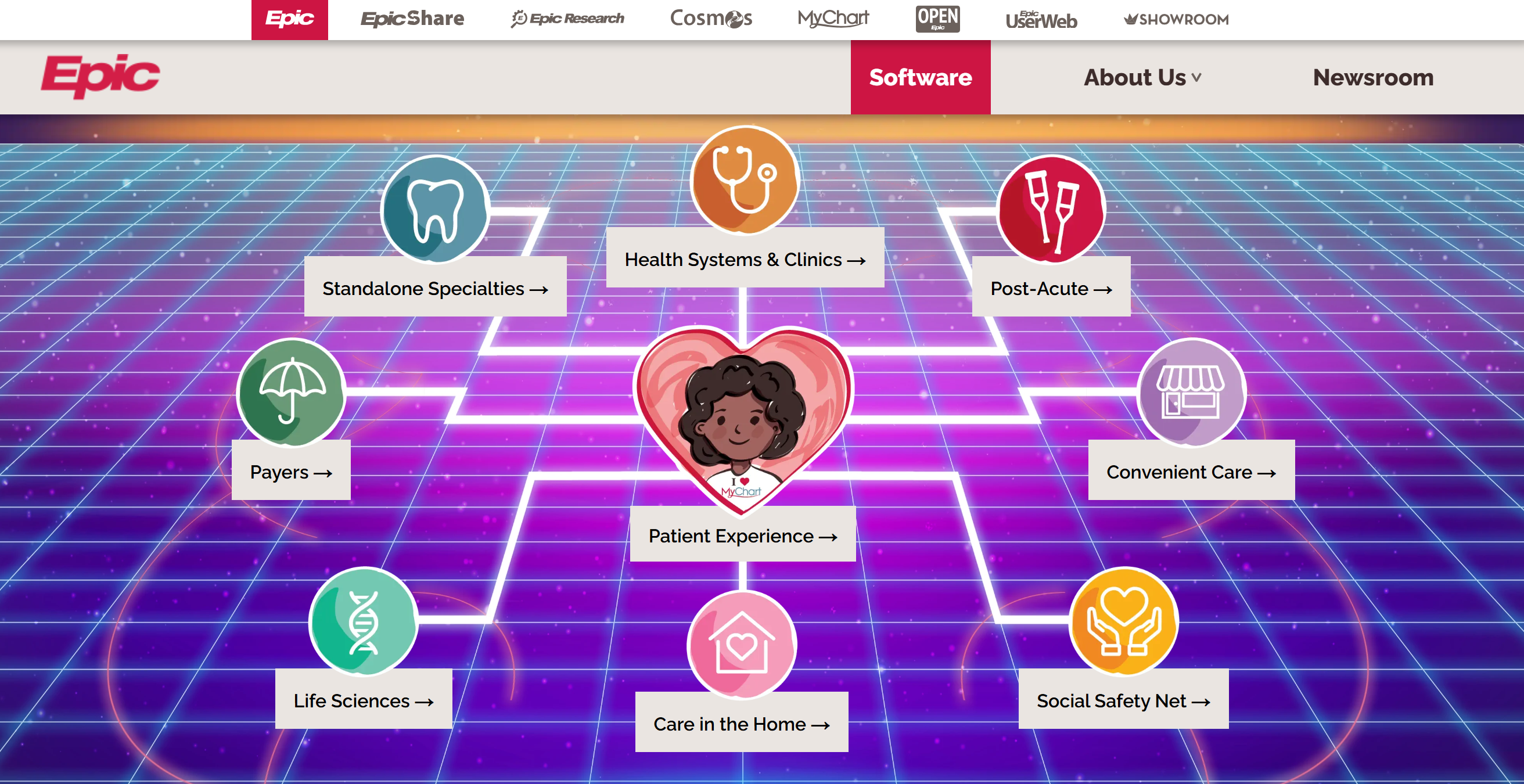
Epic is a leading healthcare software development company. It builds scalable medical systems for general and private practices.
The platform is well-known for its intuitive interface, customization, and data security.
It’s also incredibly robust and versatile. It supports over 60 specialties and provides almost all the essential modules to manage patient records and day-to-day activities.
For example, you can handle scheduling, communication, billing, and administration through Epic. Plus, you can set up remote patient monitoring and allow your patients to access their medical records online.
Overall, if you are looking for an industry standard, Epic is best for you.
Core Features
- Patient medical record.
- CRM for healthcare.
- A range of specialties.
- Patient experience and care management.
- Real-time access to the medical records.
- Remote patient monitoring.
- Appointment scheduling, walk-ins, and e-visits.
- Collaboration and workflow automation.
- Billing.
- Actionable insights.
- Resource optimization.
Price
Epic shares prices on request. Contact sales for the package details.
3. eClinicWorks
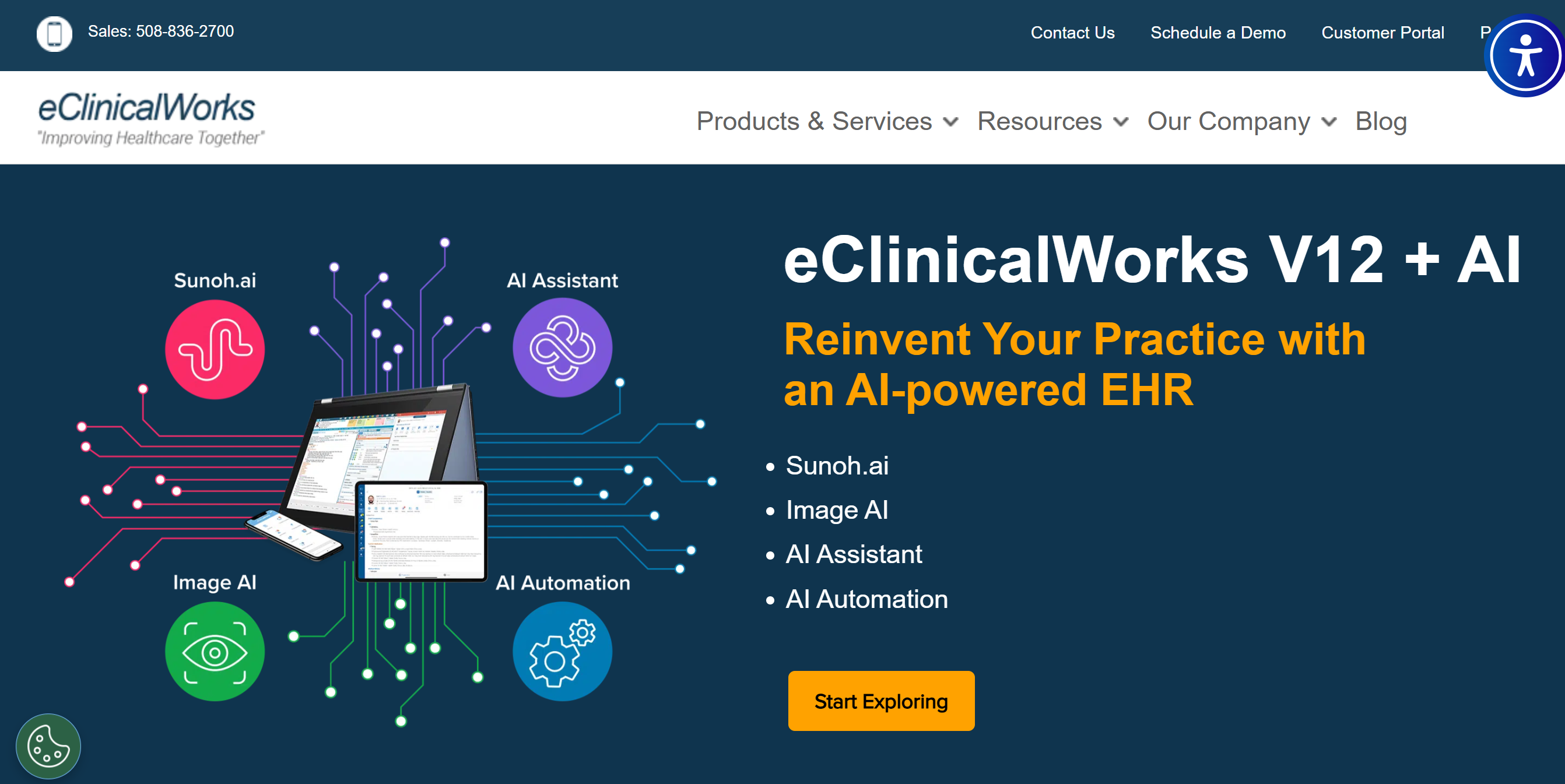
eClinicWorks, like Epic, is also an EMR with built-in practice management capabilities. It’s ideal for small to mid-size medical practices, offering decent packages and customization options.
For $449 per month, you can centralize your patient medical records, manage documents, handle appointments, and streamline your workflows. The software is easy to implement and delivers AI-powered tools to speed up the documentation and routine work.
You can run both physical and telehealth clinics through ECW. Its telehealth software provides a patient portal, self-scheduling tools, a built-in messenger, and e-prescribing.
You can access ECW from anywhere and integrate it with both medical and non-medical devices, like printers. You can also connect it with financial tools to handle billing.
Core Features
- Electronic medical records and document management.
- Telehealth clinic with patient engagement tools.
- AI and automation.
- ePrescribing.
- Appointment and scheduling.
- Revenue cycle management.
- Referral marketing.
- Tracking and reporting.
- Remote patient monitoring.
- AI agents and assistants.
- Patient communication.
- Integrations.
Price
eClinicWorks charges $499 to $599 per month. You can ask for the demo and get free implementation services.
4. Modernizing Medicine
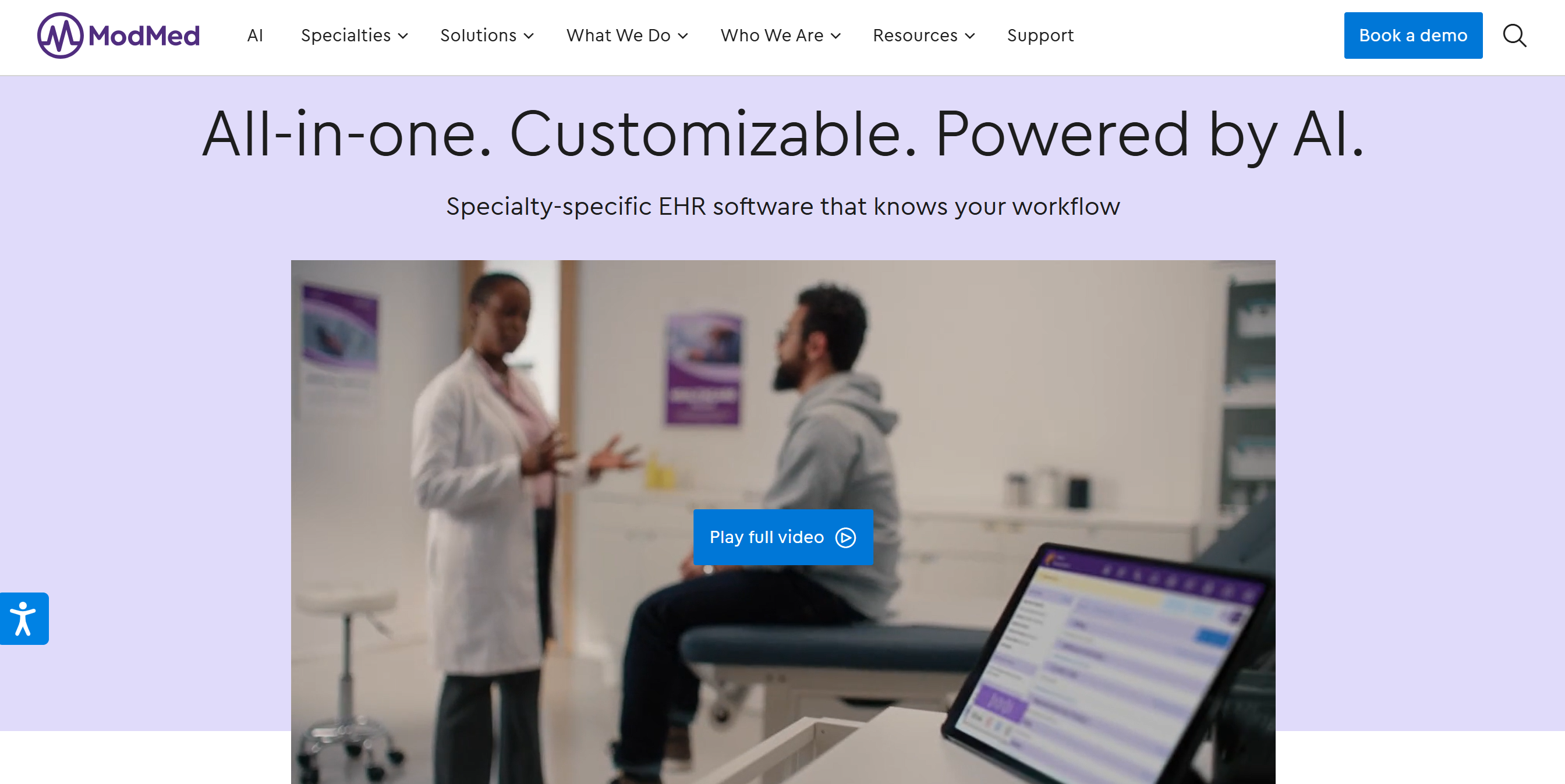
Modernizing Medicine is built for specialty practices.
It provides a digital EMR system for a dozen specialties, including Allergy, ENT, Dermatology, and Plastic Surgery.
You can use Modernizing Medicine to maintain your patient records, communicate with patients, automate some of your administrative tasks, and handle billing.
ePrescribing, inventory management, and lab integrations are also part of the system. The software connects all your departments and offers dedicated support to help you with the setup.
What I love about Modernizing Medicine is its specialty-focused features. For example, you’ll get built-in allergy software that delivers a 3D anatomical atlas to view the body image in high resolution.
Core Features
- Electronic medical records.
- Specialty-focused functions.
- Smart documentation and suggestions.
- ePrescribing and inventory management.
- Telehealth.
- Patient engagement.
- AI and automation.
- Operation management and billing.
- Analytics and reporting.
- Integrations.
- Mobile EMR.
Price
Modernizing Medicine sells custom packages. Contact sales for the demo.
5. ElationEMR
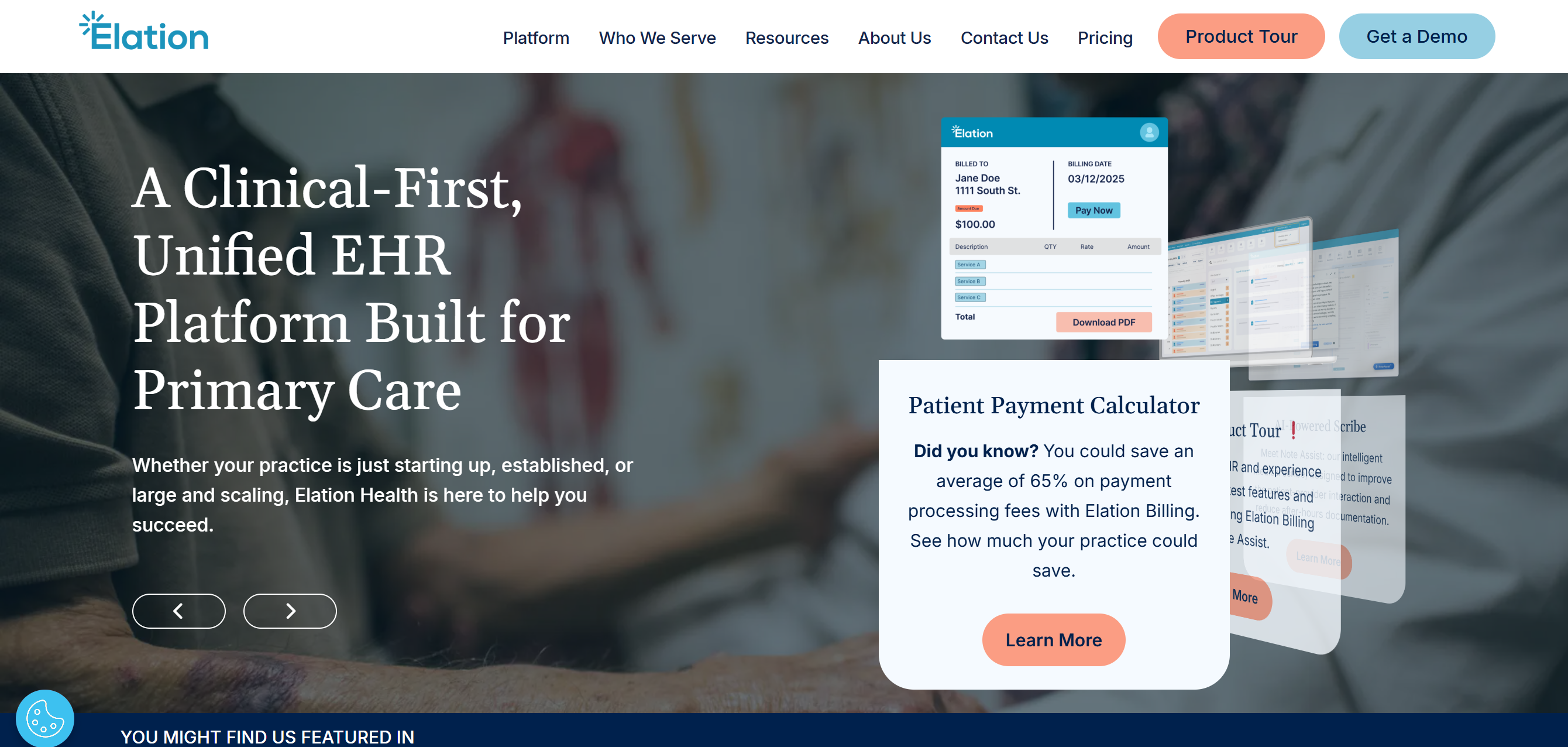
Elation EMR is designed for primary care practices. While it does support some specialty practices, its strength lies in general workflow optimization.
The platform is well-suited for small to mid-size clinics, but you can scale it as you grow. You’ll get a full-fledged practice management module with the EMR and billing software.
You can connect Elation with laboratories and imaging centers. There’s also a built-in system for a telehealth clinic, with digital portals for patients.
For convenience, Elation offers a mobile EMR. You can manage your availability, connect with patients, and send ePrescriptions.
Core Features
- Electronic medical records.
- Real-time access to the data.
- Appointment management and check-ins.
- eSigning and prescribing.
- Billing software.
- Integration with labs and imaging centers.
- Telehealth.
- Referral management.
- Mobile EMR.
Price
Elation provides quotes on request. Book a demo to learn more.
6. Athena
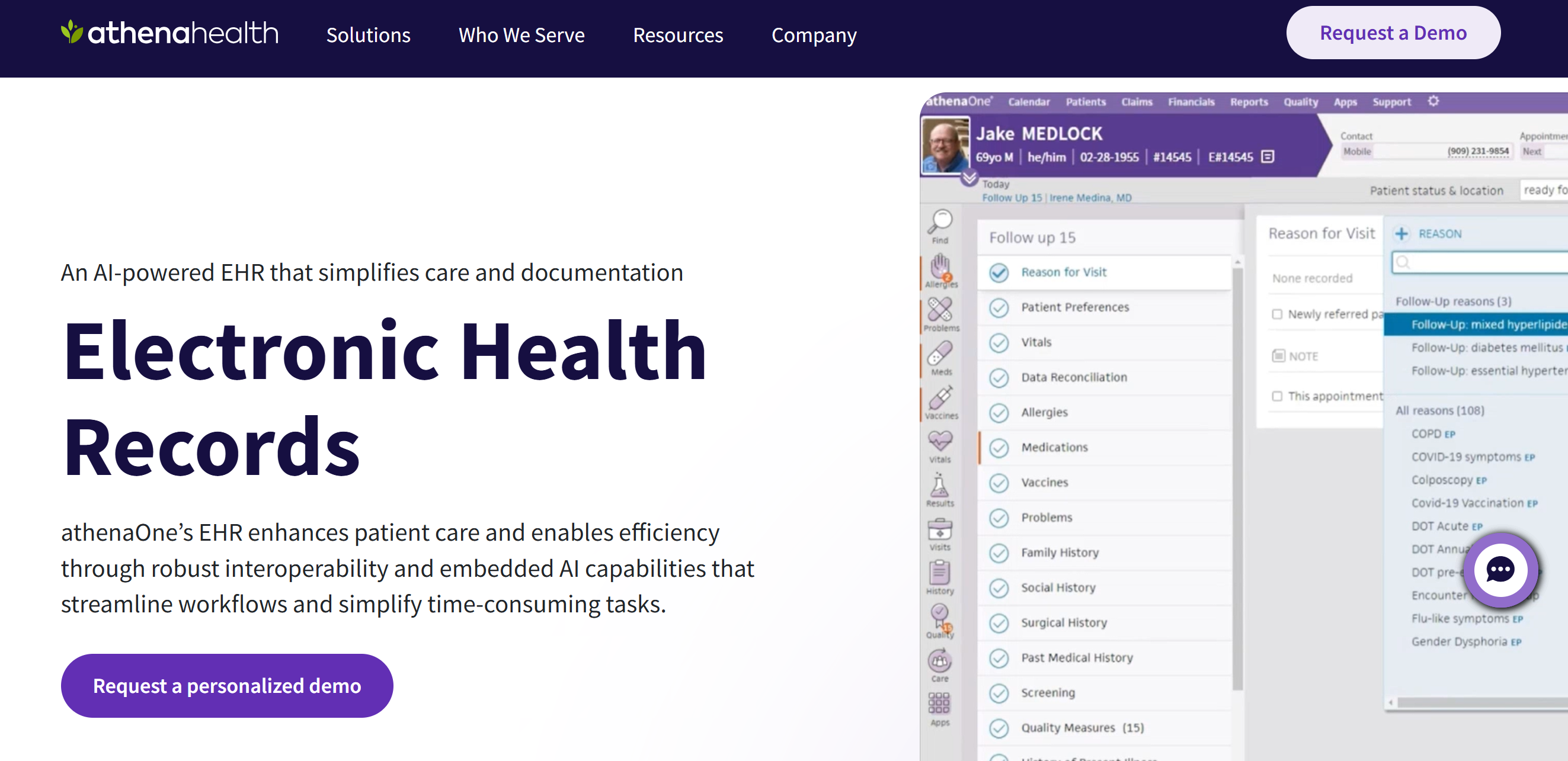
Athena helps you simplify documentation and manage your day-to-day operations with ease.
The software integrates EMR, billing, and patient engagement into a single platform, allowing you to optimize your workflows and improve the patient experience.
Some of its most notable features include document management, AI-powered workflows, and real-time patient insights. You’ll get self-service tools to set up the telehealth clinic on the side and collect payments online.
A few additional services can also be purchased with the main platform. For example, Athena offers consultation services to help you with your operations, data management, and tech implementation.
Core Features
- Electronic Medical Records (EMR)
- Smart documentation.
- Value-based care.
- Tailored workflows.
- Telehealth capabilities.
- AI-powered functions and self-service tools.
- Appointment management.
- Billing and claim resolution.
- Tracking and reporting.
- Patient engagement.
- Mobile access.
- Integrations.
Price
Athena shares prices on request. You can ask for the demo.
7. Healthie
Healthie is perfect for both private and group practices. It offers a cloud-based EMR with scalable features to help you handle workflows of multiple providers.
You’ll get a shared calendar in the package for appointment management and collaborative tools to run a group telehealth clinic.
For documentation, Healthie provides productivity tools, like an AI scribe. It automatically drafts patient charts based on your chosen templates.
With branded portals, email communication, and intake flow, you can improve the overall patient experience.
Tech support is also excellent here. You’ll get both Android and iOS apps and eFax integration.
Core Features
- Electronic medical records.
- AI documentation.
- Online intake and onboarding.
- Appointment management and billing.
- Telehealth.
- Email and SMS communication.
- Multi-provider support.
- Workflow automation.
- Tracking and reporting.
- Integration.
- Mobile apps.
Price
Healthie’s essential plan costs $49, and the group plan costs $149 per month. You can take a 14-day free trial.
8. Avon
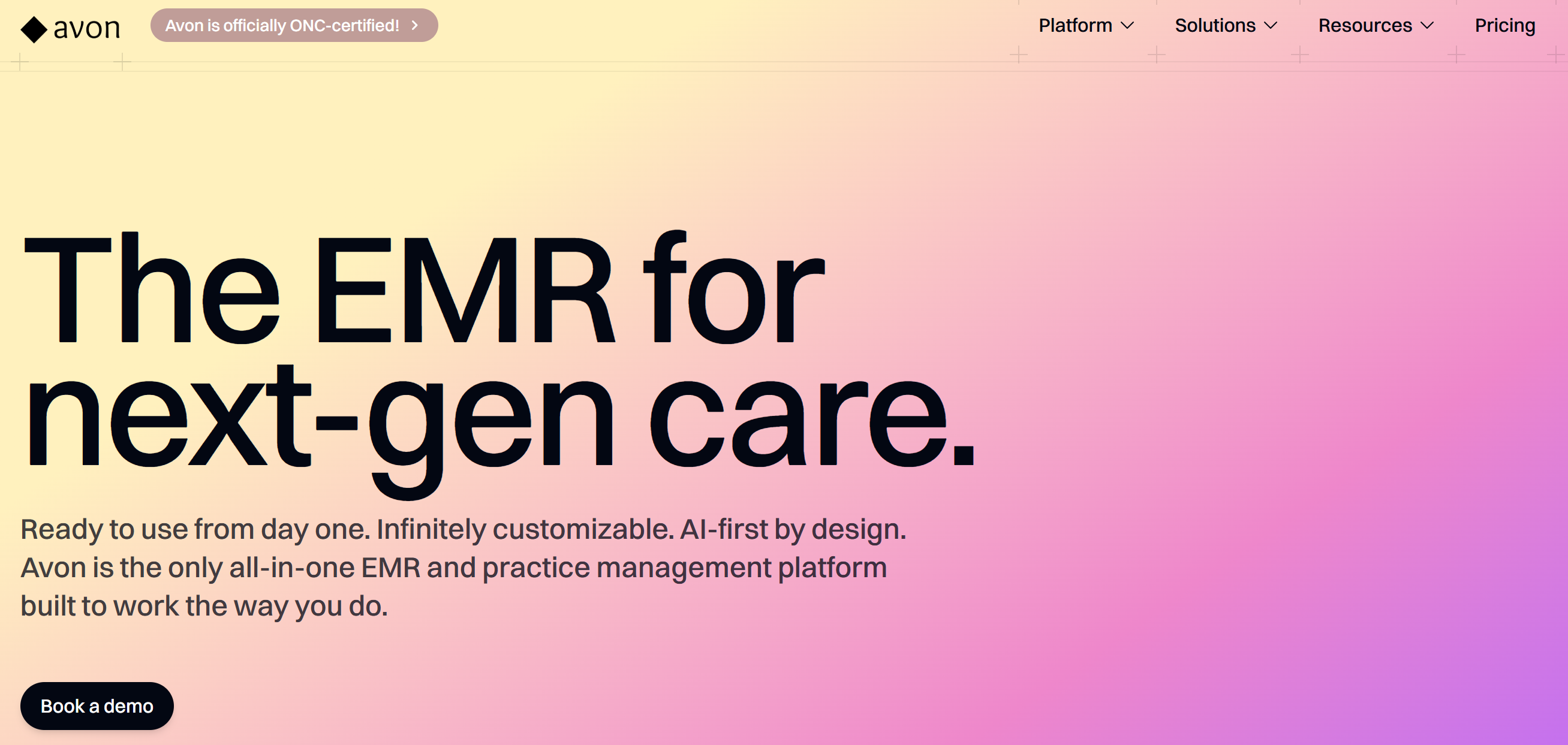
Avon delivers AI-powered EMR and practice management tools. The platform is intuitive, customizable, and accessible.
The starter package covers scheduling, charting, patient engagement, and workflow automation. If you upgrade the plan, you’ll get an AI scribe and data analyst.
The software supports both individual and group practices. You can add as many providers as you want and set up permission rules for the staff.
eFaxing, ePrescribing, and lab integration are included in the plan.
A wide range of telehealth features is also built into the system for your convenience. You can manage both online and in-person scheduling, create custom intake forms, send and receive messages, and handle the billing.
Core Features
- Electronic medical records (EMR).
- Smart documentation.
- Telehealth capabilities.
- Appointment management and onboarding.
- Billing and eligibility checks.
- Clinical essentials, like eFax and lab integration.
- Multi-provider support.
- Patient portal.
- Individual and group messaging.
- Analytics and reporting.
- Integration.
- Custom branding.
Price
Avon individual plans cost $205 to $370 per month. The tier plan starts at $2000. You can try Avon for 30 days.
9. Accuro
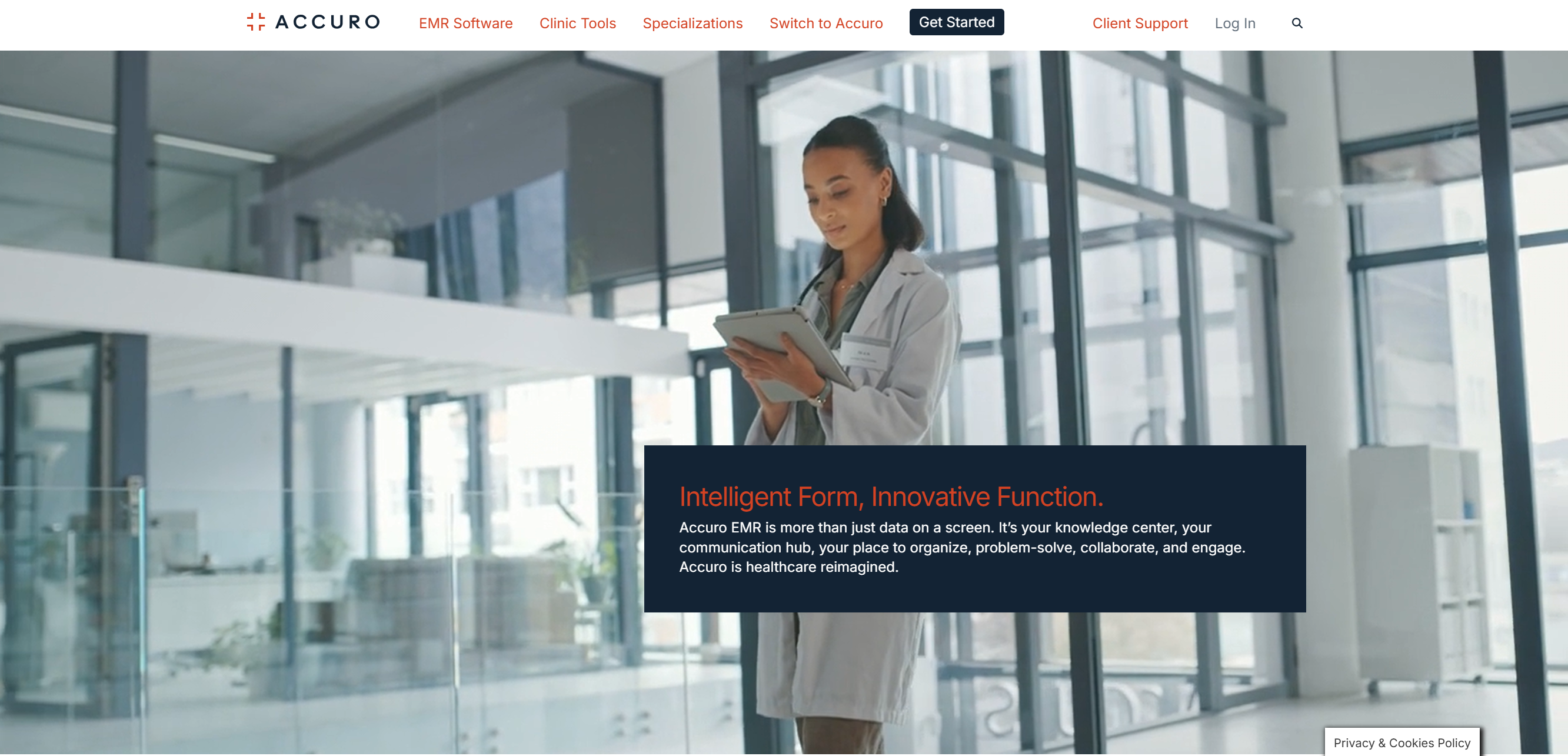
Accuro supports both individual and group practice, covering clinical and administrative areas.
The clinical module contains patient intake forms, digital patient charts, ePrescribing, and documentation.
For the admin department, Accuro provides an appointment scheduling tool, traffic manager, billing software, and clinic reporting.
Accuro can also be personalized to support different practices. Whether you run a family practice, a walk-in clinic, or a specialty practice, you can get custom solutions with implementation assistance.
Core Features
- Electronic medical records (EMR).
- Patient charts and documentation.
- Forms and letters.
- Prescriptions.
- Multi-provider support.
- Appointment management.
- Billing software.
- Traffic manager.
- Reporting.
- Mobile app.
Price
Accuro shares prices on request. Book a consultation to know more.
10. DocVilla
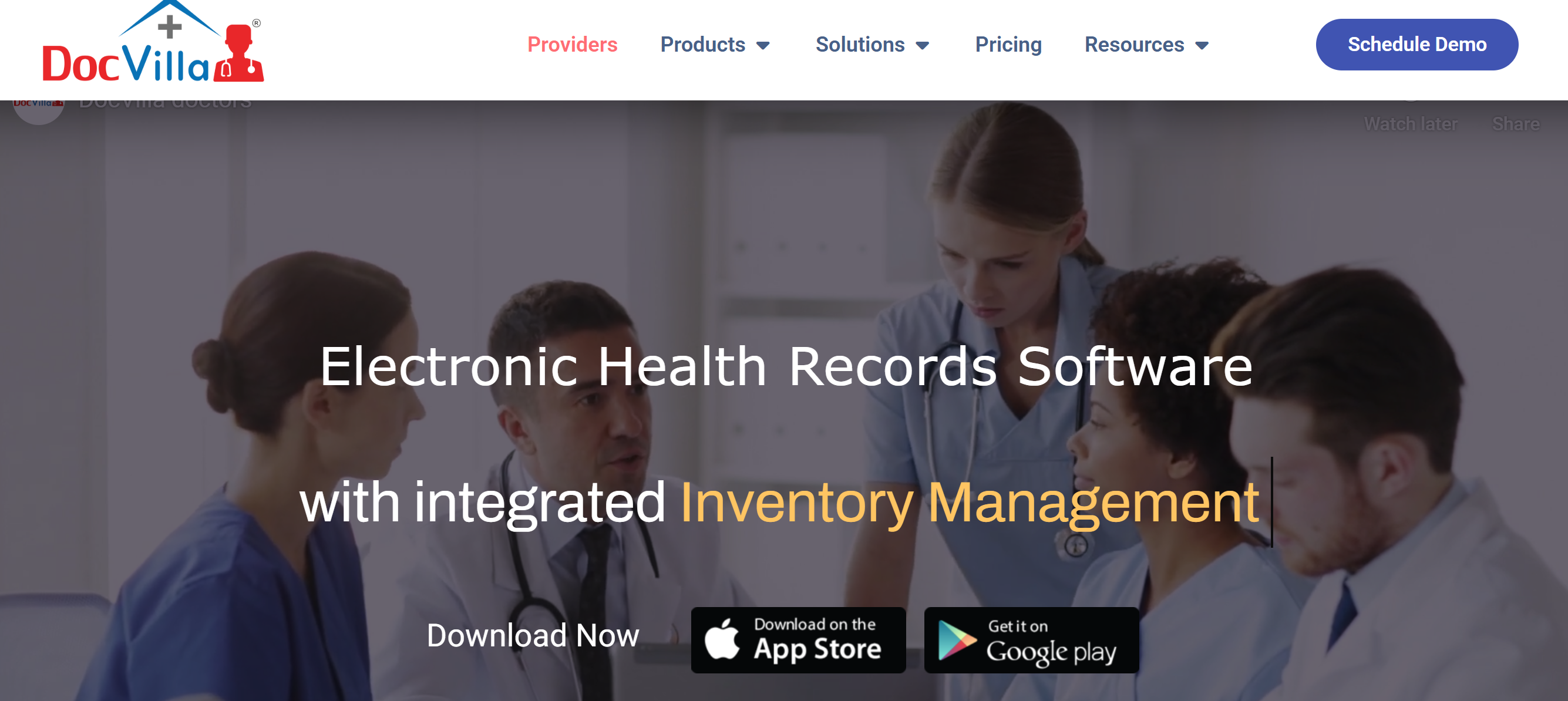
DocVilla is a comprehensive EMR software. It provides a digital system to maintain patient health records, run a telehealth clinic, track inventory, and manage billing.
The platform supports general practice, specialty practices, and direct primary care practices. You can download its mobile apps for virtual consultation and remote patient monitoring.
With its telehealth and ePrescribing modules, you can easily connect with patients, access their records, and send prescriptions to the pharmacy online.
For patients’ convenience, you can build a branded portal and allow them to self-schedule their appointments and share records online.
Tons of other admin and clinical features are available on DocVilla. I recommend scheduling a demo to explore the system.
Core Features
- Electronic medical records (EMR).
- DPC, individual, and group practices.
- Telehealth capabilities.
- Patient forms.
- ePrescribing and inventory management.
- Lab and fax integration.
- Billing software.
- Workflow automation.
- Patient engagement.
- Mobile apps.
Price
DocVilla’s monthly packages start at $100. You can customize your plan.
11. Tebra
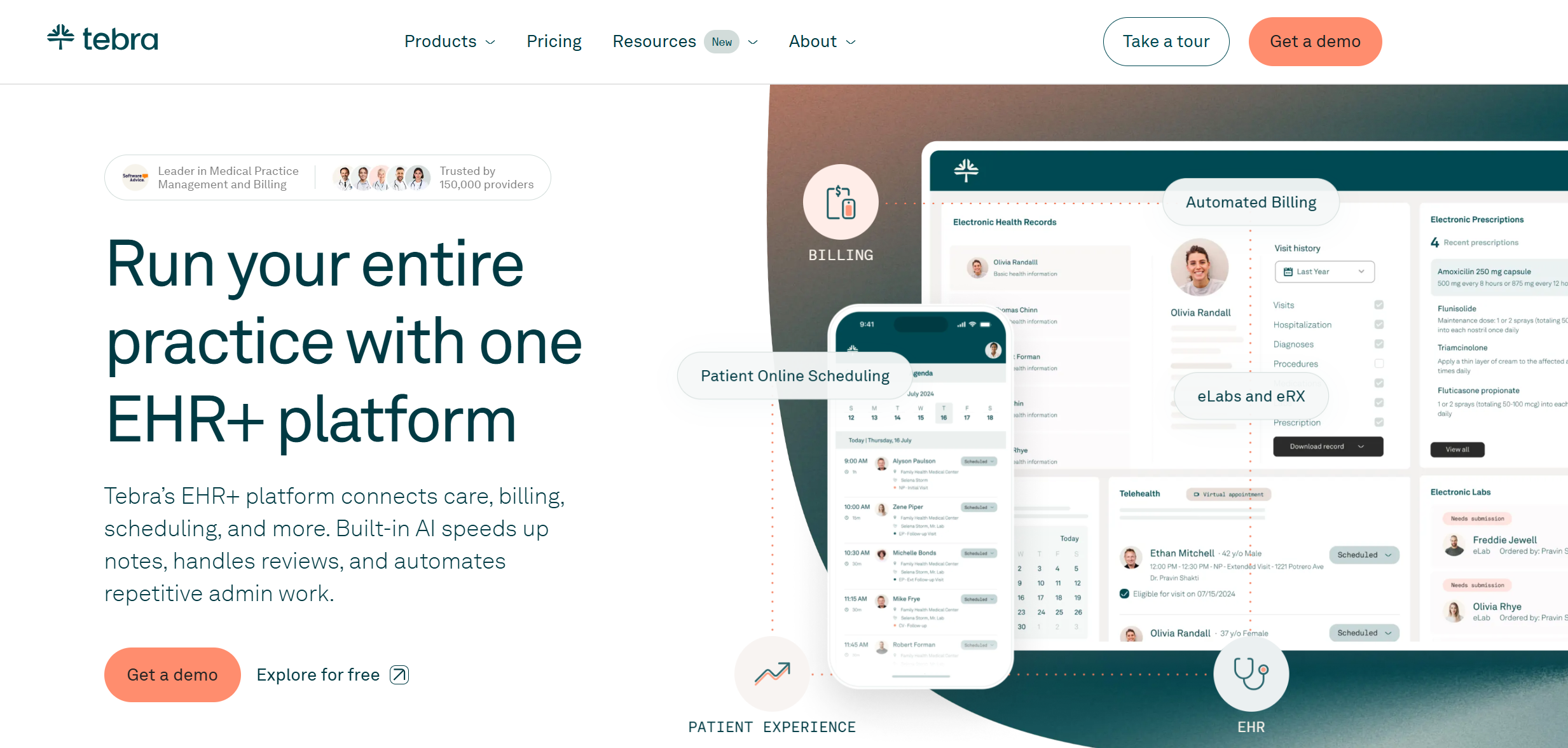
Tebra sells EMR software, a patient engagement platform, and a billing app.
The platform delivers an integrated solution, connecting all three departments to streamline your workflows.
You’ll get smart scheduling to manage appointments, a built-in billing system to handle payments, and AI-powered workflows to oversee operations.
You can automate the documentation to maintain all your patient records in the software and handle the registration and patient communication online.
The app is well-suited for both physical practices and telehealth clinics.
Some marketing tools are also available. For example, you can set up a branded website to create your online presence, update your profile on Google to increase visibility, and automatically reply to reviews.
Core Features
- Electronic medical records (EMR).
- AI documentation.
- Telehealth capabilities.
- Scheduling and payments.
- Claim management.
- Digital intake forms and communication tools.
- Marketing features.
- Analytics and reporting.
- AI and automation.
Price
Tebra sells custom packages. For more details, schedule a demo.
12. PracticeFusion
PracticeFusion is a good option for startups and small practices. It offers a well-established EMR with integrated billing services.
The software covers almost everything.
You can digitize your patient health records, access the medical history from anywhere, send ePrescriptions to pharmacies, and generate various reports.
Through PracticeFusion’s billing services, you can easily handle claims and payments.
You can also buy a few add-ons to extend the software’s capabilities. For example, it has a messaging option that lets you send a broadcast message to announce events, like walk-in vaccination clinic days.
Core Features
- Electronic medical records.
- Charting and reporting.
- Lab and imaging center integration.
- ePrescribing.
- Patient engagement.
- Billing services.
- Appointment management and intake forms.
- Automated text, voice, and email reminders.
Price
PracticeFusion charges $199 per provider. You can take a free trial and also ask for a demo.
Conclusion
EMR software has become an essential tool for modern healthcare clinics.
Almost 88% of healthcare providers use some kind of EMR/EHR platform to maintain their patient data and streamline operations.
Implement an EMR platform now to upgrade your workflows. All the tools mentioned in the above list have excellent EMR features and workflow automation capabilities. Good luck!


 A better way to manage projects and clients for freelancers
 Get through busy days like a breeze with Reclaim.ai