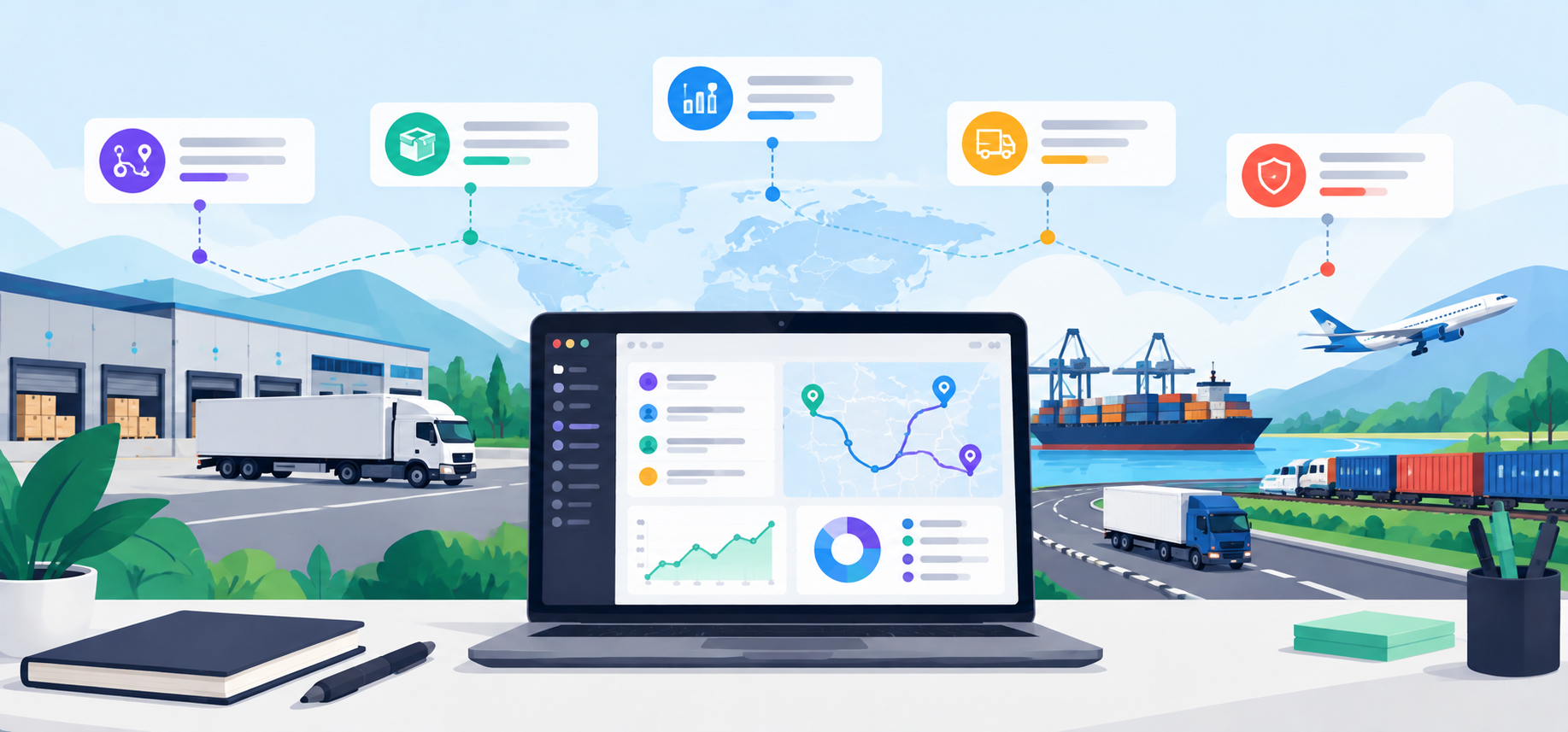
Most companies start looking for a TMS when their current system can’t keep up with the business growth.
Spreadsheets and emails may work fine initially.
But as shipment volume increases, planning transportation, coordinating with carriers, and managing documentation become too difficult to handle.
The right TMS solves this problem by automating workflows and centralizing data, giving you visibility into your shipments. You can plan better, coordinate efficiently, and track every shipment in real time.
What Is a Transportation Management System (TMS) and What Tools Are Best For You?
A transportation management system is software that works as a central hub of your operations.
Instead of using ten different tools to track shipments and manage freight documents, it gives you a single platform to manage operations.
Top Features To Look For In A TMS
- Transportation planning and execution.
- Real-time shipment tracking.
- Document management.
- Automation and integration.
Before we explore the reviews, here’s a quick overview of the best TMS platforms.
Key Takeaway
| Business Need | Recommended Platform |
|---|---|
| Best overall TMS for large enterprises | Oracle OTM |
| Best for SAP users | SAP Transportation Management |
| Best for AI-powered planning | Blue Yonder |
| Best warehouse + transportation platform | Manhattan |
| Best for global logistics collaboration | E2open |
| Best transportation automation | Descartes |
| Best for last-mile logistics | Shipsy |
| Best user experience | Shipwell |
| Best for freight procurement | GoComet |
| Best multi-carrier shipping | FreightPOP |
| Best for trucking carriers | Trimble TMS |
| Best for freight brokers | Tai TMS |
| Best for intuitive workflows | Rose Rocket |
| Best value for money | AscendTMS |
| Best free TMS | Diesel TMS |
Transportation Management System (TMS) Comparison
| Name | Target Audience | Pricing | Deployment | Free Tier | Rating |
|---|---|---|---|---|---|
| Oracle OTM | Large shippers | Custom | Cloud | No | ⭐ 4.2/5 |
| SAP Transportation Management | Large shippers | Custom | Both | No | ⭐ 4.3/5 |
| Blue Yonder | Large shippers | Custom | Cloud | No | ⭐ 4.4/5 |
| Manhattan | Retail & distribution | Custom | Cloud | No | ⭐ 4.6/5 |
| E2open | Global shippers | Custom | Cloud | No | ⭐ 4.4/5 |
| Descartes | Mid-large shippers | Custom | Cloud | No | ⭐ 4.4/5 |
| Shipsy | Retail & eCommerce | Custom | Cloud | No | ⭐ 4.5/5 |
| Shipwell | Mid-sized shippers | Custom | Cloud | No | ⭐ 4.6/5 |
| GoComet | Shippers & manufacturers | Custom | Cloud | No | ⭐ 4.9/5 |
| FreightPOP | SMB shippers | Custom | Cloud | No | ⭐ 4.8/5 |
| Trimble TMS | Carriers | Custom | Cloud | No | ⭐ 3.7/5 |
| Tai TMS | Brokers | From $995/mo | Cloud | No | ⭐ 4.4/5 |
| Rose Rocket | Carriers & 3PLs | From $2,080/mo | Cloud | No | ⭐ 4.8/5 |
| AscendTMS | SMB brokers & carriers | $69–149/mo | Cloud | Yes | ⭐ 4.9/5 |
| Diesel TMS | Small carriers | From $40/mo | Cloud | Yes | ⭐ 4.2/5 |
Methodology
There are dozens of TMS on the market, and most of them cover the basics. The real difference is who they are built for and how well they handle your day-to-day workflows.
I have compared each software using the criteria below.
- Target Audience: Who is it designed for?
- Scalability: Whether it’s for small businesses or a growing company.
- Ease of Use: How easy it is to navigate.
- Integration: Can it work with your existing tech stack and shipping carriers?
- Feedback: Reviews and ratings from well-known review platforms like G2, Capterra, and Software Advice.
Here is the list of the 15 best transportation management systems (TMS).
1. Oracle Transportation Management
Oracle (OTM) is a go-to choice for large shippers because of its transportation optimization engine. It gives you the best transportation plan to move all your freight, saving time and money.
Here, you can plan your shipments, execute your operations, and monitor everything in real time. Oracle OTM can handle complex logistics systems, including global operations.
Oracle also has excellent customization capabilities. You can configure the software to match your company’s logistics process.
Core Features
- Planning and optimization.
- Multi-model transportation management.
- Real-time shipment visibility.
- Fleet management.
- Freight billing and payment.
- AI and automation.
- Analytics and reporting.
- Integrations.
What Users Like
“The best thing I like in Oracle is its customization and ease of use.”—G2
“Using this platform feels like operating a central logistics command system for all construction deliveries.”—Garter
Price
Oracle shares pricing on request.
2. SAP TMS
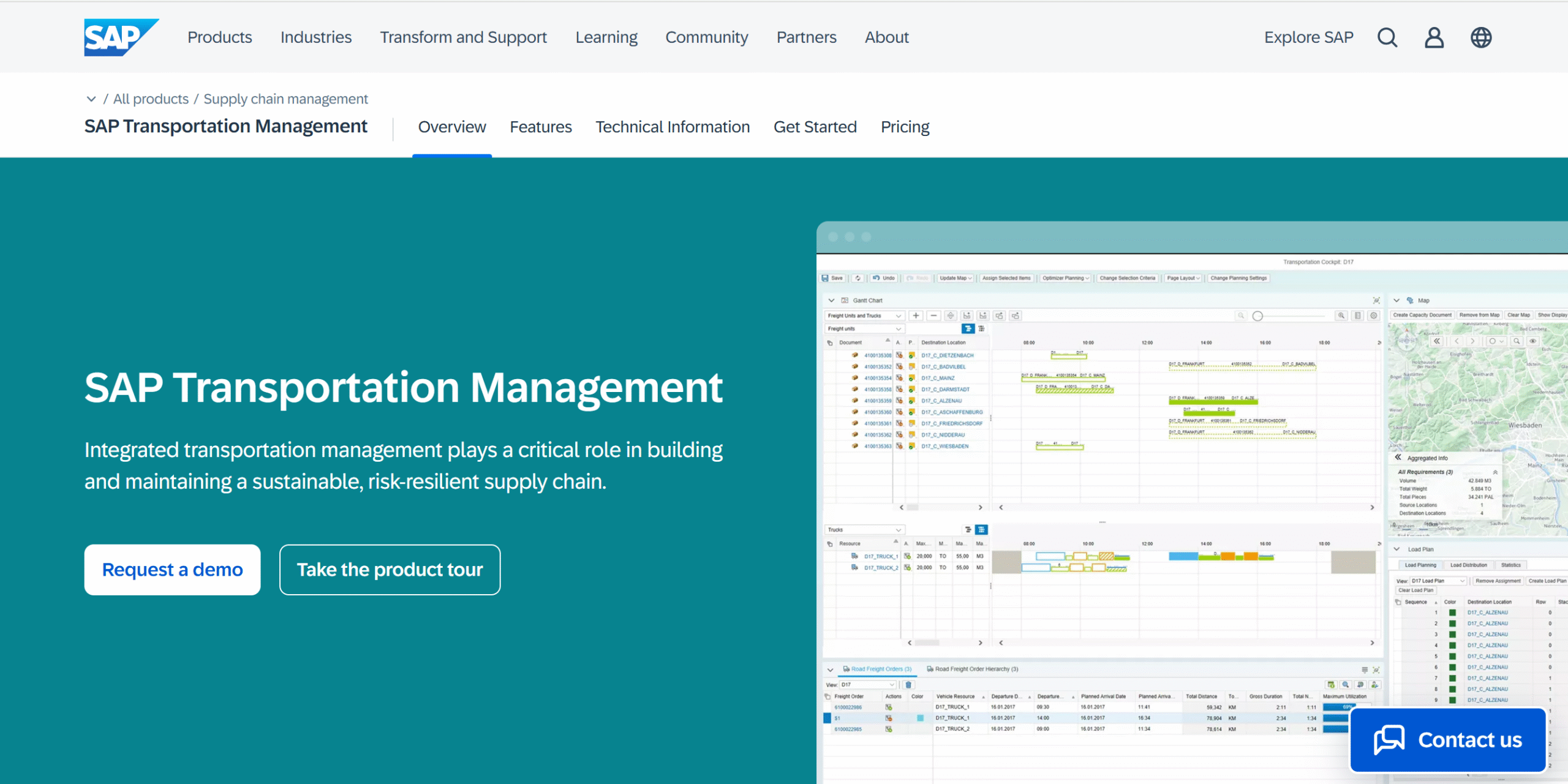
SAP TMS is ideal for businesses that already run on SAP.
It integrates directly with the SAP ecosystem, centralizing your supply chain operations.
This gives you end-to-end visibility into your orders and shipments, improving your coordination and response time.
The major drawback, however, is its complexity.
You need a specialized expert to configure and maintain the system, which can be expensive and time-consuming. It’s not a deal breaker for a large enterprise, but for growing companies, it might not be a wise choice.
Core Features
- Transportation planning.
- Route optimization.
- Multi-mode transportation.
- Order and freight management.
- Real-time tracking.
- Analytics and reporting.
- Global coverage.
- Cross-platform.
- Integrations.
What Users Say
“What I like most about SAP Transportation Management is its strong end-to-end visibility and integration.”—G2.
“I give SAP Transportation Management a seven out of ten for how it handles the business of the plant-to-plant.”—TrustRadius.
Price
SAP shares pricing on request. You can book a demo.
3. BlueYonder
BlueYonder is perfect for companies that struggle with seasonal sales. It uses AI to predict demand and recommend the best routes, carrier selection, and loads.
Some of the things you can do with Blue Yonder include transportation modeling, smart freight procurement, and multi-tiered load building.
The platform lets you run various what-if scenarios to estimate truck capacity, transportation costs, and shipment schedules.
Core Features
- AI-powered transportation modeling.
- Route optimization.
- Load building.
- Freight audit and settlement.
- Fleet management.
- Multi-model transportation management.
- Real-time visibility.
- Analytics and reporting.
- Integration.
- Mobile access.
What Users Say
“User-friendly with an array of features to assist in work.”—G2.
“I enjoy the dashboarding and reporting capabilities of Blue Yonder. I think the breakdown of data and information is great and very helpful.”–G2.
Price
BlueYonder shares pricing on request.
4. Manhattan
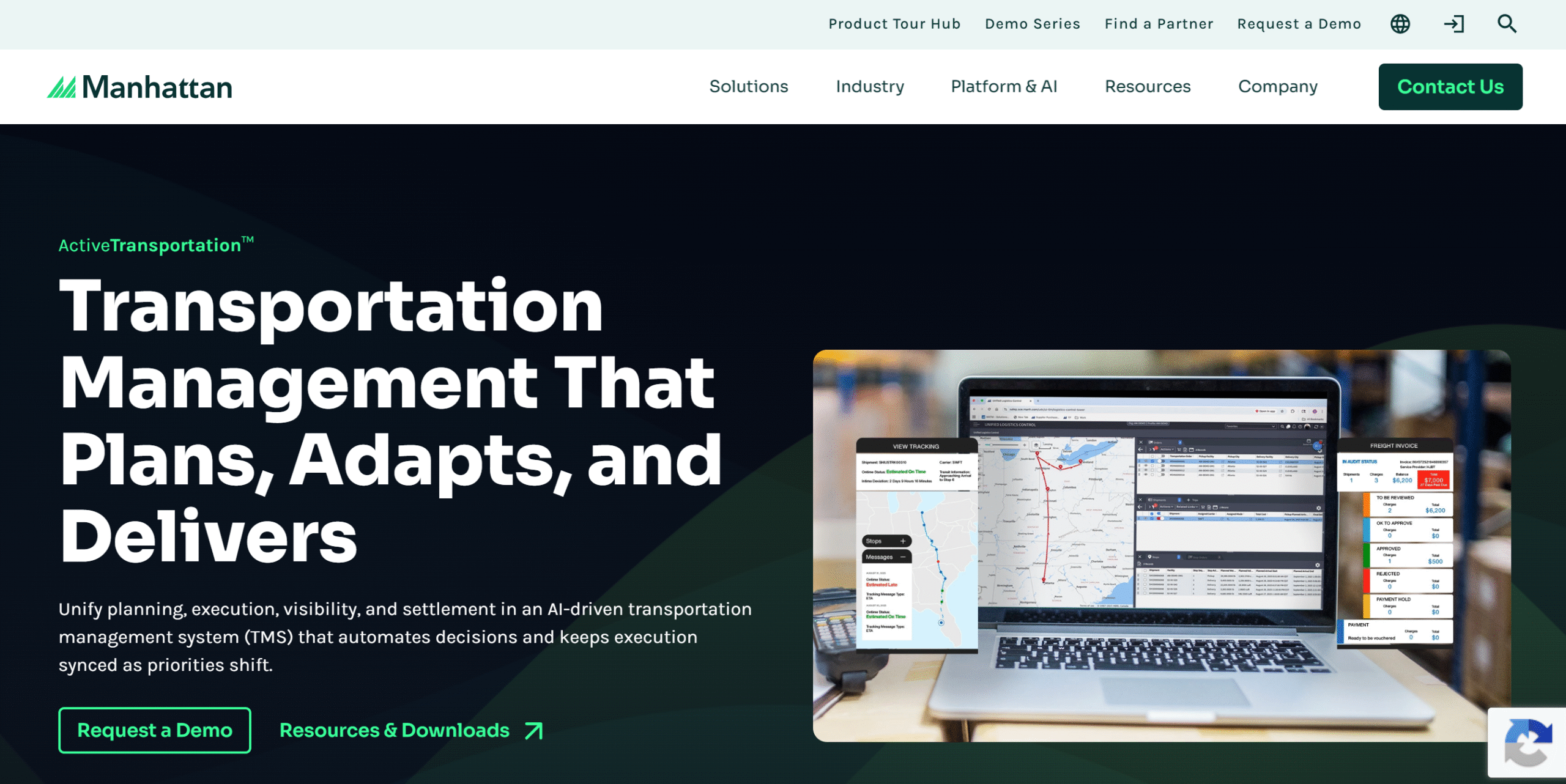
Manhattan delivers warehouse and transportation management as a single workflow.
With this tool, you can keep your orders, warehouse operations, and deliveries connected and reduce your order processing time.
This makes Manhattan a good choice specifically for large retailers and distributors with complex fulfillment operations.
Apart from TMS, Manhattan also lets you manage trucks in the yard and warehouse workers. You can assign dock doors, handle loading schedules, track trucks, and keep an eye on everything remotely.
Core Features
- Transportation and procurement planning.
- Multi-model transportation.
- Warehouse and labor management.
- Carrier selection.
- Unified logistics.
- Appointment scheduling.
- Fleet management.
- Freight auditing and payment.
- Integration.
- Mobile.
What Users Say
“User-friendly and helpful tool to manage the day-to-day operations. Reliable and steady.”—G2.
“My favorite thing about Manhattan is how it brings planning, warehousing, and transportation together in one place, giving me a clear real-time view of the whole supply chain.”—SoftwareReviews.
Price
Manhattan shares pricing on request. You can request a demo.
5. E2open
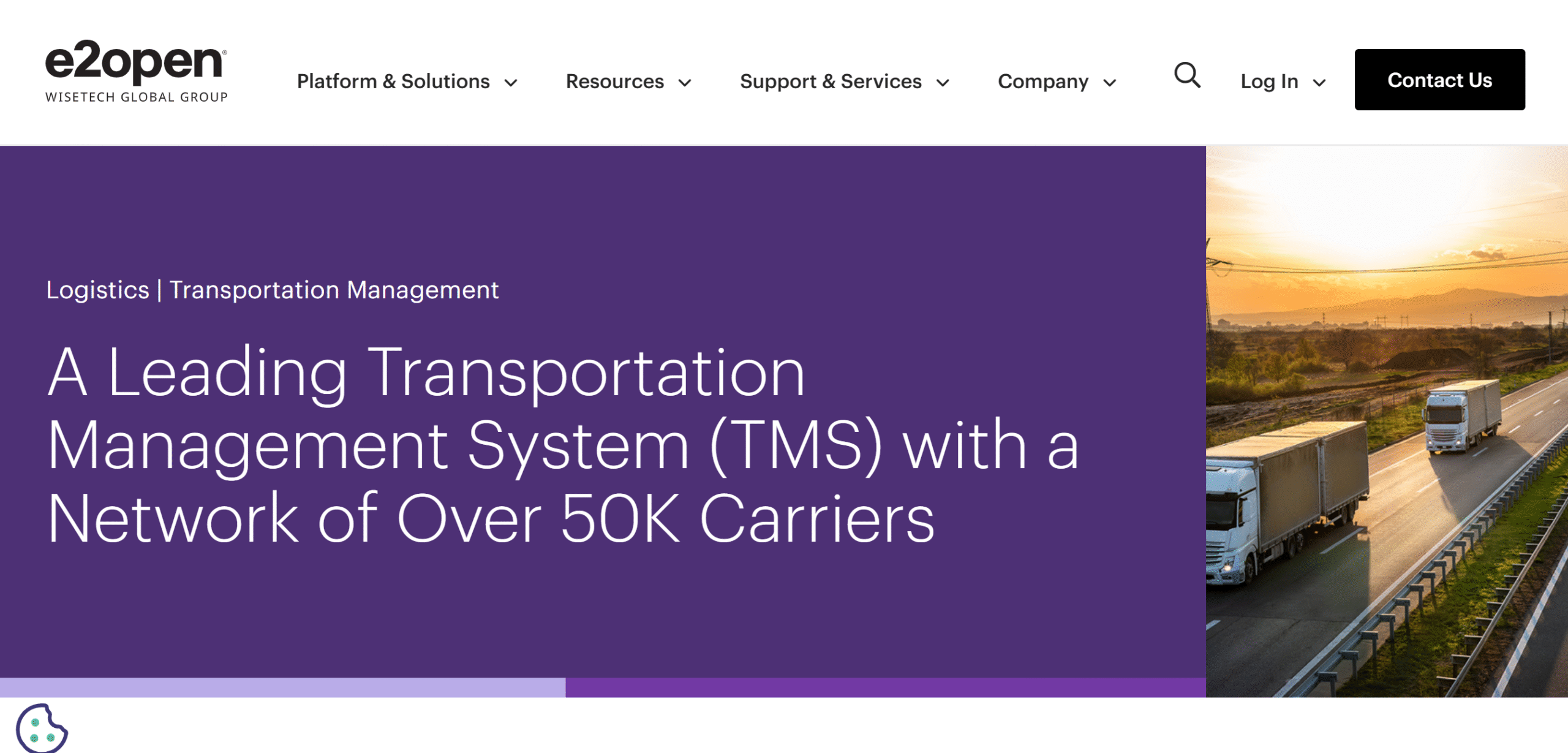
If your company works with a high number of domestic and international logistics partners, go for E2open.
It helps you plan your shipment and coordinate with all external partners, saving the back-and-forth communication.
The platform currently has a built-in network of over 50k domestic and global carriers, making it easier to onboard partners.
If you want, E2open can also handle transportation planning and execution for you through its management logistics service.
Overall, it’s an excellent platform for global enterprises.
Core Features
- Multi-model transportation.
- Transportation planning and procurement.
- Carrier selection.
- Rate optimization.
- A vast network of logistics partners.
- Tracking and monitoring.
- Logistics service.
- Integration.
What Users Say
“E2Open is the best TMS for shipments I’ve ever used. It is really easy to use as far as their spot loads board and their integration with EDI and the internal software is great!”—G2.
“The fact that it is connected to so many other carriers and partners, it truly has such a large network to be used across the globe.”—G2.
Price
E2open shares pricing on request.
6. Descartes
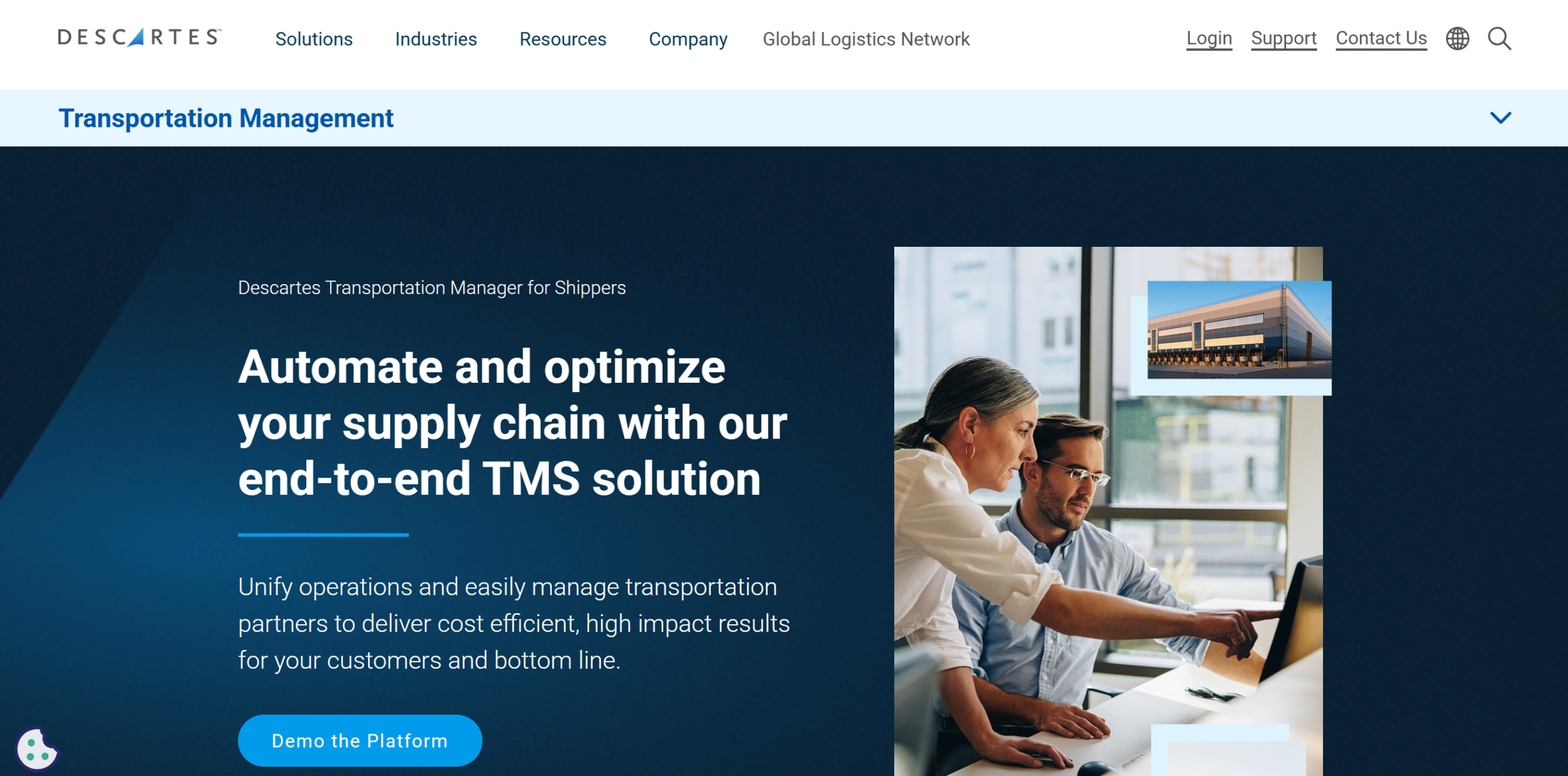
Descartes offers scalable automation. It is a great choice for companies that manage a high volume of shipments and want to automate their transportation operations.
Core capabilities of Descartes include shipment and load planning, route optimization, yard management, and freight audit. Whether you are a shipper, freight broker, or a 3PL, you can streamline everything from carrier selection to freight settlement.
The software also supports all the major transportation modes.
The only drawback of Descartes is its UI. It gets the job done, but it’s old.
Core Features
- Transportation planning.
- Carrier selection.
- Load optimization.
- Multi-model transportation management.
- Dock door scheduling.
- Yard management.
- Freight audit and settlement.
- Shipment tracking and analytics.
- Document management.
- Integrations.
What Users Say
“I like Descartes Shipper TMS for its basic, non-flashy UI, which makes using it straightforward without unnecessary distractions.”—G2.
“As an admin, I have full control over the system. Customizable Reports, Auto-reports, a wide range of parameters for shipment search, and being able to control user access and booker setup.”—G2.
Price
Descartes shares pricing on request.
7. Shipsy
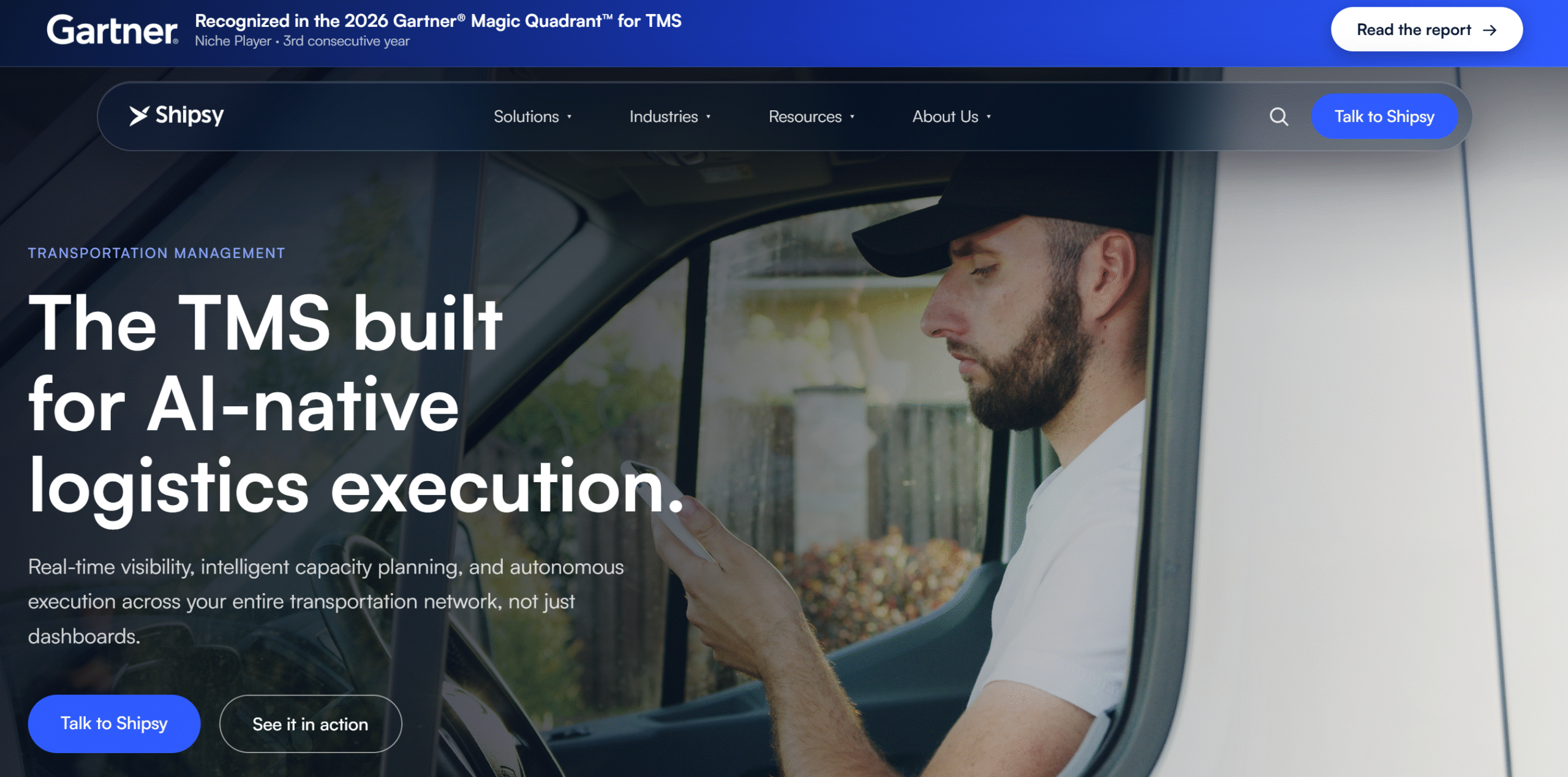
Shipsy is a little different from traditional TMS like Oracle. While most enterprise TMS focus on transportation planning, Shipsy focuses on transportation execution, especially last-mile logistics.
This means it provides full coverage, so you can plan shipments, optimize routes, automate dispatch, and track orders in real time.
The biggest advantage of Shipsy, however, is its built-in AI.
The software uses AI to recommend the best carrier, predict ETA, and detect delays.
Core Features
- Transportation planning.
- Load and route optimization.
- Carrier selection.
- Last-mile delivery.
- Real-time visibility.
- Automated settlement.
- Analytics and reporting.
- Integration.
- Mobile app.
What Users Say
“I find the smart track app, dashboard, and business intelligence features of Shipsy incredibly beneficial.”—G2.
“I work with a retail chain, and for us the most important capability is being able to track shipments and delivery times. Shipsy’s platform enables us to do exactly that.”—G2.
Price
Shipsy shares pricing on request.
8. Shipwell
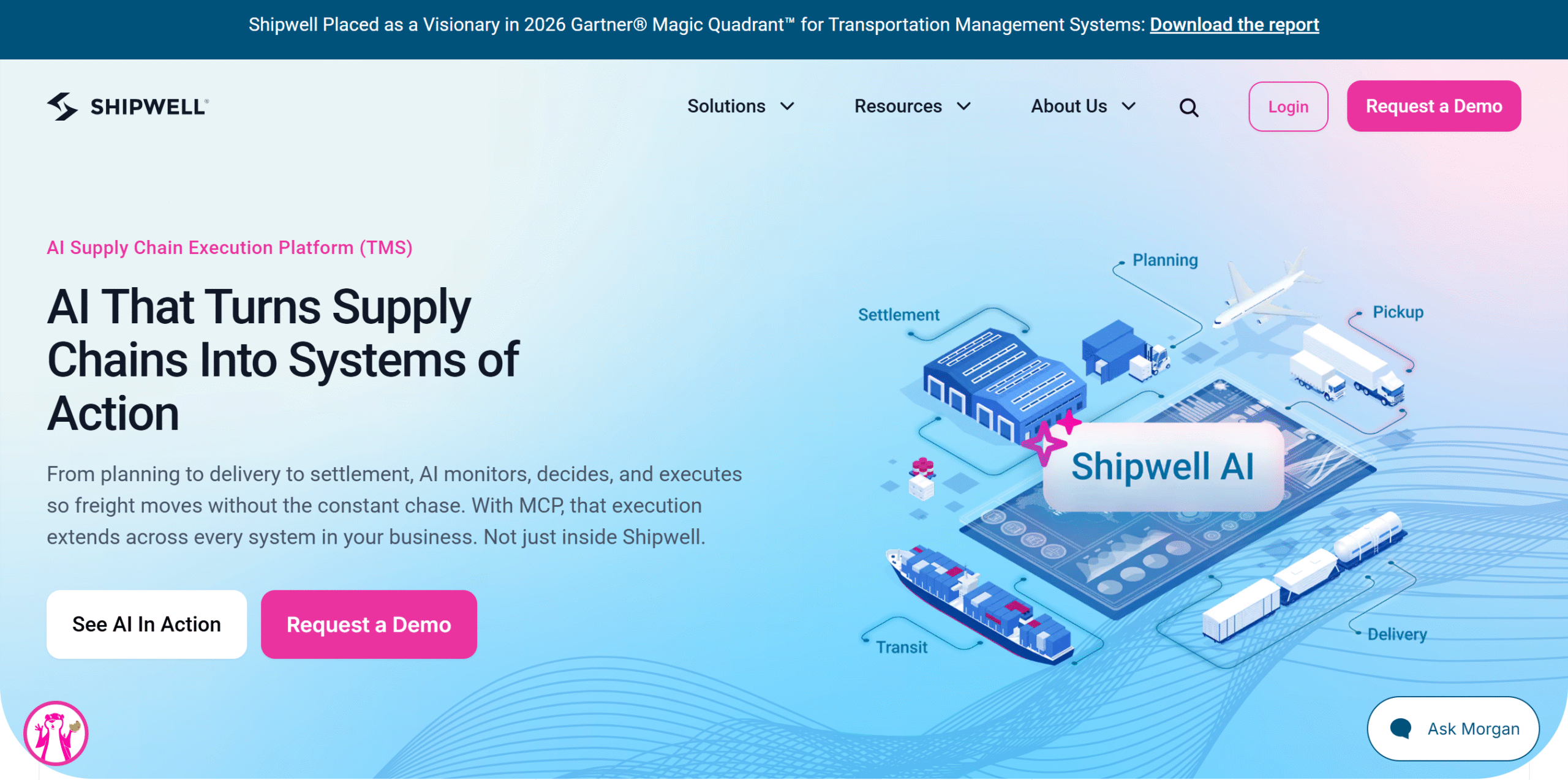
Shipwell’s unique selling point is its modern UI and customer support. It has the same capabilities as any other TMS but offers a much better user experience.
The software is AI-powered and comes with a mobile app for easy tracking. You can manage multiple transportation modes and customize your workflows.
Shipwell integration is also easier to set up than traditional TMS. It isn’t as extensive as Descartes, but it covers the essential systems and carriers that most mid-size companies rely on.
Core Features
- Transportation planning.
- Multi-mode transportation support.
- Carrier rate management.
- Load optimization and dock scheduling.
- AI-powered tools and modern UI.
- Freight settlement.
- Analytics and reporting.
- Integration.
- Mobile app.
What Users Say
“We have been using Shipwell for several months now. The service they provide is spectacular.”—G2.
“The platform is incredibly intuitive and user-friendly, streamlining our freight management processes from end to end.”—Garter.
Price
Shipwell shares pricing on request. You can request a demo.
9. GoComet
GoComet offers several logistics solutions, including PO orders, procurement, shipment, and freight settlement. But what makes it stand out is its freight procurement module.
The software allows you to invite carriers in bulk and let them compete for your business. You can set market rates as a benchmark and build an approval process to keep the management in the loop.
GoComet also tracks your contract utilization, helping you make the most of your negotiated carrier contracts.
Core Features
- Multi-model transportation support.
- Planning and execution.
- Real-time tracking.
- AI freight procurement.
- Contract utilization tracking.
- Freight settlement.
- Analytics and reporting.
- Integration.
What Users Say
“I find GoComet to be highly AI-powered, which really helps with delays in shipment. I also find the Go Procure module very helpful.”—G2.
“The tracking via OCR feature is a big win, it has made tracking shipments so much simpler.”—Capterra.
Price
GoComet shares pricing on request. You can book a demo.
10. FreightPOP
FreightPOP is built for companies that ship both small packages and truckloads. Instead of using different systems, you can track everything from FreightPOP.
It also provides separate modules for private fleets. If you handle shipments in-house, you can manage your own trucks with third-party carriers.
There’s more.
Apart from its TMS, FreightPOP lets you manage your orders and warehouse operations. The systems are AI-powered and work well with ERP and e-commerce platforms.
They are separate products, by the way, but you can buy them with the TMS.
Core Features
- Multi-mode shipping.
- Carrier selection.
- Fleet management.
- Route optimization.
- Real-time tracking.
- Order and warehouse management.
- Reporting and analytics.
- Integration.
- Mobile app.
What Users Say
“It integrates well with our existing software and gets our shipments out accurately and in a timely manner.”—Capterra.
“It was a great investment for our company. It does exactly what we were looking for.”—Software Advice.
Price
FreightPOP shares pricing on request. You can ask for a demo.
11. Trimble
Trimble is best known for its trucking carrier solutions. While it can support shippers and brokers, its carrier TMS is more mature.
The software offers almost everything a carrier needs to run its operations. You’ll also get some truck-specific features to handle administration tasks, such as driver onboarding and communication.
I highly recommend exploring it. The platform is really broad, and the sales team can guide you better.
Core Features
- Order, dispatching, and load management.
- Freight procurement.
- Driver and fleet management.
- Workflows and accounting.
- Real-time shipment tracking.
- Reporting and analytics.
- Integrations.
- Driver app.
What Users Say
“The most helpful thing about Trimble is that it is easy to keep track of our fleet of trucks and to keep our drivers compliant with DOT regulations.”—G2.
“I have used this product for 3.5 years and have loved it.”—Software Advice.
Price
Trimble shares pricing on request.
12. Tai TMS
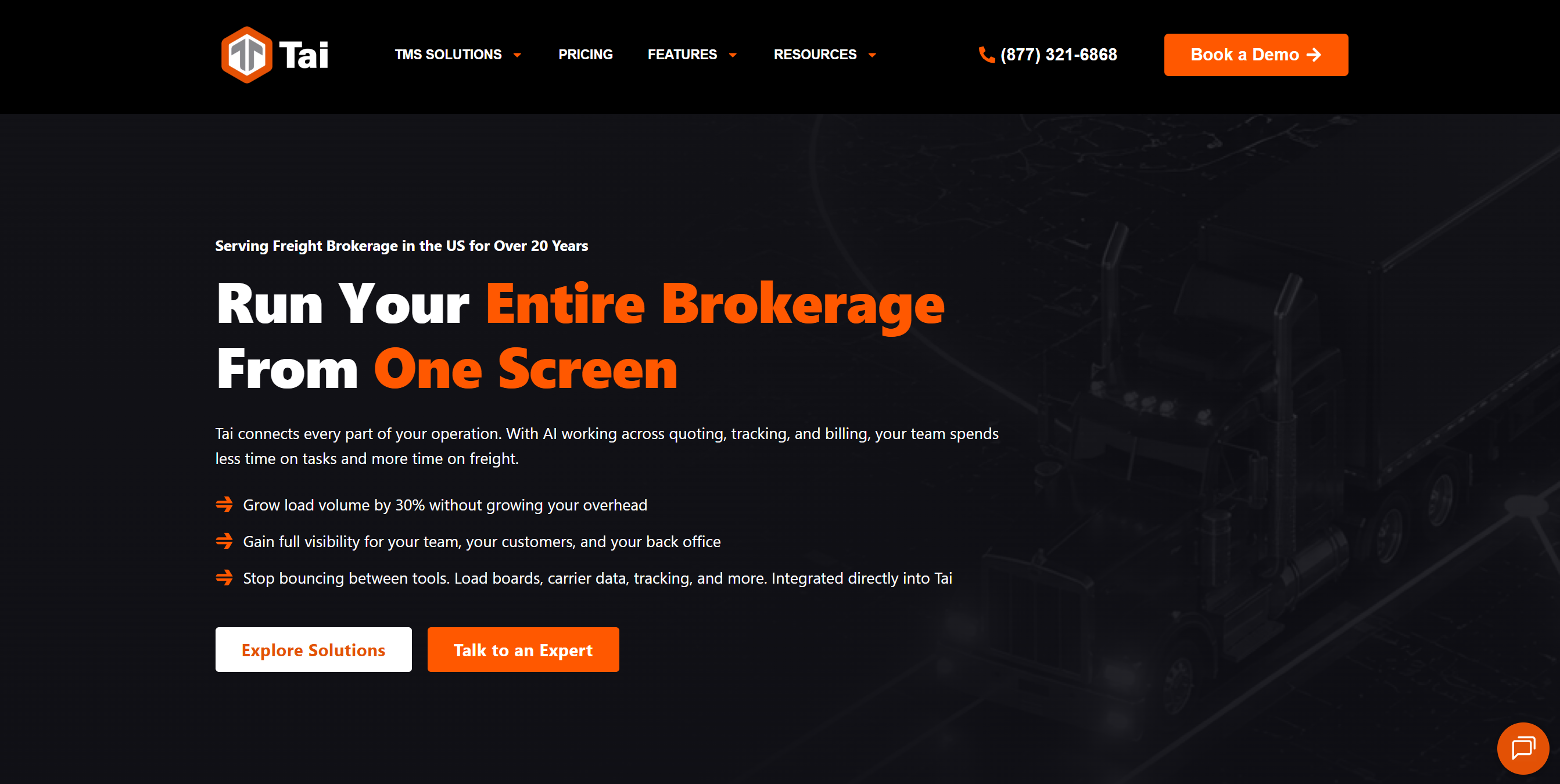
Tai TMS is niche software for freight brokers. It solves the one problem that many growing brokerages typically face—coordinating multiple shipments at a time.
You can automate most of your day-to-day workflow with Tai, from generating freight quotes and assigning the right carrier to tracking shipments and managing documents.
The platform supports both FTL and LTL, making it ideal for brokers that handle both full and shared shipments.
The one drawback of Tai is its geographic limitation. It’s primarily focused on US domestic freight. While you can extend reach through integration, it’s more centered around the US market.
Core Features
- Freight quoting.
- Lane data.
- Carrier selection.
- Real-time tracking.
- Document management.
- Invoicing.
- Branded client portal.
- Integrations.
What Users Say
“Great. We can’t remember the last downtime. The brokers love it because less clicking between screens.”—Capterra.
“As a freight broker, I love how useful Tai TMS has been. I can keep track of the loads I have available and those that are moving or being picked up.”—Softwarefinder.
Price
Tai TMS prices start at $995 per month. You can book a free demo.
13. RoseRocket
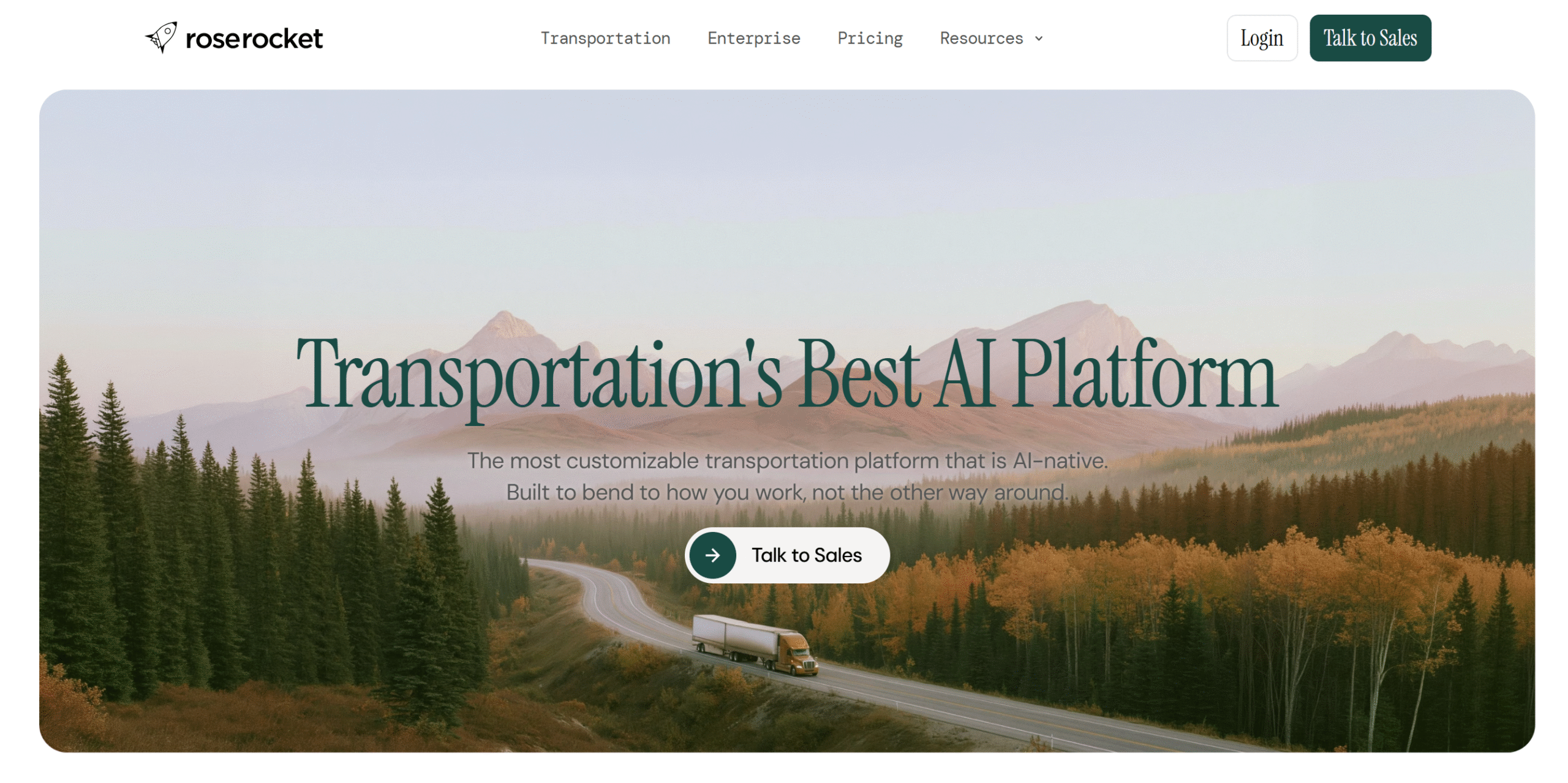
RoseRocket is a close competitor of Tai. Both serve freight brokers and 3PL, and both offer modern cloud-based TMS.
But what makes RoseRocket different from Tai is its usability. While Tai is built to automate workflows, RoseRocket focuses on user experience.
It’s comparatively easy to navigate and has one of the most intuitive interfaces. It also supports cross-border operations, making it an excellent option for US and Canada-based companies.
Last year, RoseRocket made some major upgrades to its platform, introducing AI workflows. People have some mixed feelings about it, but it has improved the platform’s automation capabilities.
Core Features
- Freight quoting.
- Order and dispatch management.
- Real-time shipment tracking.
- Invoicing and document management.
- AI-powered tools.
- Custom workflows.
- Branded portals.
- Integrations.
What Users Say
“The best thing about Rose Rocket is its user-friendly online customer portal, using which our customers are able to transparently find info about our rates.”—G2.
“Rose Rocket has a clean and easy-to-navigate modern interface.”—G2.
Price
RoseRocket prices start at $2080 per month.
14. AscendTMS
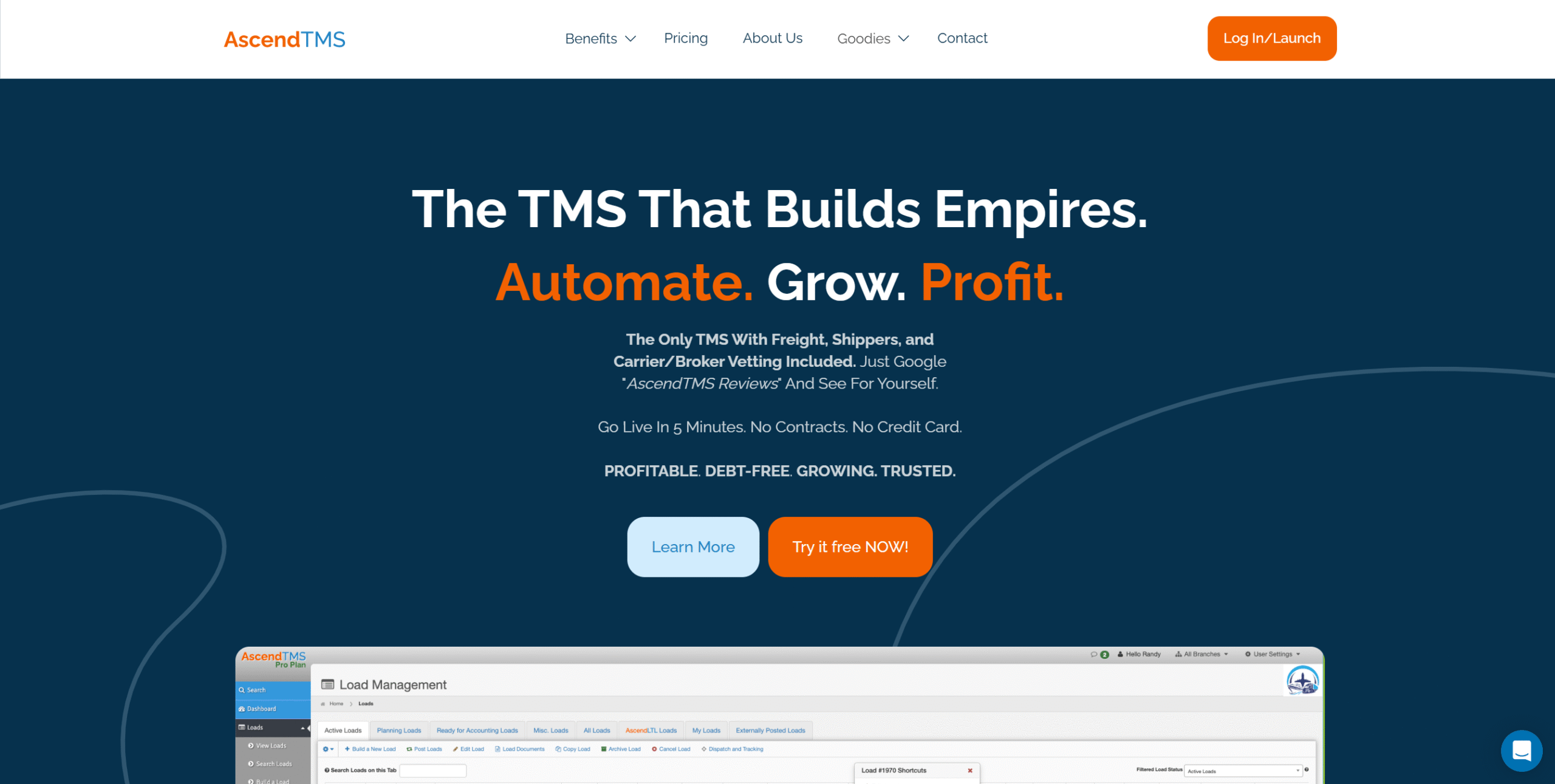
AscendTMS has one of the highest customer satisfaction rates due to its user interface and affordable packages.
The software offers over 230 features at the lowest price with no setup fee and no limit on the number of users.
It also supports shippers, carriers, and freight brokers and provides free onboarding training.
Most of its features are built-in, but you can connect external tools. Ascend provides around 140 integrations.
People also love Ascend for its customer service. Despite being an affordable platform, it has a highly responsive team.
Core Features
- Order and shipment management.
- Carrier selection.
- Tracking and analytics.
- Load and dispatch management.
- Freight quoting and auditing.
- CRM and document management.
- Integration.
What Users Say
“10/10 for lack of better words. The system itself flows easily, the automations are just as good if not better than others I have used, and the team really cares about their clients.”—Capterra.
“I love that every time we go to upgrade or integrate, Ascend can accommodate.”—Capterra.
Price
Ascend charges $69 to $149 per month.
15. Diesel TMS
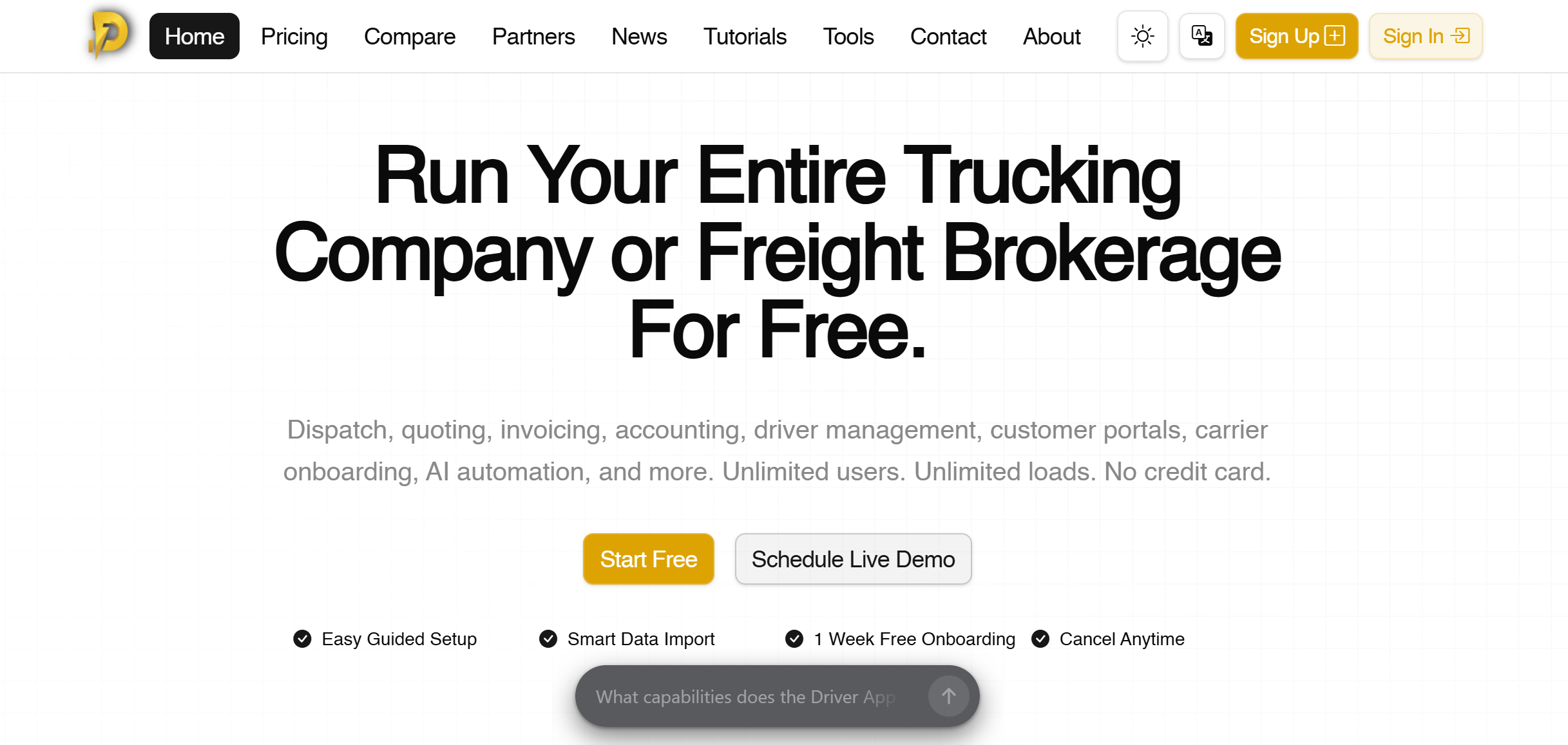
If you are new to TMS and want to try something budget-friendly before investing in a tool, check out Diesel TMS.
It’s a small platform with limited features, but you can use it for free.
And the best thing? You can access all the standard features in the free plan—no restrictions.
The software is designed with carriers and brokers in mind, offering essential tools like load management, dispatching, and settlements. You can handle both domestic and international shipments and easily track your finances.
Core Features
- Fleet management.
- Quotes, loads, and dispatching.
- Carrier portal.
- Document management.
- Shipment tracking.
- Invoicing and payments.
- Multi-currency support.
- Two-way QuickBooks integration.
- Driver app.
What Users Say
“It’s easy to set up, and you can get your business up and running within an hour or two.”—Software Advice.
“We have used four different TMS systems over the past five years & Diesel has been the best one out of all of them.”—Trust Pilot.
Price
Diesel TMS prices start at $40 per month. It also offers a Pay-As-You-Go package.
FAQ
Are There Different Types of TMS?
Yes. There are three different types of TMS. Shipper, Carrier, and Freight Broker TMS. Some platforms, like Descartes, support all three, while some, like Tai TMS, are built for a specific market.
How Do I Choose The Right TMS?
Choose a TMS that improves your workflow. If a TMS looks good on paper but doesn’t work with your existing tech stack, it can become a hassle. The right TMS should automate time-consuming tasks, work with your tools, and scale as you grow.
Do Small Businesses Need A TMS?
It depends. If your shipping operation is growing and you manage multiple carriers, then yes, you’ll eventually need a TMS.
Can a TMS Reduce the Transportation Cost?
Yes. A TMS helps you get the best carrier rates, optimize routes, and find the most cost-effective shipping option.
How Much Does A TMS Cost?
TMS prices vary depending on your business needs. A small business can get a decent cloud TMS for under $100 per month.
Conclusion – Which TMS Software Should You Choose?
Based on my research, here are my recommendations.
For Large Shippers
Oracle is by far the best option for large shippers. It can handle high volume and provide global coverage. SAP is also a good choice, but its value lies in its ecosystem.
For MidSize Shippers
Descartes is a powerful TMS for growing shippers if you don’t mind the UI. If you need a modern system, Shipwell is a good option.
For Small Freight Brokers
I would recommend Tai TMS and Ascend. They are purpose-built for brokers.
For Carriers
RoseRocket and DieaslTMS are perfect for small to mid-size carriers. They focus on day-to-day operations. RoseRocket is comparatively more modern, however.
Explore the top platforms and request their demos to make an informed decision. Good luck!


 A better way to manage projects and clients for freelancers
 Get through busy days like a breeze with Reclaim.ai